Campaign planning has already moved past the era of waiting for a quarterly brand tracker to find out how an audience felt. Most marketing teams today have some form of real-time social listening in place. They can see sentiment shift, watch share of voice move, and get an alert when a post starts trending negatively. That capability is now table stakes, not a competitive advantage.
The real shift happening right now is what comes after listening. It is the move from passive monitoring to active command, and from command to intelligence that drives decisions a leadership team can act on immediately. Understanding this progression is what separates brands that are merely watching their campaigns from brands that are actively steering them.
Stage one: listening was the starting point, not the destination
Real-time social listening solved the visibility problem. Brands could finally see what audiences were saying as a campaign went live, rather than waiting weeks for a report. But visibility alone does not change outcomes. A dashboard showing a sentiment dip is only useful if someone is watching it, someone is empowered to act on it, and the action happens before the moment passes.
This is where most marketing operations still get stuck. The listening tool sits with one team, the media buying decision sits with another, and the gap between seeing a signal and acting on it is measured in hours or days, not minutes. By the time a meeting is scheduled to discuss a sentiment shift, the campaign window that mattered has often closed.
Stage two: the command centre changes who can act, and how fast
The next evolution is the real-time command centre, a live operational view where listening data, campaign performance, and response capability sit in one place, monitored by a team empowered to make decisions in the moment.
This is a meaningful structural change. Instead of sentiment data being a report that gets reviewed, it becomes a live feed that drives action. A command centre team watching a campaign launch can see a creative variant underperforming on sentiment within the first hour and reallocate spend before the rest of the day’s budget is committed. They can see an unexpected negative reaction forming around a specific message and adjust before it compounds. They can see one platform driving disproportionate positive engagement and shift weight toward it while the moment is still live.
The command centre model has become standard practice for large-scale launches and high-stakes campaigns, precisely because the cost of a delayed reaction is now visible and measurable. A campaign that goes wrong publicly does not have days to be corrected anymore. It has hours.
Stage three: from operational response to strategic intelligence
Command centres solve the speed problem for a single campaign. But they do not solve a bigger one: most of what a command centre observes never reaches the people making strategic decisions about where the next quarter’s budget goes, what the next campaign should say, or which market deserves more investment.
This is the gap that CX intelligence is built to close. Where social listening tells you what is happening and a command centre lets you react to it in the moment, CX intelligence reasons over that same data to answer strategic questions a leadership team actually has. Not what is our sentiment today, but why is it trending this way, what does it mean for the brand’s positioning, and what should we do about it at a strategic level, not just a tactical one.
The distinction matters because the audience for this layer is different. A command centre is built for the team running the campaign in real time. CX intelligence is built for the CMO deciding next quarter’s strategy, the CEO preparing for a board conversation about brand health, or the strategy lead identifying where a competitor is losing ground. These are not questions a sentiment dashboard answers well. They require a system that can synthesise millions of signals into a direct, evidence-backed answer, delivered in the language a business leader actually thinks in.
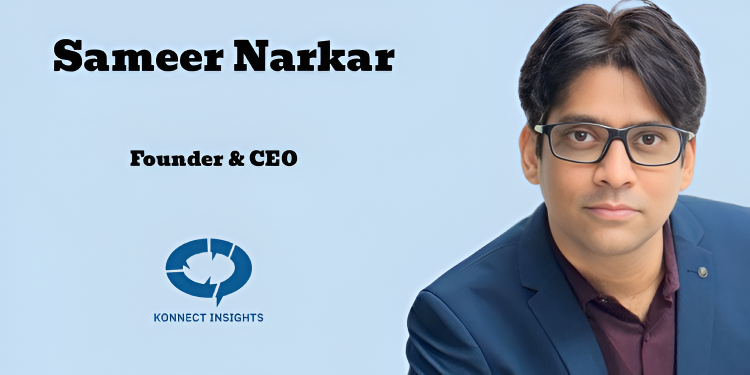
This is the thinking behind Konnect Research Cloud, the AI-powered intelligence layer we built at Konnect Insights. Instead of a leader waiting for an analyst to interpret a sentiment report, KRC lets them ask a direct question, what is driving the negative reaction to our current campaign in this market, or how does our sentiment trend compare to our closest competitor this quarter, and receive a synthesised, board-ready answer in seconds. The same data a command centre uses to react in the moment becomes, at this layer, the foundation for the next campaign’s strategy, the next quarter’s positioning, and the next board conversation about brand health.
What this means for how campaigns get planned
The practical implication is that campaign planning is no longer a single moment that happens before launch and gets reviewed after. It is becoming a continuous loop: real-time listening generates signal, a command centre acts on it operationally, and an intelligence layer synthesises the pattern into strategic direction for what comes next. Each stage feeds the one above it.
Brands still operating only at the listening stage are seeing the weather but not adjusting the sails. Brands operating a command centre are reacting well to individual campaigns but often missing the larger pattern across them. The brands pulling ahead are the ones connecting all three: live signal, real-time response, and strategic intelligence that compounds with every campaign they run.
The shift worth making now
The technology to do this exists today. The harder shift is organisational: breaking down the separation between the team that watches sentiment, the team that buys media, and the leadership that sets strategy, so the same intelligence flows through all three without delay or translation loss.
The brands that make this shift will not just run better campaigns. They will build a compounding intelligence advantage, where every campaign makes the next one smarter, faster, and more precisely targeted to what their audience is actually telling them, in real time.
(Views are personal)