TRA Research (formerly Trust Research Advisory), a part of the Comniscient Group, is a Brand Intelligence and Data Insights Company dedicated to understanding and analyzing stakeholder behavior through two globally acclaimed, proprietary matrices of Brand Trust™ and Brand Desire™, which together make up Buying Propensity.
In a remarkable show of consistent consumer preference, Dell Laptops has claimed the title of the #1 Most Desired Brand of 2025 for the fifth consecutive year, as revealed in the latest 11th edition of TRA’s Most Desired Brands Report 2025. The second and third ranked, Apple iPhone and Titan Watches also retain their last year ranks, reflecting sustained admiration and aspiration among the consumers.
Based on the comprehensive interviews with over 2,500 consumer influencers across 16 cities, TRA’s yearly Brand Desire rankings capture the evolving affinities that define India’s consumer behaviour.
Mediannews4u.com caught up with N. Chandramouli, CEO, TRA Research:
Q. Does brand-building start with a relentless focus on genuinely solving customer pain points?
Yes, but that is only the starting point. Solving pain points builds Brand Trust — it is the transaction-based foundation of any relationship. But enduring brands go beyond relief; they evoke Brand Desire — the deeper emotional and cultural connection that makes consumers feel understood and inspired. In essence, great brands do not just remove friction; they create meaning.
Q. What is the one thing you would like to see brands do in 2026 that they are not doing enough of currently?
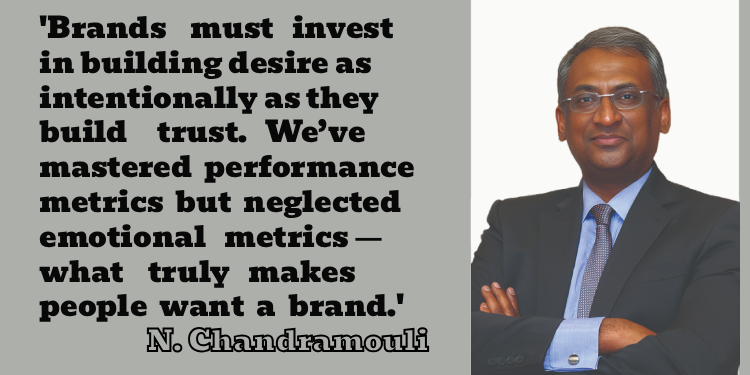
I would like to see brands invest more in building desire as intentionally as they build trust. We have mastered performance metrics, but we have neglected emotional metrics — what truly makes people want a brand, not just need it. In 2026, the winning brands will design for aspiration and emotion, not only efficiency.
Q. Are brands that win in 2026 the ones who leverage tech effectively to build the CX?
Technology will remain an enabler, not the differentiator. The winners in 2026 will use technology to humanise, not mechanise, the customer experience. Artificial intelligence, automation, and data should amplify empathy — turning insight into moments that feel personal, intuitive, and emotionally resonant.
Q. Brand building versus performance marketing. Is this the biggest challenge that marketers will face as we head into 2026?
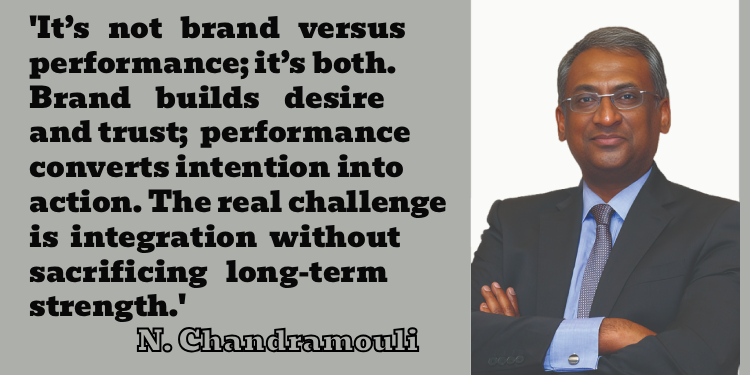
It is not brand versus performance; it is brand and performance. The two drive different aspects of Buying Intent. Brand building nurtures trust and desire, while performance converts that intent into action. The real challenge is integration — ensuring that short-term metrics do not erode long-term brand strength.
Q. What trends were seen in 2025 in brand building? What can we expect in 2026?
In 2025, we saw the rise of emotionally intelligent brands — those that listened deeper and personalised meaningfully. In 2026, this will evolve into culturally fluent brands — those that understand not only individual psychology but also the collective socio-cultural signals that shape desire.
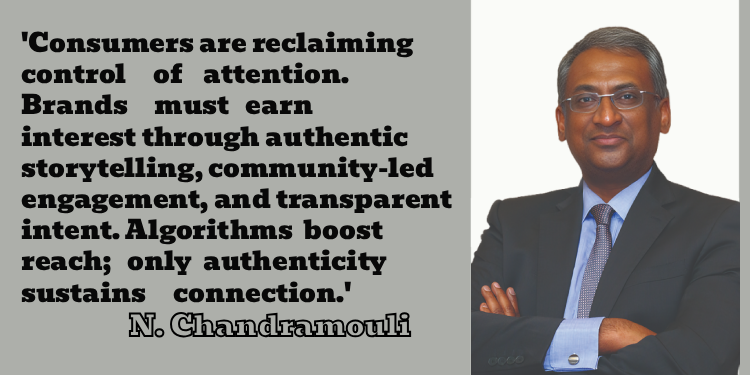
Q. Consumers are starting to fight the algorithm. Is this going to be the big challenge in brand building in 2026?
Yes. Consumers are reclaiming control of their attention and narrative. This means brands cannot just target people; they have to earn their interest. Authentic storytelling, community-led engagement, and transparent intent will matter more than ever. Algorithms can amplify reach, but only authenticity sustains connection.
Q. The report notes that desire is the invisible force that pulls consumers closer to brands. What tactics can brands adopt to enable this?
Desire is built through Emotional, Rational, Aspirational, and Communication Appeals. Brands should create consistency across these dimensions — aligning what they say, what they sell, and what they symbolise. Desire grows when a brand mirrors the consumer’s inner world — reflecting aspirations and values they already feel but cannot yet articulate.
Q. What are the reasons for the consumer-centric sectors dominating the great brands list?
Consumer-centric sectors operate closest to human emotion. They are not just selling products; they are participating in identity formation. These brands understand that people buy not to own something, but to belong somewhere — to express who they are and what they value.
Q. Someone said that when Steve Jobs launched the iPhone back in 2007 it was not just a phone with features. It was showing consumers a new world. Is this what separates a great brand like Apple from the rest?
Absolutely. Great brands are world-builders, not product-sellers. Apple did not sell a device; it sold a philosophy — simplicity, empowerment, and beauty in technology. That is what separates a brand that informs from a brand that transforms.
Q. When you look at brands that have fallen in the list badly what are the few things that they have in common?
Most often, they have lost cultural velocity — they stopped evolving with their consumers’ identities. Many also over-indexed on technology or performance without refreshing emotional meaning. In simple terms: they maintained function, but lost feeling.
Q. What role is AI playing today in brand building by helping brands deliver personalised, meaningful experiences at scale?
Artificial Intelligence is helping brands listen better and respond faster. When used thoughtfully, it allows for personalisation that feels intuitive rather than intrusive. The real opportunity lies in using AI to scale empathy — turning data into emotionally intelligent action.
Q. How is AI enabling speeding up of the brand building process?
AI accelerates the learning cycle — reducing the time between feedback, insight, and creative response. This agility helps brands refine their emotional and cultural positioning faster. However, speed only matters when it is grounded in depth. The future belongs to brands that are both agile and authentic.
Q. Are we seeing examples where companies have effectively an AI-powered content engine for personalised emails, banners, or product descriptions to lower creative bottlenecks? How effective has this been in brand building?
Yes, many brands now use AI-driven content engines to automate personalisation at scale. It is like a camera with auto-focus on — it gets it mostly right. But if you want professional-level output, the human must capture the image in manual mode. AI can scale relevance, but humans must ensure emotional and cultural resonance. The best outcomes come when human creativity directs the algorithm.
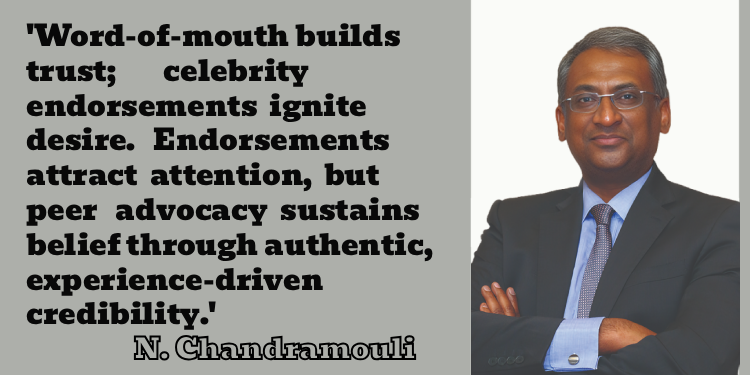
Q. How important is word-of-mouth in brand building versus celebrity endorsements?
Word-of-mouth builds trust, while celebrity endorsements build desire. Both matter, but peer advocacy creates deeper credibility because it is authentic and experience-driven. Endorsements can ignite attention, but community validation sustains belief.
Q. Beauty is a category that is extraordinarily competitive. Some established brands like Sugar Cosmetics have declined. Could you talk about the challenges of building a strong brand in a category that is very easy to enter but which is hard to build brand recall in?
The challenge in beauty is that functional differentiation is fleeting, while emotional differentiation endures. New entrants can copy packaging and formulation, but not feeling. Brands that build lasting recall are those that evolve the cultural meaning of beauty — tying it to identity, empowerment, and self-expression.
Q. What role is genuine digital transformation playing in helping legacy companies grow their brand value by appealing better to newer consumer sets like Gen Z?
Digital transformation is not only about new technology; it is about a new mindset. For legacy brands, it signals relevance, agility, and openness. When transformation is authentic — not cosmetic — it helps legacy brands rebuild Brand Trust and ignite Brand Desire among younger consumers who value purpose and progress.