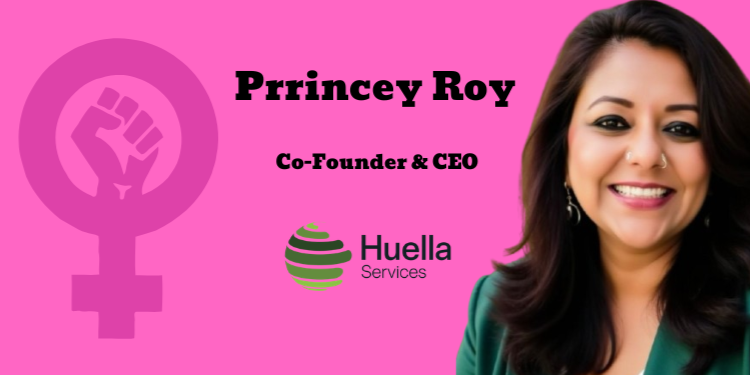
On the occasion of International Women’s Day Medianews4u.com caught up with Prrincey Roy, Co-Founder, CEO Huella Services
With over 25 years in ad sales, Prrincey Roy co-founded Huella Services in 2021 after noticing a clear gap in meaningful digital storytelling. Having worked with leading organisations like Times Group and Network18, she saw that brands needed more engaging and impactful ways to connect with modern audiences.
Huella was created to fill that space helping brands grow through creative, interactive digital solutions. In a short span, it has become a trusted partner for leading brands, reflecting Prrincey’s strong vision and leadership.
Q. You co-founded Huella Services in 2021 after noticing a clear gap in meaningful digital storytelling. Did you face initial skepticism?
Absolutely, and honestly, I expected it. When Karan, Mayura and I decided to leave the relative comfort of Times Internet to build something from scratch, the most common reaction was, “Why? The market is already crowded.” Digital advertising already had plenty of networks, platforms and intermediaries.
But we were not trying to build another ad network. We were building a point of view that digital advertising could actually mean something to the person on the other side of the screen.
The skepticism came from two places. First, we chose to bootstrap in an industry where most companies were chasing venture capital. And second, we were talking about creative intelligence and storytelling at a time when the industry was almost entirely focused on performance dashboards and scale.
But we had seen enough campaigns deliver impressive metrics while leaving audiences completely indifferent. That disconnect stayed with us. We believed advertising could do better, that brands could achieve performance without losing meaning or creativity in the process.
Four years later, the journey has been incredibly validating. We started Huella as a four-member team, and today we are a forty-member organisation operating across multiple markets, continuing to grow at well over 130 per cent year-on-year.
More importantly, we are seeing the industry itself evolve. Brands are beginning to realise that attention cannot simply be bought through scale; it has to be earned through creativity, storytelling and meaningful interaction. In many ways, the market is now moving in the direction we believed in from the very beginning.
 Q. What role have women played in growing Huella Services over the years?
A very real one, starting with the founding team itself. Out of the three partners who built Huella, two are women. So from day one, this was never a company where women were being “included” later. We were already at the table when the decisions were being made.
Mayura Nayak, our CRO and co-founder, has been instrumental in building our revenue engine and partnerships. Many of the relationships that helped Huella scale across the company are present as well; women are present in strategy, revenue, operations, and creative roles. In a business like digital media, which is ultimately about understanding people and what earns their attention, that perspective matters.
But honestly, we’ve never approached it as a diversity agenda. The company grew the way it did because the right people were doing the work. The fact that many of those people are women simply reflects the team’s evolution.
Q. Women struggle with work-life balance in the corporate world. How does Huella Services ensure this through its HR policies?
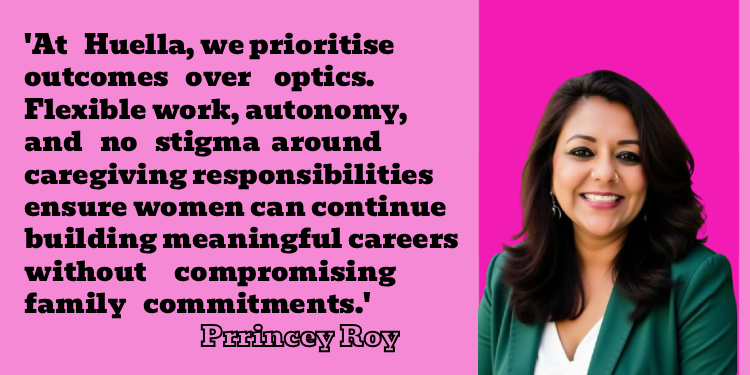
We’re a bootstrapped startup, so we can’t solve problems by simply throwing resources at them the way large corporations sometimes do. What we can do, and what we’ve tried to build from the start, is a culture of outcomes over optics.
We don’t measure contribution by how late someone stays in the office or how many hours appear on a timesheet. We measure it by what gets built, what gets solved, and what gets delivered. In practice, that means flexible working hours, no stigma around caregiving responsibilities, and genuine autonomy in structuring their workday.
For many women navigating responsibilities around children, parents, or both, flexibility isn’t a perk. It’s often the difference between staying in the workforce or stepping out of it.
We’ve also been deliberate about ensuring women are present in leadership discussions so that the policies we build reflect real experiences rather than assumptions.
Q. What do women bring to the table in leadership roles in the media, entertainment and advertising industries?
I’m always careful about putting leadership traits into rigid “male” and “female” categories, because good leadership ultimately comes down to the individual. But one quality I’ve consistently seen many women leaders bring into the room is empathy.
Empathy doesn’t mean being soft. It means understanding people: your team, your partners, and, most importantly, your audience. In industries like media and advertising, that ability is incredibly valuable. The work we do is not just about numbers and performance dashboards. It’s about understanding human behaviour, culture and what actually connects with people.
Women who have navigated leadership roles in environments that were not always designed for them often develop a very strong emotional intelligence. They learn to read situations carefully, listen deeply and build consensus without always needing authority to drive decisions.
And when a large part of the audience we are speaking to is women themselves, having women shape those conversations adds a layer of authenticity that audiences can feel immediately. It brings a deeper understanding of real experiences rather than assumptions about them.
Q. What kind of meaningful digital storytelling is Huella Services doing this month to celebrate International Women’s Day, and for the rest of 2026, to effectively target women?
To be honest, we don’t approach storytelling around women as something that should happen only around Women’s Day. Women are a significant part of almost every brand’s audience, so the conversation shouldn’t suddenly appear for one week in March and disappear the next.
What we encourage brands to do through our platforms is build storytelling that reflects real experiences rather than seasonal messaging.
Through Newsroom AI, brands can create deeper narrative environments where women can explore information, perspectives, and products in a way that feels natural rather than interruptive. Instead of a single ad message, the format allows multiple layers of storytelling from expert insights to product discovery to interactive experiences.
Across 2026, the bigger shift we are seeing is towards context-driven storytelling. The same person interacts with brands very differently depending on what they are doing and where they are in that moment. Someone researching skincare late at night is in a completely different mindset from someone quickly browsing financial products during the workday.
Our focus is on helping brands understand those moments and deliver narratives that actually fit them. We are also seeing strong interest from brands exploring storytelling on connected TV, because the living room screen still creates a deeper emotional connection than most other digital environments.
For us, meaningful storytelling for women isn’t a campaign theme. It’s simply about understanding the audience properly and speaking to them with relevance and respect throughout the year.
Q. What is the big mistake that digital marketers continue to make in targetting women?
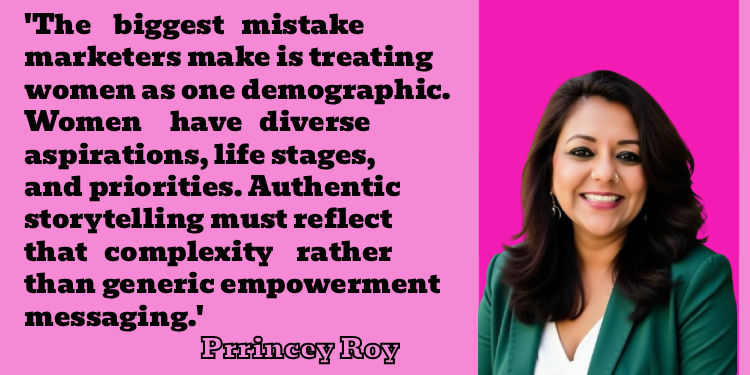
The biggest mistake, and it’s still astonishingly common, is treating women as a single demographic category.
“Women 25–45” is not a target audience. It’s a demographic bracket with distinct aspirations, life stages, priorities, and relationships with money, beauty, health, and career.
When marketers flatten all of that complexity into a generic empowerment campaign, audiences recognise it instantly. Women in particular have a very strong radar for when messaging feels patronising or performative.
The second mistake is confusing reach with connection. Getting an ad in front of a woman is not the same thing as earning her attention. Women are extremely discerning media consumers; they multi-screen, they research, and they share feedback quickly.
A campaign that reaches ten million people but feels inauthentic will do far less for a brand than one that reaches a smaller audience and genuinely resonates.
 Q. What tactics work for capturing women’s attention in a cluttered digital environment?
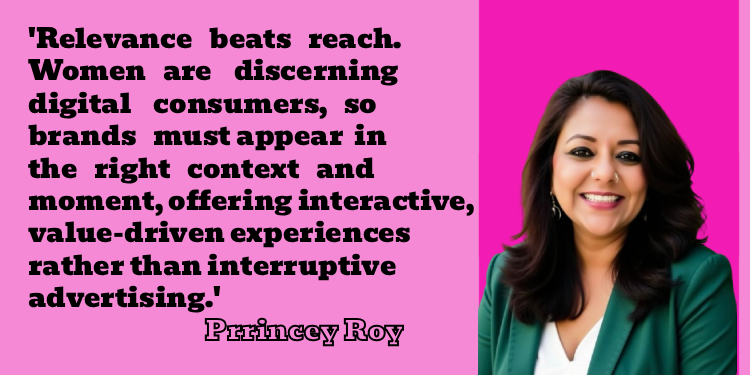
Relevance over reach always. The brands that truly cut through are the ones that understand what is actually happening in a woman’s life at that moment, not what marketers imagine is happening.
Context matters enormously. Are you appearing in the right environment? At the right moment? When is the audience open to hearing from you? Beyond context, formats that consistently perform well are those that offer something in exchange for attention.
Interactive formats allow women to explore information on their own terms rather than passively consuming a message. Web Stories and shoppable experiences through Newsroom AI perform strongly because they respect a woman’s time while delivering genuine value.
At the core, the principle is simple: treat her as the protagonist of the experience, not the target of the advertisement.
Q. What role will hyper-personalisation play in building brand loyalty among women in categories like beauty?
Hyper-personalisation in beauty is no longer optional; it’s the expectation.
But true personalisation goes far beyond adding someone’s name to an email. It means understanding context. A woman’s skin type, climate, lifestyle, health stage, and the specific problems she is trying to solve.
When a brand understands that someone has combination skin, lives in a humid city, is researching fragrance-free products, and has been comparing ingredients for weeks and then serves the exact right recommendation, that creates trust. In beauty, where purchasing decisions are deeply personal and often tied to identity and self-confidence, that trust builds extremely strong loyalty.
Through AIgnite, we can generate thousands of personalised creative variations from a single campaign asset, allowing brands to deliver that level of relevance at scale without dramatically increasing creative production costs.
Q. How does AIgnite help change the tone of a campaign in the moment to appeal better to women?
AIgnite was built on a simple insight: the same product can mean different things to the same person at different moments.
A skincare product might feel like self-care on a Sunday morning, a confidence boost before an important meeting, or a small indulgence after a difficult day. A single static creative cannot reflect all those emotional contexts, but adaptive AI can.
AIgnite uses agentic AI systems to generate thousands of tonal and contextual variations of a campaign, adjusting copy, visuals and messaging dynamically based on signals like time of day, content environment and audience behaviour.
For women-centric campaigns, this allows brands to shift tone from aspirational to practical to nurturing to bold in real time.
In our pilot campaigns, this approach has delivered click-through rates above 5%, nearly ten times the open-web average. The improvement doesn’t come from better targeting alone; it comes from the message actually fitting the moment.
Q. What role will data analytics play in ensuring that digital ads by women-centric brands appear in the right context and moment?
Data analytics is foundational to this, but the way it’s used matters. At Huella, we focus on contextual intelligence rather than invasive behavioural tracking. Instead of following individuals around the internet, we analyse the environments they are in, and the intent signals those environments provide.
When a woman is reading a detailed skincare ingredient review on a premium wellness platform late in the evening, she is likely in a research mindset. When she browses deal platforms mid-afternoon, she is in a transactional mindset.
Our network of curated publishers across finance, technology, lifestyle and premium content gives us strong signals about high-intent audiences without relying on third-party cookies.
Data tells us the moment. AIgnite ensures the creative matches it.
 Q. Are women increasingly using LLMs for product discovery online? If so, what opportunities does this offer brands and Huella Services?
Yes, and it’s a behavioural shift that is already reshaping how discovery happens online.
Women have traditionally been very research-driven consumers, especially in categories such as beauty, wellness, and lifestyle. Large language models simply make that research more intuitive. Instead of scrolling through multiple pages of search results, people can now ask detailed questions and receive contextual recommendations. It feels closer to asking a trusted expert than performing a keyword search.
For brands, this changes the way visibility works. Traditional SEO and display advertising don’t automatically translate into presence inside AI-generated answers. Brands now need credible, structured, information-rich content that AI systems can reference confidently when responding to user queries.
This is where platforms like Newsroom AI become relevant. The kind of editorial-style storytelling and product intelligence we help brands create, ingredient explainers, comparison guides, and contextual narratives, is exactly the type of structured content that performs well in AI-driven discovery environments.
At the same time, AI is also changing how campaigns themselves are built. Through AIgnite, we can generate multiple contextual variations of creative assets so that the messaging adapts to different audience mindsets and moments of discovery.
So the opportunity is twofold: helping brands be discoverable in AI-led environments and helping them deliver intelligent, adaptive messaging once that discovery happens. The brands that understand this shift early will have a significant advantage over the next few years.