The traditional marketing funnel in travel is officially dead. Today’s traveller moves from inspiration to booking in a single, non-linear loop—driven by AI, creator ecosystems, and a massive surge in demand from India’s Tier-2 and Tier-3 cities.
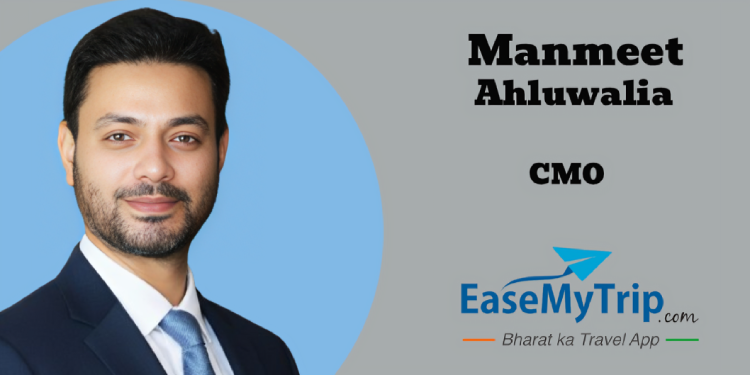
In this context Medianews4u.com caught up with Manmeet Ahluwalia CMO EaseMyTrip.
As an Expedia veteran who recently joined EMT to lead their global marketing and brand strategy he offers a unique vantage point on the “New Geography” of Indian travel and the shifting economics of digital commerce.
EaseMyTrip says that it is one of the few profitable, homegrown unicorns in the space.
Q. How is EaseMyTrip fine-tuning its global marketing and brand strategy in 2026?
In 2026, our focus is on strengthening EaseMyTrip’s positioning as a trusted, technology-led global travel platform originating from India. Our marketing strategy is built around three core pillars: trust, personalization, and experience-led travel.
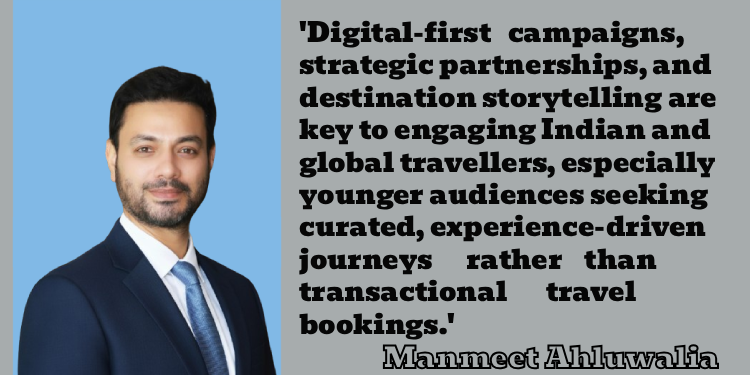
We are increasingly leveraging data insights to understand evolving traveller behaviour and deliver more personalised travel recommendations. At the same time, we are expanding brand visibility through strategic partnerships, destination-led storytelling, and digital-first campaigns that resonate with both Indian and international travellers.
Equally important is our commitment to traveller support. For instance, amid the ongoing tensions in West Asia, EaseMyTrip has announced plans to operate charter flights from Doha and Bahrain to Delhi and Mumbai to assist travellers proactively. Initiatives like these reinforce our belief that building trust is just as important as driving brand visibility.
 Q. From a marketing perspective, what tactics are being adopted to ease the concerns of travelers planning vacations in the wake of geopolitical tensions?
Traveller confidence is critical during uncertain times. Our approach focuses on transparent communication, flexible booking options, and real-time travel updates so travellers can make informed decisions.
From a marketing perspective, we are also highlighting alternate destinations such as Singapore, Thailand, Bali, Vietnam, Japan, etc. and encouraging flexible travel planning so that vacation plans are not disrupted.
At the same time, we remain committed to supporting travellers on the ground. Our recent announcements of operating charter flights and providing structured travel options to travellers amid the ongoing West Asia tensions, reinforces our commitment towards traveller safety.
Q. Could these tensions impact marketing activities planned ahead of the crucial summer season?
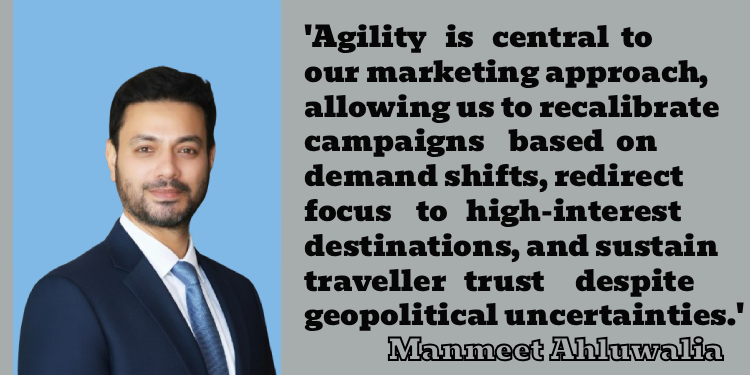
Geopolitical developments can influence traveller sentiment in the short term, but the travel industry has historically demonstrated strong resilience. Our marketing strategy remains agile, allowing us to recalibrate campaigns based on real-time demand trends.
If certain destinations witness temporary demand fluctuations, we quickly shift focus to destinations where interest remains strong. At the same time, our priority remains maintaining traveller trust through proactive communication and support during uncertain situations.
Q. Travel is a “high-stakes” category where a single failure can damage brand equity. Do Dubai, Israel, and the Middle East risk this danger?
Travel decisions are strongly influenced by perceptions of safety and stability. However, destinations such as Dubai and several parts of the Middle East have built strong reputations through world-class infrastructure, connectivity, and visitor experiences.
While geopolitical developments may temporarily affect traveller sentiment, established destinations typically recover quickly once stability returns. For travel platforms like EaseMyTrip, the focus remains on providing accurate information, flexible travel options, and dependable customer support to help travellers plan with confidence.
Q. What marketing activities are being planned by EaseMyTrip in the coming months, and which are the key target markets?
In the coming months, EaseMyTrip will focus on digital-first marketing, including sales campaigns, topical campaigns, and seasonal initiatives like summer promotions, along with strategic partnerships and destination-led storytelling to drive engagement and bookings.
Our key target markets are Indian outbound travellers, domestic leisure travellers, and younger, experience-driven audiences seeking curated and memorable travel experiences.
 Q. Will joint marketing efforts be needed alongside tourism boards and hotels to ensure tourism in the Middle East and Israel is not adversely affected?
Collaboration across the travel ecosystem becomes especially important during periods of uncertainty. Travel platforms, tourism boards, airlines, and hospitality partners can work together to communicate accurate information and rebuild traveller confidence.
Joint campaigns that highlight safety, accessibility, and unique travel experiences can play a key role in ensuring that destinations regain momentum once the situation stabilises.
Q. Gen Z prioritizes authenticity. Is this forcing travel players to rethink their marketing playbook?
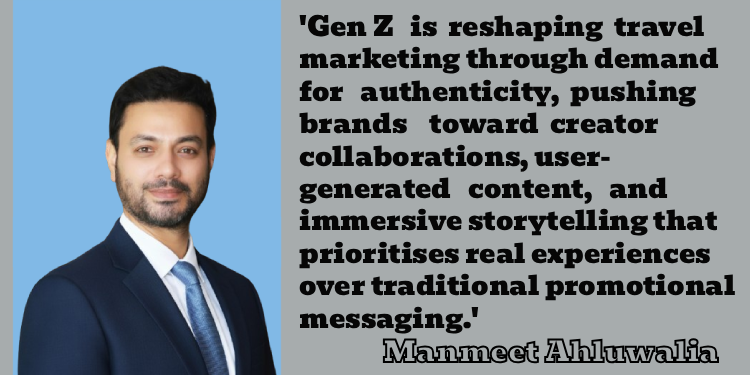
Absolutely. Gen Z travellers value authenticity, real experiences, and transparent storytelling over traditional advertising.
This shift is encouraging travel brands to adopt content-led marketing strategies, including creator collaborations, user-generated content, and immersive storytelling. For platforms like EaseMyTrip, the focus is increasingly on enabling meaningful travel experiences and building communities around travel, rather than simply promoting destinations.
 Q. EaseMyTrip has tied up with IIFA and sports events in the past. Does a sizeable chunk of business come from movie and sports-related tourism?
Entertainment and sports tourism are fast-growing segments within the travel industry. Major events such as film awards, concerts, and sporting tournaments often generate significant travel demand.
Through partnerships with platforms like the IIFA and sports marquee events such as the Big Cricket League, World Tennis League, Pro Kabaddi League, EaseMyTrip has been able to create curated travel experiences for fans.
While this segment may not constitute the majority of overall travel demand, it is an important and rapidly expanding category that helps engage younger, experience-driven travellers.