Ask anyone in a media agency what trusted television IPs look like in the South, and a few names come up every single time. Bigg Boss is one of them — not because it’s new or flashy, but because it has been around long enough to stop being a risk.
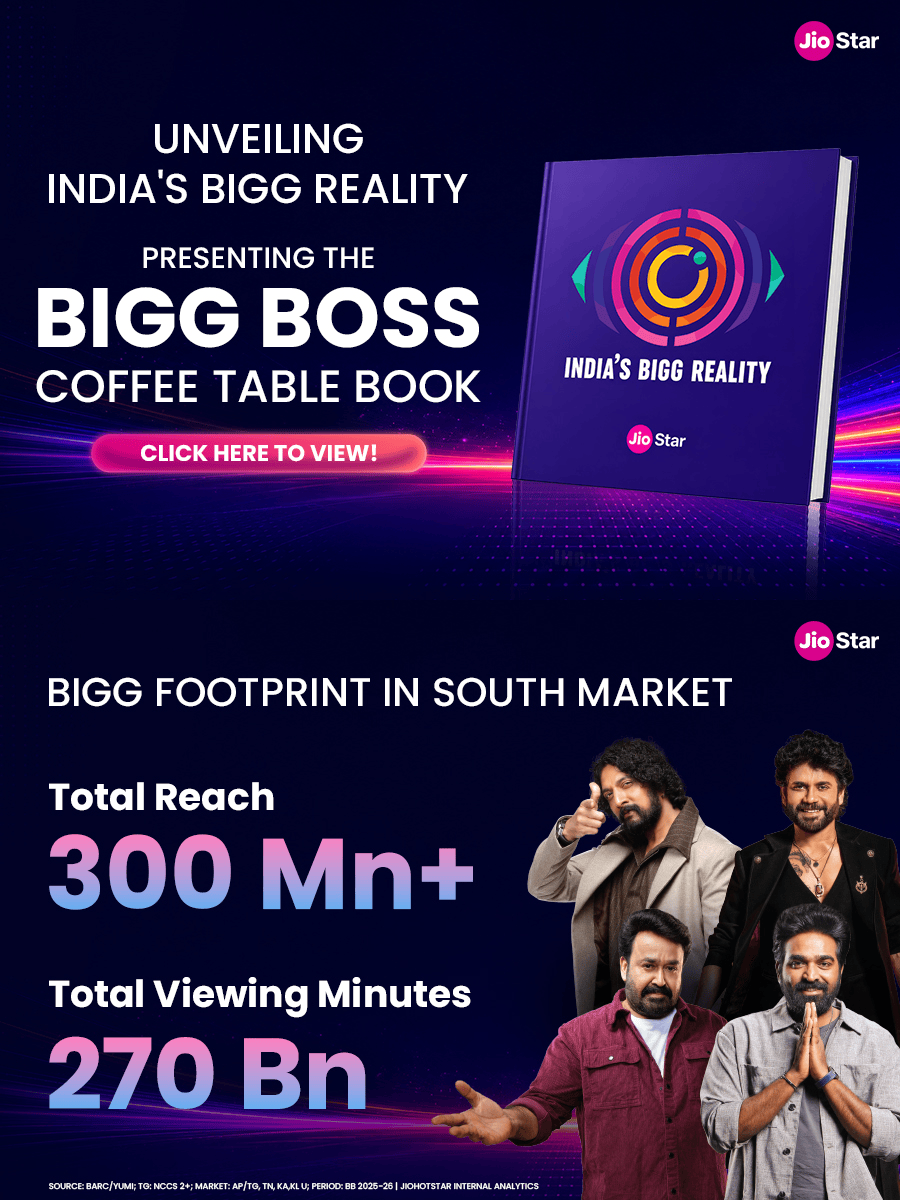
It helps to see why that reputation holds up. Bigg Boss’ southern footprint now runs past 300 million viewers and 270 billion viewing minutes, and eight in ten TV viewers across the South are immersed into it — a reach no other show in the region gets close to. On JioHotstar, it draws 3.5 times the audience of every other reality show in the South combined. Numbers like that explain why media planners stopped debating whether to be on Bigg Boss a while ago, and started debating how much of it to buy. (Source: BARC data, via JioHotstar analytics)
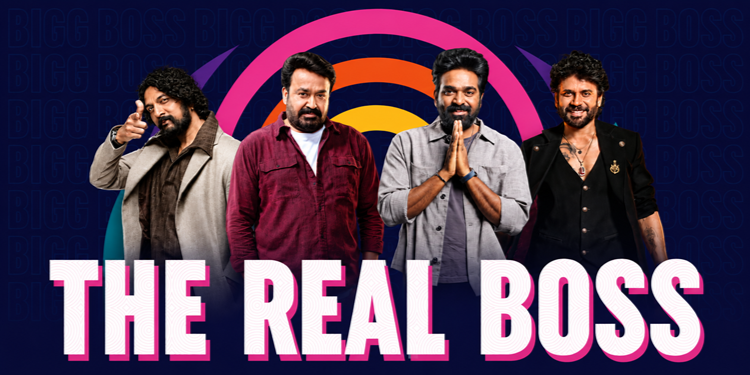
Bigg Boss Tamil and Bigg Boss Telugu are both heading into their 10th seasons. Malayalam is heading for its 8th season. Kannada, the longest running of the four, is entering its 13th and this festive season, the scale gets a lot bigger: JioStar is set to launch six editions of Bigg Boss across Hindi, Tamil, Telugu, Kannada, Malayalam and Bangla, marking the biggest-ever multilingual rollout of India’s most iconic reality entertainment franchise.
Four regional shows have today effectively become six parallel shows (including Hindi & Bangla), each with its own audience, its own advertiser base and its own personality — and yet a recognisable core of brands treats them as a single, near non-negotiable annual buy.
So why does the same set of brands keep showing up, year after year?
Talk to the agencies running these accounts and the reason becomes obvious. “Bigg Boss offers extensive opportunities for in-show brand integrations, task sponsorships and product placements within the house,” says Maheshwara Rao, Managing Director and Founder of V.V. Ambigai, an agency that has run Bigg Boss accounts across multiple languages and many seasons. “These innovations let brands engage audiences in a more immersive and memorable manner, strengthening both awareness and consumer connect.”
That’s the pitch in one line: it isn’t a spot, it’s a storyline. A brand isn’t buying thirty seconds between segments — it is buying a place inside a task, a conversation contestants have on camera, a product viewers watch get used for weeks rather than glimpsed once.
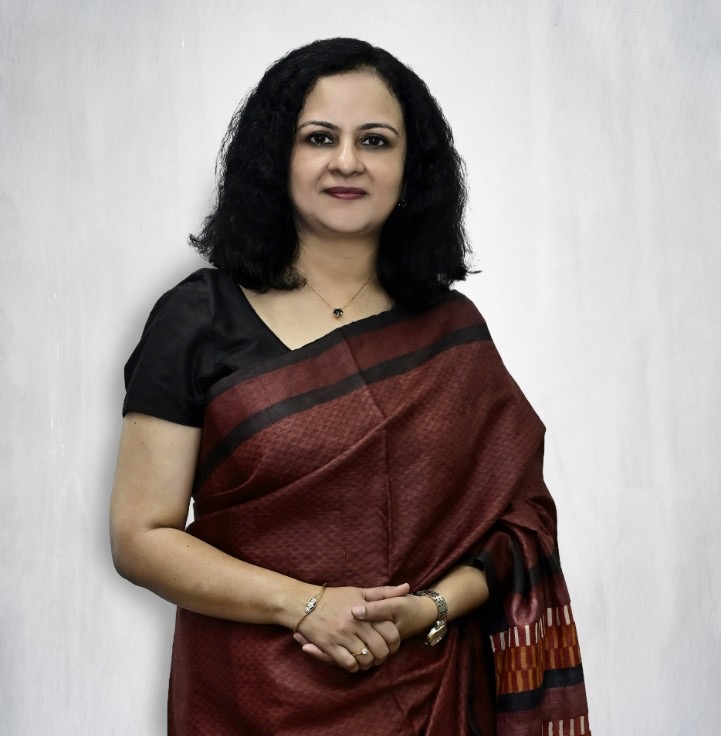
According to Shalini Sinha, Group Head – UU, CRE & Synthesio, Ipsos India, “Bigg Boss South continues to attract brands because it has evolved beyond a television show into a participatory cultural event. Its strength lies in keeping audiences engaged through community, regional relevance and daily involvement. For brands, the greatest impact comes when they become part of that experience, not just its advertising.”
The numbers behind the pattern
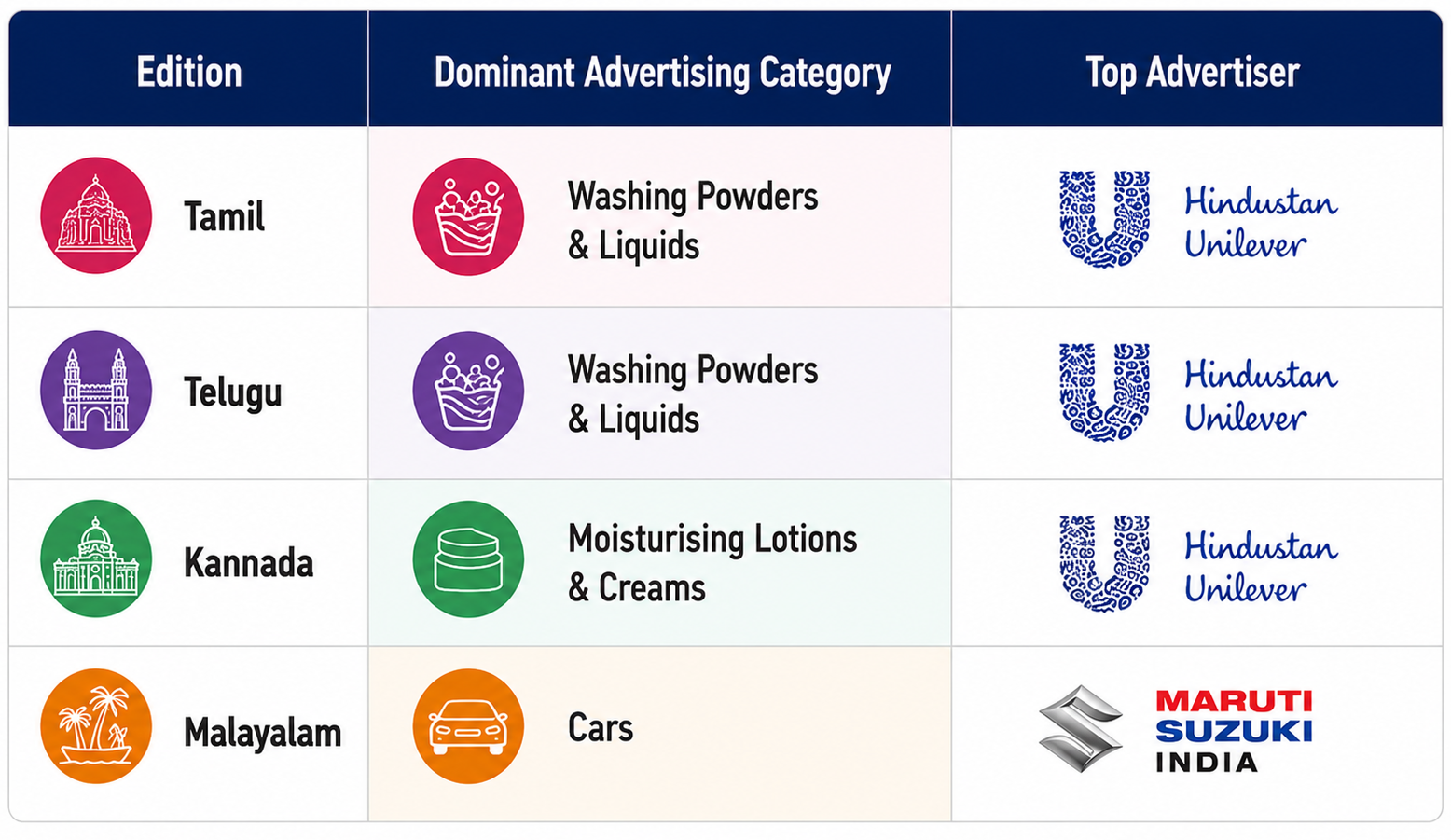
TAM AdEx data from the most recently completed seasons reveals an interesting pattern. While category leaders differed across markets, large national advertisers consistently treated Bigg Boss as a scalable, multi-market platform rather than four independent regional properties. Hindustan Unilever (HUL) emerged as the leading advertiser in three of the four southern editions, while Maruti Suzuki led in Malayalam in terms of ad volumes, highlighting how marquee brands tailor their investments to regional audience dynamics without losing national scale.
Cross-market consistency
Hindustan Unilever, Asian Paints and Maruti Suzuki India are the true cross-market advertisers. Hindustan Unilever had taken the top position in three of the four Bigg Boss South language markets last season. Asian Paints and Maruti Suzuki India feature in the top-five advertiser lists in three of the four markets. The pattern points to a clear shift: brands are thinking South India-wide, rather than market by market.
Malayalam stands apart from the other three markets. Its top four advertisers — Maruti Suzuki, Berger Paints, myG India, and Jyothy Laboratories — have little overlap with the other editions, with stronger representation from categories such as cars, paints and electronics. While national advertisers have made a clear choice with their strategy on Bigg Boss, the same holds true for regional brands. Strong local players feature prominently across all four editions, often competing alongside national advertisers. Brands such as Dazller, with a multi-state South Indian presence, have invested across multiple Bigg Boss editions on both television and digital.
It reflects a broader shift: as regional businesses expand across southern markets, Bigg Boss has become a natural platform to build scale without sacrificing local relevance. It is a clear sign that Bigg Boss has become less a state-by-state buy and more a default line item for a specific set of large, repeat advertisers.
This is where the regional logic kicks in, and Ramesh Lungies is a clean example of it in action. The premium cotton lungi maker has just signed on as an official sponsor of Bigg Boss Kannada’s upcoming season, alongside naming Kannada actor Vijay Raghavendra and actress Sharanya Shetty as brand ambassadors — a Karnataka-specific play, timed to a product launch in the state, running on television only this season.
“Our sponsorship of Bigg Boss Kannada is another important step in our journey to bring Ramesh Lungies closer to millions of viewers,” said B.V. Subba Rao, Founder of Ramesh Lungies. “Along with our successful association with Bigg Boss Telugu over the last two consecutive seasons, we are excited to further strengthen our presence across South India.”
That last line is the tell: the brand is not choosing between Telugu and Kannada. It’s building a footprint across both, sequentially, using each language edition as its own entry point rather than running one blanket campaign.
The advertiser story is just as compelling. Year after year, both the advertiser categories and, increasingly, the same leading brands within those categories continue to return. That shows not only consistency, but it is also a strong signal of the brand confidence, trust and equity built by Bigg Boss over time. Advertisers are no longer experimenting with the property; they have already validated its effectiveness. Effectively, the conversation today is not whether to invest in Bigg Boss, but how much more to invest as the franchise continues to grow in scale and reach.
There is a reason media planners talk about Bigg Boss the way they talk about a festival season or a sporting calendar — not as an opportunity to evaluate, but as a fixture to plan around. What is less understood is how that planning actually happens season to season, and that is a conversation worth continuing.
As B.V. Subba Rao, Founder of Ramesh Lungies, put it: “These initiatives will help us connect with our beloved customers in a bigger and more meaningful way while reinforcing our commitment to quality, trust and tradition.”
For advertisers, the strength lies not just in scale but in measurable brand impact. ‘India’s Bigg Reality’ coffee table book by JioStar seconds this. It reports an average uplift for brands that associated with South Bigg Boss with 1.5x higher awareness, 1.3x growth in consideration and 1.3x uplift in purchase intent across featured partnerships, is a dream metric any advertiser would refuse. This reinforces Bigg Boss South’s ability to move brands from visibility into meaningful consumer engagement, while its 100+ day presence creates sustained recall and relevance.