Healthy Master, a snacking brand, recently announced the appointment of Indian fast bowler and rising cricket talent Harshit Rana as its brand ambassador. This collaboration underscores the brand’s commitment to promoting mindful snacking through everyday, practical choices—both on and off the field. Harshit Rana, known for his raw pace, dedication, and disciplined approach to fitness, embodies Healthy Master’s core philosophy that true health stems from consistent, daily decisions.
As part of the collaboration, Healthy Master is rolling out a digital and social campaign titled ‘Match Buddy’, positioning the brand as a dependable companion for cricket fans during match moments. With the ongoing cricket season, millions of fans are glued to their screens, reaching for snacks during every boundary, wicket, and strategic timeout. The campaign’s core message, #MakeASwitch, aligns with Healthy Master’s brand philosophy: “It is difficult to quit, but easier to switch.” It encourages fans to move away from unhealthy, processed snacks and opt for Healthy Master’s clean-label alternatives, making every match moment both exciting and nourishing.
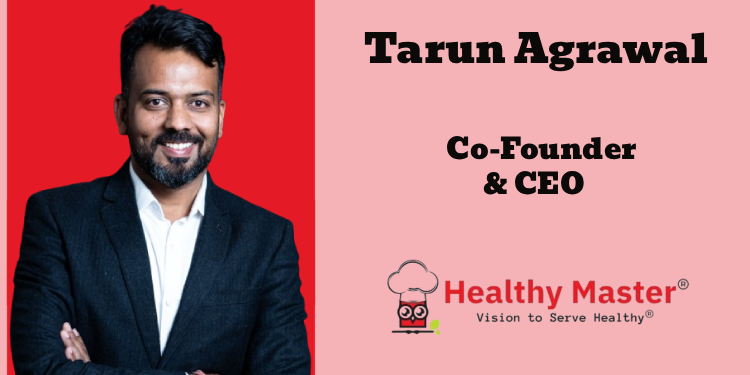
Medianews4u.com caught up with Tarun Agrawal Co-Founder, CEO Healthy Master
- What was the gap in the snacking category that led to the launch of Healthy Master? So far what progress has been made?
The snacking aisle has never lacked options—but for years, it lacked the right ones. While tasty choices were abundant, truly clean, nutrition-forward snacks that parents could confidently give their children for everyday consumption were few and far between. That gap is what Healthy Master set out to fill.
Today, we have expanded to a portfolio of over 250 products, scaled operations through multiple manufacturing partners, and established a strong presence across quick commerce platforms pan-India. The company turned profitable in FY25. Our revenue for FY24–25 stood at ₹9.23 crore, and we are now fulfilling approximately 75,000 orders every month.
- Are Gen Z and Gen Alpha reshaping preferences in the snacking category by demanding nutrition as opposed to products that just taste good but offer no nutrition value?
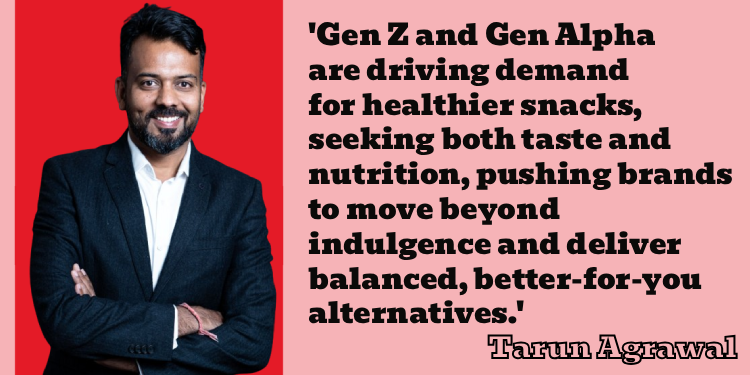
Absolutely, and it’s one of the most interesting shifts we are watching. Gen Z is becoming increasingly label-aware; they’re reading ingredients, questioning additives, and actively seeking healthier swaps rather than just going by taste.
At the same time, kids are still consuming large amounts of packaged snacks, which is creating a real demand for “better-for-you” options that work for both the child and the parent. It’s no longer a trade-off between health and taste as today’s consumer wants both, and brands that can deliver on that equation are the ones winning.
- The company expects revenue to rise to ₹75 crore by FY27-28. What is the gameplan to get there?
The roadmap has a few clear pillars. Quick commerce will be our most aggressive growth engine; scaling across platforms and expanding into more cities. Alongside that, we are focussed on expanding our assortment with new launches, strengthening our distribution network, and adding offline touchpoints that complement our digital-first presence.
Selective brand building will also play a role, ensuring we are building equity and not just transactions. And International presence and exports are on the horizon too as there’s a meaningful market for trusted Indian healthy snacking brands globally, and we intend to tap into that.
- Healthy Master has been recording around 75,000 orders a month. According to predictive analytics, where is the whitespace for growth?
Healthy Master sees significant whitespace for growth across three strategic levers. First, Tier-2 and Tier-3 markets present a strong opportunity as quick commerce adoption accelerates beyond metros, opening access to new, high-intent consumers. Second, we aim to drive higher repeat rates and basket sizes through intelligent bundling, snack-occasion packs, and cross-selling across our wide portfolio.
Third, family and kids’ consumption moments—such as tiffin, after-school snacking, and match-time—remain underpenetrated. In these high-frequency occasions, our “healthy + tasty” proposition resonates strongly, positioning Healthy Master to deepen household relevance and unlock sustained, scalable growth.
- How does Harshit Rana as brand ambassador embody Healthy Master’s core philosophy that true health stems from consistent, daily decisions?
Harshit is a natural fit for what we stand for. As a cricketer, his entire career is built on consistency, discipline, and daily performance habits; not just one great game, but showing up and making the right choices every single day.
That mirrors exactly what Healthy Master believes about health; it’s not a weekend decision or a resolution, it’s an everyday one. When he speaks about making better choices, it doesn’t feel like an endorsement. It feels authentic.
- Could you talk about the brainstorming with the creative agency that led to the digital and social campaign ‘Match Buddy’? Will it run over the T20 World Cup and the IPL?
The idea was simple but powerful as match-watching is one of the biggest snacking moments in India, and yet most of what people reach for during those hours is the same old unhealthy snacking options. The campaign was built around flipping that habit with the message of #MakeASwitch.
It is designed to be digital-first and ride the enormous attention that cricket season generates, making it the perfect window to reach consumers when they are already in a snacking mindset. Yes, the campaign is timed to run through the cricket season, spanning both IPL and T20 World Cup; the timing couldn’t be more intentional.
- Given the huge clutter of online content, what tactics will be adopted to ensure that short-format videos and social content holds consumers’ attention?
The first two seconds are everything; if you don’t hook someone immediately, you have lost them. Our content strategy is built around conflict-first scripts, for instance, positioning chips against a smarter swap right at the top, before the viewer even thinks to scroll.
Beyond that, we’re leaning heavily into creator and UGC content because it travels further and feels more real. Every piece of content is edited to be platform-native, and we are integrating shoppable links timed to peak snacking moments so the path from interest to purchase is as short as possible.
- Besides cricket, what other sports is Healthy Master looking at getting involved with?
Cricket is the obvious starting point in India, but our ambition goes broader. We’re looking at running and marathon communities, yoga and wellness events, and sports like badminton, football, and kabaddi; particularly for reaching youth audiences and tier-2 markets.
The approach here will be a mix of on-ground sampling and creator partnerships, because in these spaces, trial and peer influence go a long way in building habit.
- On social media platforms like Meta and YouTube, what is the strategy to hit consumers at the times of day when they are most receptive to messaging? Do noon and 4 pm timeslots work best?
They do. Noon and 4 pm are natural snack decision windows as people are taking breaks, feeling that mid-day or post-lunch hunger, and often reaching for something to eat. Those are the moments we want to be present in their feed.
During the cricket season, we layer on top of that with evening bursts timed to match schedules, when snacking intent is at its highest. It’s about being contextually present, not just algorithmically present.
- Will traditional media like TV and print have a role to play in 2026, or will marketing be predominantly led by digital?
Digital will lead as it’s measurable, conversion-oriented, and allows us to be precise about who we are reaching and when. That said, traditional media isn’t irrelevant for us. In select regions and at key moments,
TV and print can play a valuable credibility and reach role, particularly as we expand into newer markets where digital penetration is still growing. It’s less about either/or and more about knowing when each medium earns its place.
- What form and shape will experiential marketing take in 2026 through a presence in shopping malls, multiplexes, etc?
We are planning sampling-led ‘smart snacking’ counters in malls and multiplexes, basically spaces where people are already in a leisure and snacking mindset, making it the perfect environment to drive trial. We are also looking at commuter touchpoints like metro stations, where we can build daily habits through repeated, low-friction exposure. The goal with all of this is trial first because we know that once someone tries our products, the product speaks for itself.
- Q-commerce accounts for around 50% of Healthy Master’s sales. But they can no longer use the 10-minute promise. Will these platforms have to rework how they are positioned in the consumer’s mind space?
The 10-minute promise was always more of a hook than a habit-driver. As platforms move past that, the ones that will win are those that stand for reliability, strong assortment, and genuine value and that’s actually a better conversation for brands like ours to be part of.
We don’t need to be positioned as an impulse buy that arrives in 10 minutes. We want to be the trusted healthy choice that people actively seek out and that arrives fast enough. That’s a more sustainable and meaningful position for both the platform and the brand.
- What role does packaging play in driving repeat orders? How does AI help in this regard?
Our packaging is designed to communicate clearly — benefits, ingredients, trust cues — all at a glance. On the AI side, we’re using it to test which pack designs and messaging combinations actually lift click-through and repeat rates, rather than relying on gut feel.
AI also helps us mine customer reviews at scale to understand what’s resonating and what needs refining, which feeds directly back into how we evolve our packaging and product claims.