Century Real Estate is a South Indian Real Estate brand. Over the past few months, it has been experimenting with a far more creative marketing playbook for the category, moving beyond conventional, feature-led property communication to storytelling that sparks curiosity and conversation.
Most recently, the company launched a campaign for its upcoming child-centric development in Yelahanka, built on a simple but powerful insight: a child’s potential is often shaped by the environment they grow up in.
Alongside this, Century has been rolling out a series of distinctive campaigns, such as the curiosity led ‘Peek a Wow’ teaser and the minimalist #MadeToBeMore campaign for Century Business Districts, each using unconventional storytelling and striking outdoor formats to capture attention and build intrigue. The brand has also stepped into culture-led engagement through its partnership with Bengaluru FC as Principal Sponsor, bringing Century into stadium experiences and fan-led activations, and expanding how a real estate brand shows up in the city’s cultural spaces.
Medianews4u.com caught up with Vikas Nair, VP, Head Marketing and Communications, Century Real Estate, who shares insights into the company’s upcoming marketing campaigns, creative experiments, and broader brand-building plans.
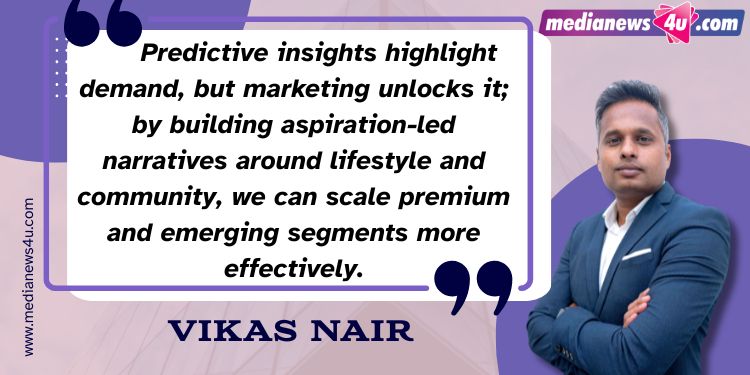
Q. According to predictive analytics, where is the whitespace for growth in 2026 for Century Real Estate?
Bangalore continues to see strong demand fundamentals, driven by talent inflow and global corporations. Within this, three clear growth white spaces are emerging:
● Premium & Luxury Housing:
The market is rapidly premiumising, with strong demand from HNIs, business owners, and senior executives. The opportunity lies in experience-led, differentiated luxury offerings, not just higher ticket sizes.
● Upgrader Segment:
A large base of existing homeowners is moving into better, larger homes within gated communities. This aspirational premium segment is one of the most scalable growth drivers.
● Senior Living:
With changing demographics and increasing life expectancy, there is a growing demand for independent, community-driven senior living, making it a strong emerging category
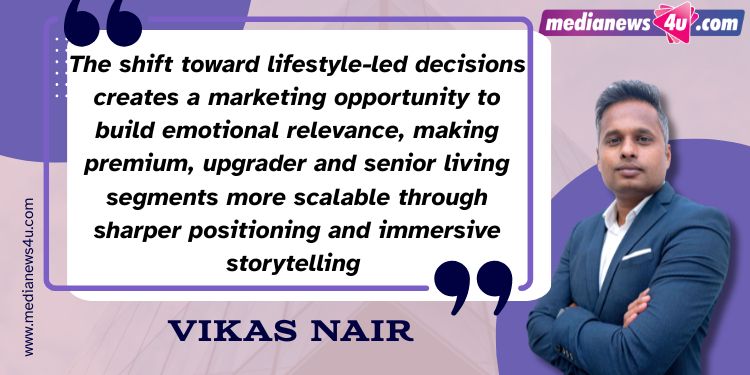
Overall, the shift is from just buying homes to choosing lifestyle-led living formats, and that’s where the real opportunity lies.
Q. Century Real Estate has been experimenting with a far more creative marketing playbook for the category, moving beyond conventional, feature-led property communication to storytelling that sparks curiosity and conversation. What does this strategy look like in 2026?
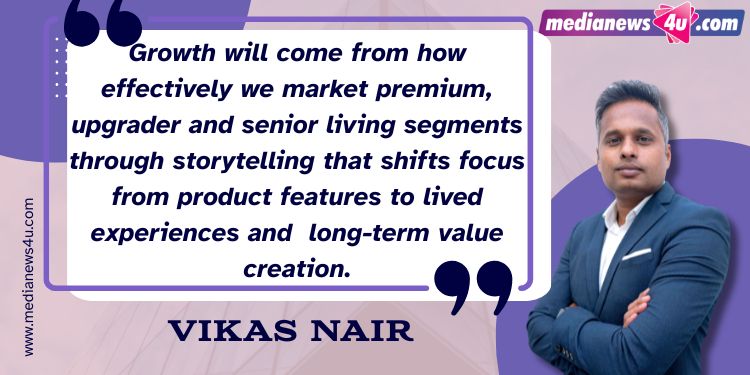
In a crowded real estate market, feature-led communication is no longer enough. Our approach is firmly consumer insight-led, where we aim to spark imagination and build emotional connection before introducing the product.
This helps create aspiration, leading to stronger sales conversations and better conversions.
In 2026, this strategy deepens further on two fronts:
● Creative storytelling:
We will continue to push the envelope with more immersive formats and culturally rooted narratives that make our projects stand out.
● Masterbrand building:
The focus is on shaping a distinct point of view for Century, positioning it beyond physical developments as a brand associated with long-term value creation and quality of life.
This will be supported by intelligence-led engagement, adapting communication to where the customer is in their journey.
Q. Could you talk about the brainstorming with the creative agency that led to the campaign for your upcoming child-centric development in Yelahanka? What are the various legs of the campaign?
The campaign stemmed from a powerful insight: talent is meaningless without access. A child’s potential is shaped not just by ambition, but by the environment they grow up in.
We wanted to shift the category conversation from square footage to life outcomes, highlighting how homes can enable or limit a child’s growth.
The campaign was built in two key legs:
● Teaser Phase (Insight-led storytelling):
We used sharp visual contrasts- showcasing children on the brink of greatness, before cutting to everyday home environments that quietly restrict their potential. This reframed the role of a home as either an enabler or a constraint.
● Reveal Phase (Product as solution):
The next phase introduces our development as the answer- demonstrating how a thoughtfully designed environment can actively nurture talent and aspiration.
Overall, the idea was to provoke thought first, and then position the product as a meaningful solution.
Q. What other marketing campaigns and innovations can one expect in the coming months?
We have a strong pipeline of initiatives across brand, product, and experience.
● Corporate Narrative:
We’re developing a differentiated brand narrative that clearly brings our brand purpose to life beyond projects.
● Commercial Portfolio Launch:
With our upcoming landmark development on Airport Road, we’ve taken a curiosity-led approach, using suggestion over specification to spark imagination and deeper engagement.
● New Segments (Senior Living):
As we enter senior living, our focus is to position it as an aspirational lifestyle offering, not a care-led category.
● Immersive Storytelling:
We’re scaling the use of CGI, AR/VR, interactive experiences, and phygital installations to help customers better visualise life within our developments.
● Content & Culture:
We’re strengthening our content ecosystems, creator collaborations, and cultural associations like Bengaluru FC to stay relevant beyond transactions.
Overall, the intent is to connect with consumers not just through projects, but through shared experiences and emotional relevance.
Q. Will digital lead the media mix and will marketing spends grow substantially? Kindly elaborate.
Digital will continue to be a key driver for discovery and performance, but our approach remains firmly omnichannel.
We see the customer journey moving from online discovery to on-ground validation, so it’s critical to have a strong presence across digital, traditional, and experiential touchpoints.
● Digital drives targeting, engagement, and conversions
● Print and OOH build trust, legitimacy, and top-of-mind recall, especially important in a high-value category like real estate
In terms of spends, a significant share will go into digital and ATL, with ATL driving brand storytelling and digital delivering performance.
Beyond media, we are also investing in content creation, brand collaborations, and marquee sponsorships to strengthen cultural relevance.
Overall, the focus is not on one medium over another, but on sequencing them intelligently across the consumer journey.
Q. What role will hyper personalisation play in driving conversions?
Hyper-personalisation is central to driving conversions in real estate, given the long and complex decision journey.
Over the past year, we’ve built a unified MarTech ecosystem that integrates AI-driven workflows, automated nurture journeys, and intelligent engagement tools. This allows us to map the customer journey in detail and deliver context-relevant communication at scale.
We’re also leveraging predictive workflows to anticipate buyer intent and trigger the right message, at the right time, through the right channel.
For us, hyper-personalisation is not just about efficiency, it’s about enabling customers to move forward with greater clarity and confidence in their decision-making.
Q. Gen Z and Gen Alpha prioritise authenticity. As a result are real estate brands having to rethink tactics to target these TGs effectively?
Absolutely. Younger audiences today are more research-driven, design-conscious, and culturally attuned, and they expect authenticity and transparency over generic, feature-led communication.
This has led us to evolve our approach in two ways:
● Storytelling & Design:
Cleaner aesthetics, more grounded visual language, and narratives rooted in real, relatable contexts.
● Immersive Experiences:
Greater use of CGI, AR/VR, virtual walkthroughs, and phygital experiences that help consumers meaningfully visualise life within the project.
Importantly, our campaigns are increasingly rooted in Bengaluru’s cultural realities and aspirations, rather than generic category imagery.
This allows us to build stronger emotional resonance and credibility with younger audiences.
Q. Do luxury print magazines continue to play an important role for the category in getting the message across?
In a category where buyers commit significant long-term capital, credibility and reassurance are critical. Luxury print continues to play an important role in anchoring trust and reinforcing brand stature. Our approach integrates print with digital discovery and experiential engagement to create a seamless brand journey from awareness to validation.
Q. How will Century Real Estate use advances in AR, VR, MR to deepen storytelling online?
Immersive technologies are transforming how buyers evaluate homes. Through AR/VR walkthroughs, CGI-led visualisations and interactive scale models, we enable prospects to explore layouts, community spaces and lifestyle environments.
This moves communication from static information to experiential imagination, helping customers “experience their future” and building stronger aspiration and confidence in decision-making.
Q. What role will sports play through partnerships with Bengaluru FC in brand building? In 2026 how will these activities expand how a real estate brand shows up in the city’s cultural spaces?
We are a true-blue Bangalore brand, and have in many ways shaped the evolution of Bangalore from a pensioner’s paradise in the 70s to a global tech hub today
For over five decades, our journey has been deeply intertwined with the spirit of Bangalore – bold, resilient and ever-forward
Partnership with BFC is more than a sponsorship; BFC is a club that mirrors the energy, passion & relentless drive that defines Bangalore
This partnership is a tribute to the city of Bangalore from a brand that has been rooting for bangalore since 1973
Q. How is AI being leveraged to create striking formats in mediums like outdoor to capture attention and build intrigue?
AI has significantly transformed our approach to creative storytelling. What earlier required large teams and months of production can now be executed in days at a fraction of the cost.
This agility allows us to experiment with bolder narratives and visually striking formats that capture attention and spark intrigue, especially in high-impact mediums like outdoor.
Our teams actively leverage platforms like Midjourney, OpenAI, Freepik, and Anthropic to create compelling campaigns.
We’ve already rolled out multiple campaigns produced entirely using AI, and this is just the beginning. The focus is on pushing creative boundaries and reimagining conventional norms in the category.
Q. Is too much focus on performance led marketing a big strategic challenge for marketers in the real estate category in 2026?
Performance marketing is an important engine for efficiency and scale, but in a category like real estate it cannot operate in isolation. Homebuying is a long-cycle, high-involvement decision, and brands need to build aspiration, trust and emotional relevance well before the final conversion moment.
Performance-led digital channels today contribute nearly 50 percent of our qualified leads and walk-ins and drive about 20–25 percent of topline revenue, making them a critical acquisition layer. At the same time, we have consciously moved beyond a narrow high-intent strategy to a broader top-of-funnel approach that allows us to engage audiences earlier and nurture them with more personalised, insight-led communication.
For marketers in this category, the real challenge is not choosing between brand and performance, but sequencing both intelligently. Performance delivers momentum, but long-term demand is built through credibility, cultural relevance and consistent storytelling. In real estate, trust still remains the most valuable lead.