New Delhi: In a move to strengthen institutional oversight of artificial intelligence, the Centre has constituted a high-level inter-ministerial body—the AI Governance and Economic Group (AIGEG)—to steer India’s AI strategy and harmonise policy across ministries, regulators and departments.
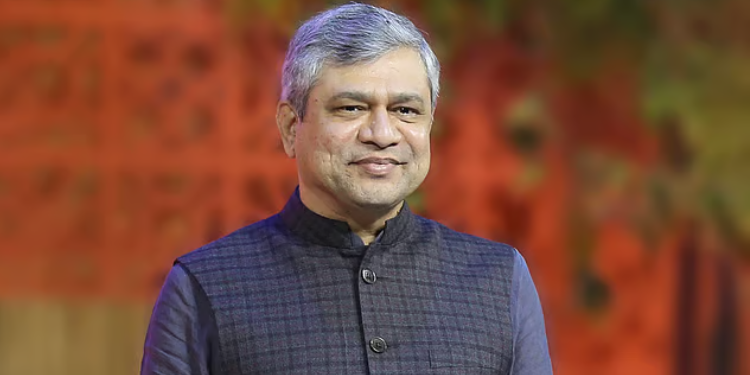
The newly formed group will be chaired by Union IT Minister Ashwini Vaishnaw, with Minister of State for Electronics and IT Jitin Prasada serving as vice chairperson. Positioned as the apex authority within India’s AI governance architecture, AIGEG is expected to drive coordinated decision-making on the development and deployment of AI technologies.
According to an official statement, the body will adopt a whole-of-government approach, bringing together senior leadership from domains such as science and technology, economic affairs, public policy and national security. Its mandate spans both strategic oversight and operational alignment of AI-related initiatives across the public and private sectors.
A core focus area for AIGEG will be the economic implications of AI adoption. The group has been tasked with evaluating potential disruptions in the labour market and designing mitigation strategies that account for India’s diverse workforce, including informal employment, regional disparities and varying levels of digital skills. It will also map job roles most vulnerable to automation and assess the balance between job displacement and augmentation.
To guide implementation, AIGEG will develop a long-term roadmap for AI deployment over the next decade in consultation with industry stakeholders. As part of a structured framework, it will categorise AI use cases into “deploy”, “pilot” and “defer” buckets, based on readiness indicators such as data availability, regulatory maturity, talent capacity and mechanisms to manage workforce transitions.
The group will be supported by a Technology and Policy Expert Committee (TPEC), which will provide advisory inputs on global AI trends, emerging technologies and evolving regulatory risks. This layer of expert consultation is expected to help the government stay aligned with international developments while tailoring policies to domestic priorities.
On the regulatory front, AIGEG will review existing frameworks and issue guidance to ensure compliance with Indian laws, while also identifying gaps that may require new legal or policy interventions. It will play a key role in promoting responsible innovation and ensuring that AI deployment remains aligned with broader economic and social objectives.
Additionally, the body will contribute to shaping India’s stance in global AI governance discussions, reflecting the country’s growing ambition to play a more active role in international rule-setting.
The government said the formation of AIGEG formalises recommendations outlined in India’s AI Governance Guidelines and the Economic Survey, both of which underscored the need for a centralised authority to coordinate AI policy and align it with long-term economic priorities and societal stability.
With AI increasingly influencing sectors ranging from manufacturing to services, the establishment of AIGEG signals a more structured and proactive approach by the government to balance innovation with risk management and inclusive growth.