MUMBAI: The biggest difference between agencies and in-house teams is culture. The relationship between brands and agencies should function like a strong partnership built on mutual value
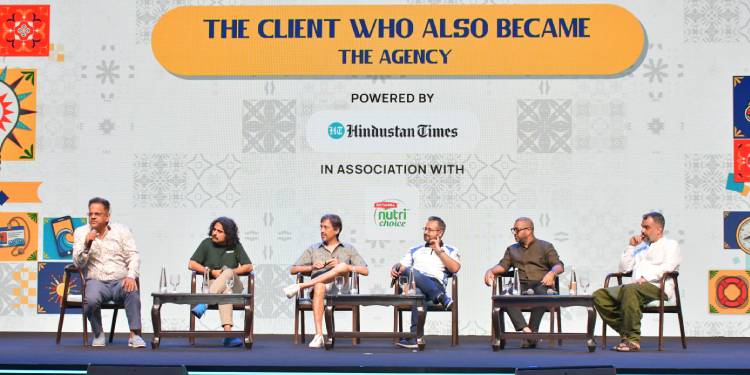
These were some of the points made during a session on the third day of Goafest 2026 titled ‘The Client Who Also Became the Agency’, powered by Hindustan Times. The panel featured Raj Kamble, Founder & CCO, Famous Innovations; Gaurav Ramdev, CMO – India & South Asia, Visa; Ajay Kakar, Head – Corporate Branding, Adani Group; Chandan Mendiratta, Chief Brand Officer, Zepto; and Harsh Deep Chhabra, Global Head – Media, Godrej Consumer Products Limited. The discussion was moderated by Rohit Ohri, Founder, Ohriginal. The session explored the rise of in-house creativity, the changing role of agencies, and how brands are increasingly seeking agile, collaborative, and culturally relevant creative solutions.
Raj Kamble, founder, CCO, Famous Innovations, enlightened on the role of culture and creative tension in driving better work between brands and agencies. He said, “The biggest difference between agencies and in-house teams is culture. Agencies bring outside perspective, debate, challenge and creative friction, while many brands build in-house teams for cost efficiency and tighter control. Creative excellence thrives when brands and agencies work as true partners, and strong agency culture encourages disagreement, experimentation, and bold thinking.”
Highlighting how modern marketing models are evolving towards agility, culture-led responsiveness, and hybrid operating structures, Gaurav Ramdev, CMO – India & South Asia, Visa, said, “In-housing is driven by the need for speed, agility, and cultural relevance, as modern brands must react to culture and consumer behaviour in real time. Long-term strategic campaigns and fast-moving daily content now coexist together, while consistency at scale remains critical alongside local adaptation and rapid trend response. The future operating model will be a hybrid between traditional agencies and agile in-house systems.”
Speaking on the evolving nature of brand-agency partnerships and the need for greater collaboration and relevance, Ajay Kakar, Head – Corporate Branding, Adani Group, said, “The relationship between brands and agencies should function like a strong partnership built on mutual value. Brands move work in-house when agencies fail to meet expectations around speed, relevance, or execution, while the industry must focus more on conversations and audience relevance than only impressions and reach. The future depends on transparent collaboration, evolving with new tools and technologies, and building complementary strengths.”
Chandan Mendiratta, Chief Brand Officer, Zepto, emphasised Zepto’s in-house marketing model as a driver of speed, cultural relevance, and consistency. He said, “Zepto’s in-house model is built for agility and real-time cultural relevance, where social media comments and consumer behaviour inspire campaigns within minutes. The brand operates like a content creator brand, celebrating multiple cultural moments and micro-occasions through highly frequent, trend-driven campaigns. Brand culture cannot be outsourced, and in-house teams help maintain consistency across design, PR, communication, and branding.”
Dwelling on how media scale, in-housing, and business alignment have reshaped marketing effectiveness, Harsh Deep Chhabra, Global Head – Media, Godrej Consumer Products Limited, said, “Godrej Consumer Products scaled from being among the top 20 advertisers to one of India’s top four advertisers, with campaigns increasing from around 10 to nearly 30 per month. In-housing became critical as business data, growth KPIs, and strategic insights are deeply integrated internally. The focus is not on awards, but on marketplace growth, brand visibility, shareholder value, and aligning marketing efforts closely with business outcomes and sales impact.”