Sotrue is an Indian beauty brand that is redefining simplified beauty for modern Indian women.
Founded in 2017 by Gautam Khosla, Kunal Shandilya, and Sahil Khosla, Sotrue was built with a clear philosophy of creating “glow-first” beauty products that deliver instant confidence with minimal effort. The brand focuses particularly on women in Tier 2 and Tier 3 cities, where aspirations are rapidly evolving but beauty routines need to be quicker, simpler, and more intuitive.
Khosla, a former business consultant with Bain & Company, transitioned from strategy consulting to building a consumer-first beauty brand after recognising a significant gap between how beauty was being marketed and how modern Indian women actually live their lives.
Since launch, Sotrue has been growing steadily with a strong D2C foundation and expanding retail presence. The company has recorded notable growth.
With its “instant glow, zero effort” philosophy and multi-functional hybrid formulations combining skincare and makeup, Sotrue aims to become India’s leading glow-first beauty brand and scale to a ₹1000 Cr brand in the next five years.
Medianews4u.com caught up with Gautam Khosla Founder, CEO Sotrue
Q. Could you talk about the significant gap that existed in terms of how beauty was being marketed and how modern Indian women actually live their lives that led to Sotrue being started?
Beauty brands were selling illusion, glamorous ads, complicated regimes, and impossible makeovers. However, when we engaged directly with urban women in cities such as Bhopal, Lucknow, and Surat, we found their lives were quite different. They had little time, typically only eight minutes in the mornings while managing multiple responsibilities, including work and home commitments.
It wasn’t about radical transformation; it was merely about looking like themselves but in a way that radiated light. The communication was unidirectional, preaching down to them instead of communicating with them. Our foundational insight came from this gap. Sotrue represents her everyday self, providing products that enhance her beauty.
Q. The beauty category is easy to enter but very difficult to build a brand in that resonates. What tactics have worked for Sotrue in terms of building a brand?
Everything for us starts with the product. Without an effective product, it would have been hard to achieve anything. We gained trust every time we ensured that our strobe cream worked flawlessly on different skin types, which resulted in word-of-mouth advertising. Our success wasn’t due to elaborate marketing efforts but to consumer recommendations. Once we had achieved consistency in our approach, we knew we were doing well. The tone was always the same, the message the same, and we remained loyal to our promise of making things easier.
Q. The focus for 2026 is on women in Tier 2 and Tier 3 cities, where aspirations are rapidly evolving but beauty routines need to be quicker, simpler, and more intuitive. What consumption trends are being seen there and how big is the whitespace for growth?
The gap between metro and non-metro consumers in terms of aspiration has become much smaller. The women in Tier 2 and Tier 3 cities are watching the same reels and tutorials as the rest of the world. They aspire differently now, yet their needs aren’t being met by the products available in the market. They require products that are designed with consideration for their skin color, environment, financial situation, and rapid pace of life. This presents an opportunity for a significant white space.
Q. In marketing to women there will tactics adopted be different from how you target women in the Metros?
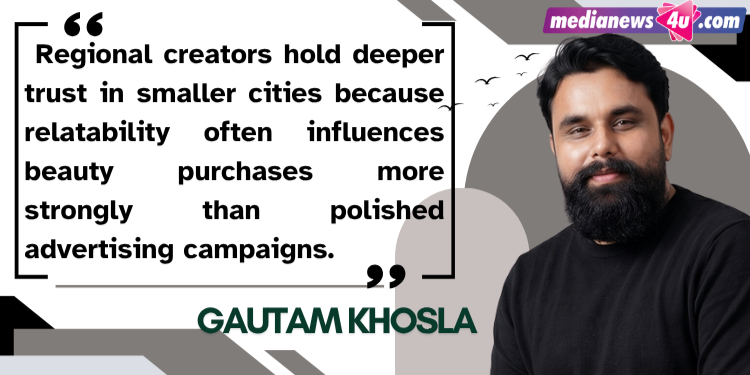
The marketing techniques used in metros and small cities vary greatly. Metro consumers are more innovative and ingredient-conscious; hence, they respond positively to the storytelling and innovation-based narrative of the brands. Consumers in Tier II and Tier III cities, on the other hand, base their decisions on the level of trust and relatability.
The medium through which the message passes is sometimes even more important than the message itself. Messages passed by known faces, friends, family members, and regional influencers hold more value than highly produced advertisements. Our marketing strategy is very localized because of this.
Q. In 2026 will the brand narrative being pushed through marketing revolve around providing authentic results?
Authenticity is not a tactic; it’s our foundation. The philosophy behind Sotrue centers around truth, meaning no exaggerations, no heavily edited images, and no unattainable before-and-afters. We are about true skin, true outcomes, and real women. We prioritise enhancement rather than transformation.
Similarly, accessibility is key to making sure that our high-end products continue to be available to all at an affordable cost. In 2026, it will be our responsibility to elevate the voices of our customers and make them the focal point of the story.
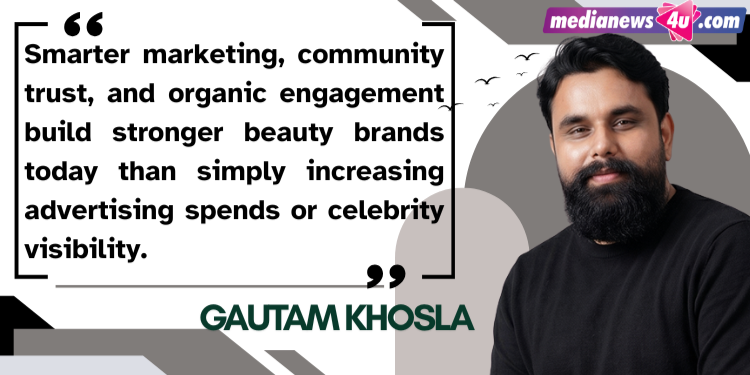
Q. In the beauty category smarter marketing is replacing higher ad spends. Will Sotrue also focus on smarter marketing as opposed to just increasing marketing outlays?
Our approach has always been efficient from a capital standpoint, and that has influenced how we have marketed our products and services. The limited budget we have required us to be more strategic and deliberate when it comes to marketing. We have realized that increased expenditures in advertisements do not necessarily lead to improved brand equity.
Our goal, therefore, has always been to optimise our marketing by utilizing our owned platforms, cultivating our communities, and fostering organic engagements. As we continue to expand, this approach will remain at the core of everything we do.
Q. Is perceived premium going to drive storytelling for Sotrue and the beauty category in 2026?
The idea behind our concept of premium is inclusiveness rather than exclusiveness. The goal is to offer something that can be perceived as luxurious but still affordable. In other words, it is more about what the product offers in terms of content, ingredients, functionality, and user experience rather than any artificial symbols of luxury.
We need to give our consumers something that they would appreciate but without feeling out of place. That is how we have managed to find the perfect balance between premium and pragmatism.
Q. How important is hyper personalisation?
Hyper-personalisation is becoming increasingly important, and we are working hard towards it. At present, we personalize through communication, wherein the message and media used are dependent on the segmentation of audiences. However, the future will be much deeper than that, with personalization in terms of products and experiences. These may include skin-tone-specific advice, customised regimens, and formulations suited for the region’s climatic conditions.
For instance, a customer from Jaipur having dry skin requires an entirely different treatment than another customer from Chennai who has oily skin. It does not make sense to treat them alike.
Q. Could you talk about the media mix that will be adopted between traditional and digital media?
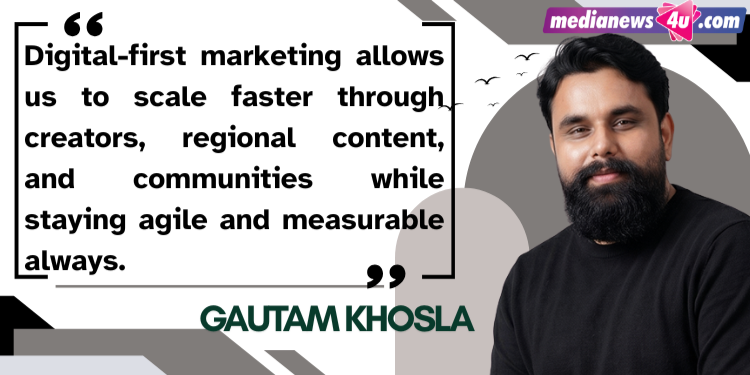
At present, digital will be at the center of all our activities, as that is where our consumers are most active. It helps us act fast, go deep, and measure our efforts. Going digital-first while scaling towards achieving a bigger revenue goal, we don’t want to switch to traditional advertising.
Instead, we want to invest even more into our creators, regional content, and community development. Being much more flexible and scalable, digital media can do what the traditional media cannot do at the moment.
Q. The beauty category has a lot of celebrity endorsements. Some celebrities like Katrina Kaif own stakes. Will Sotrue go down the celebrity route to get the message across in 2026?
There could be a possible opportunity for us to utilize celebrity endorsements in order to expand our brand coverage; however, we have to take a careful approach when doing so. Whatever collaboration we undertake must be believable and consistent with our brand philosophy.
Ideally, the celebrity we choose must be inherently compatible with both our brand and the target market, as opposed to serving merely as an additional form of exposure. Although we are optimistic about this area’s prospects, there is no predetermined schedule in place. This might happen either in 2026 or sometime after that.
Q. How will Sotrue leverage the creator economy by working with beauty influencers?
The creator economy is our greatest channel for growth, and we are committed to engaging it in a way that serves our objectives. Rather than a series of one-time partnerships, we build strong relationships with creators who truly believe in our products.
Our regional creators, who speak languages such as Hindi, Tamil, Marathi, and Punjabi, have loyal communities that trust them. Their trust in turn transfers to our brand. We are also exploring ways to get closer to co-creation and invite creators to participate in the development of products by giving their feedback.
Q. All Sotrue formulations are cruelty-free, vegan and dermatologically approved. Does this help the company appeal better to Gen Z and Gen Alpha?
These principles align closely with the sensibilities of younger consumers, Generation Z and Generation Alpha. These consumers are well-informed, investigate ingredient listings, and do not shy away from calling out false claims. For them, cruelty-free and veganism are more than buzzwords; they signify ethics.
The seal of approval from dermatologists is an added element of scientific validation that appeals to their sensibilities. It is authenticity that is valued the most, rather than whether these principles are sincerely part of the product or merely for show.