On the occasion of marketing day that took place on 27 May 2026, an interesting conversation emerging within the industry is around the digital marketing gaps that Indian brands are still struggling to address despite rapid internet growth.
India today has over 800 million internet users, with the next phase of digital consumption being driven largely by Tier-2 and Tier-3 audiences. Yet many brands continue to rely on metro-focused campaigns, English-first communication, and short-term performance marketing strategies.
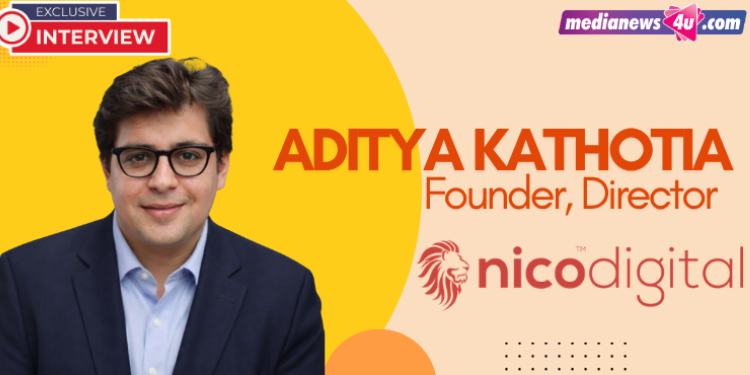
Aditya Kathotia, Founder and Director of Nico Digital, has been closely mapping these gaps – particularly around regional storytelling, consumer trust, SME digital adoption, and the disconnect between brands and non-metro consumers.
Medianews4u.com caught up with Aditya Kathotia, Founder, Director Nico Digital
Q. Should “SEO” in Nico Digital’s positioning be replaced by “GEO”?
Honestly, it should probably be both, but the honest answer is we’re in transition. SEO isn’t dead; it’s just no longer sufficient on its own. GEO, or Generative Engine Optimisation, is about ensuring your brand gets cited, referenced, and recommended by AI systems like ChatGPT, Perplexity, and Google’s AI Overviews.
We’ve been doing this work quietly for about two years now, and it increasingly drives real results for clients. So while we haven’t retired SEO from our vocabulary, the more accurate description of what we do today is AI-led visibility, across search engines and AI platforms alike.
 Q. What are Nico Digital’s goals for 2026 and the game plan?
Three things. First, deepen our GEO and AEO practice. We want to be the agency Indian brands call when they’re not showing up in AI-generated answers, not just Google results. Second, grow our digital PR capability beyond metro clients. A lot of mid-market D2C and B2B brands outside Mumbai and Delhi are building serious businesses with no earned media presence, and that’s a gap we’re actively closing.
Third, build more repeatable, data-led processes internally so we can serve 150+ clients without quality slipping. Growth without systems is just chaos.
Q. How does structure over shortcuts give Nico Digital an edge?
Most agencies sell outputs: posts, links, reports. We sell outcomes, which requires a fundamentally different way of working. We run structured audits before we touch a single deliverable. We document baselines. We set hypotheses before campaigns, not after. It’s slower to start, but the compounding effect is real.
Clients who’ve been with us three or more years routinely tell us the work done in year one is still paying dividends. In a market where most agencies are optimising for the invoice, building for the long term is genuinely differentiated.
Q. How urgent is it for brands to move beyond metro-focused, English-first, short-term performance marketing?
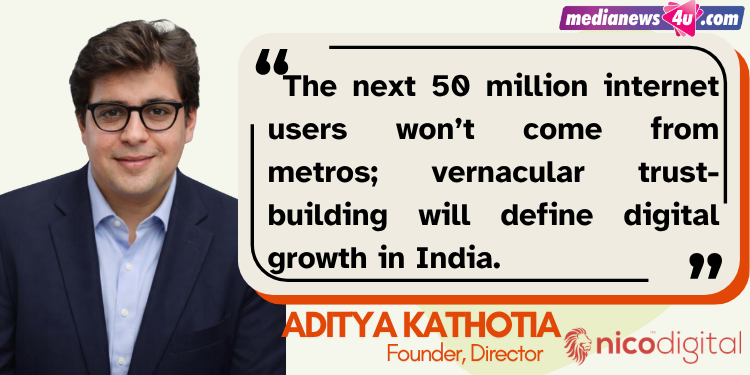
It’s not urgent; it’s already overdue. The next 50 million online consumers aren’t coming from Bandra or Koramangala. They’re in Rajkot, Patna, Coimbatore, and Siliguri. They consume in Hindi, Tamil, Telugu, and Bengali. And they don’t trust a brand just because it ran a clever Instagram ad.
Performance marketing still has its place, but the brands that will win the next decade are building brand equity in vernacular, building trust through content, and playing a longer game. The ones still running English-only retargeting campaigns to metro audiences are fishing in an increasingly crowded, expensive pond.
 Q. Are ad fraud and Gen Z/Alpha attention the two biggest challenges you face?
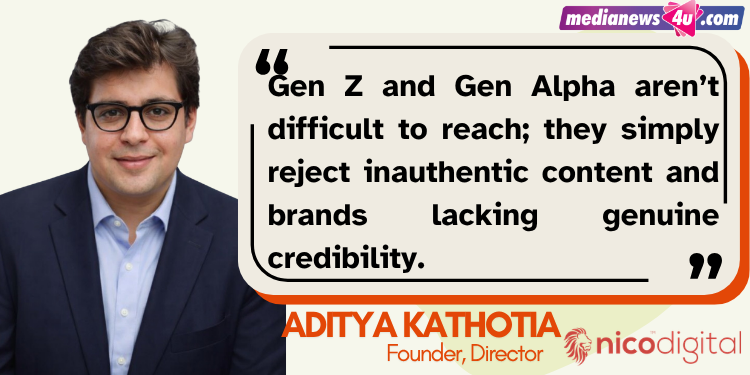
They’re real challenges, but I’d frame them differently. Fraud is a structural problem; it erodes trust in the entire ecosystem and makes it harder to justify budgets to CFOs who are already skeptical. Gen Z and Alpha aren’t actually hard to reach; they’re just impossible to fool. They have finely tuned BS detectors.
The real challenge is authenticity at scale: how do you build genuine brand relationships with audiences who skip ads, use blockers, and only engage with content that actually earns their attention? That’s the harder problem, and it requires a very different creative and editorial mindset.
Q. Can you share recent work that stands out?
We ran an AI visibility audit for a B2B SaaS client that discovered they had zero presence in AI-generated answers for their core category, despite ranking well on Google. We restructured their content architecture, built out topical authority clusters, and within four months, they were being cited by three major AI platforms.
That’s the kind of work I’m proudest of right now because it’s genuinely new territory and the client impact is hard to argue with.
Q. How does Nico Digital help brands close the trust deficit in digital advertising?
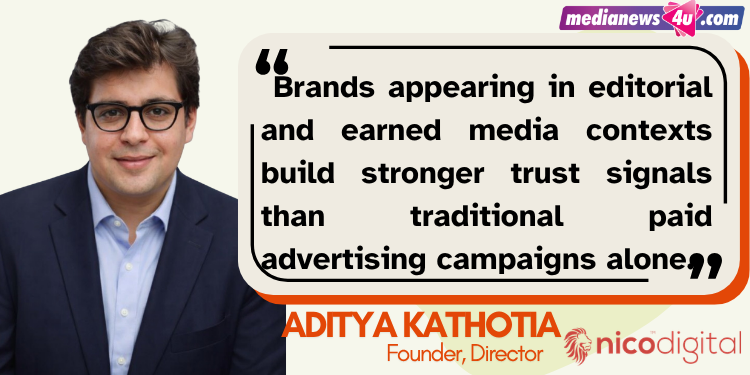
Earned media is the foundation. When your brand appears in an editorial context, a journalist citing your founder’s insight or an industry analyst referencing your data, that’s a qualitatively different trust signal than a paid ad. We help clients build that kind of presence through digital PR, thought leadership, and content that’s actually useful rather than promotional.
Combined with cleaner, more transparent performance marketing practices, it closes the credibility gap meaningfully over time.
Q. How is AI reshaping the PR industry?
AI is accelerating the work that was always tedious: journalist research, coverage monitoring, and first-draft pitches. But it’s also raising the bar on what gets coverage. When any brand can generate a mediocre press release in 30 seconds, mediocre press releases stop working entirely.
The agencies and in-house teams that will thrive are the ones using AI to do the groundwork faster while investing that saved time in genuinely sharper, more targeted story angles. AI is a leverage multiplier, not a replacement for editorial judgment.
 Q. How is AI helping Nico Digital with turnaround times?
Significantly. We’ve built internal tooling that automates keyword research consolidation, competitive gap analysis, and first-draft content briefs. What used to take a strategist two days now takes two hours. That doesn’t mean we’ve cut headcount; it means our team spends more time on thinking and less on data wrangling.
Client proposals that would have taken a week to research and write now take two days without sacrificing depth. The quality is actually better because we’re not rushing the strategic layer to meet the deadline.
Q. Are Tier-2 and Tier-3 audiences genuinely different to market to?
Very much so. The content consumption patterns, the trust triggers, the preferred platforms are all different. WhatsApp is a primary discovery channel in many Tier-2 markets. Regional YouTubers move more product than national campaigns in some categories.
And price sensitivity isn’t just about numbers; it’s about perceived value relative to local context. Brands that paste their metro strategy onto these markets and wonder why it doesn’t perform are missing what’s actually driving purchase decisions there.
Q. How can brands balance performance marketing and brand building?
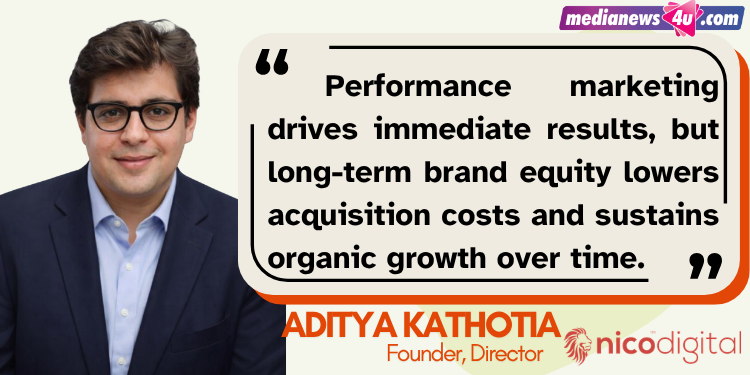
A rough mental model I use: performance marketing is rent, brand building is equity. You need rent to survive, but you can’t build long-term value by only paying rent.
The brands we see struggling are usually over-indexed on performance: great ROAS on paper, but shrinking organic traffic, declining brand search volume, increasing customer acquisition costs year-on-year. The fix isn’t abandoning performance; it’s running brand-building activity in parallel so that your performance channels get cheaper over time, not more expensive.
Q. How can SMEs adopt scalable, affordable digital systems?
Start with one channel done properly rather than five channels done poorly. Most SMEs are spread thin across every platform without a coherent content or distribution strategy. The playbook that actually works: one strong owned asset (usually a blog or YouTube channel), one earned media placement a quarter, and one paid channel with a clear attribution model.
That’s a system most SMEs can actually sustain. Add complexity only when the simpler version is working.
 Q. Does B2B need more hand-holding than D2C in digital?
Yes, and it’s not a knock on B2B marketers; it’s structural. D2C has clear, fast feedback loops. You run an ad, you see sales. B2B has longer cycles, multiple decision-makers, and attribution that’s genuinely messy. It takes longer to demonstrate that content marketing drove a pipeline opportunity six months later.
So yes, B2B clients require more patience, more education, and more sophisticated reporting. The payoff when it clicks, though, is usually much stickier. B2B clients who understand the value of digital rarely leave.