Glu focusses on enabling brands to stay visible in what its call the “Answer Economy,” where platforms like ChatGPT and Gemini are fundamentally reshaping how consumers discover and decide what to buy. Instead of browsing through links, users now receive direct, curated answers—making it imperative for brands to be part of those responses.
With AI already influencing a significant share of purchase journeys and projected to drive $750 billion in commerce by 2028 (according to McKinsey), the company believes that this marks a critical inflection point for marketers globally.
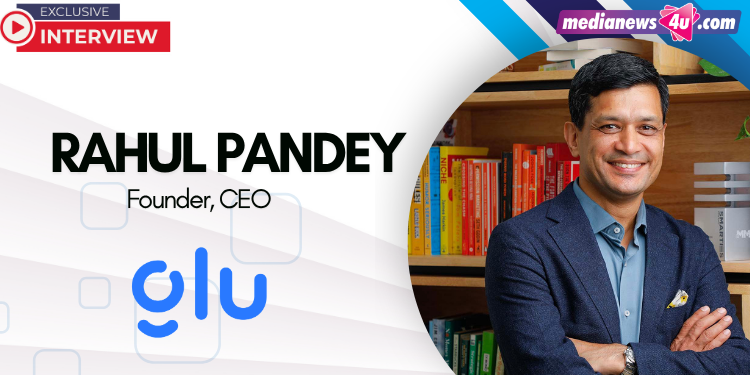
Medianews4u.com caught up with Rahul Pandey, Founder, CEO, Glu, who shared his perspectives on the evolving ecosystem.
Q. Glu enables brands to stay visible in the Answer Economy. What does this entail?
We are moving from a world of links to a world of answers. Discovery no longer happens across pages and tabs. Increasingly, it happens inside AI generated responses. That shift changes how brands get discovered entirely.
Traditional SEO was built around rankings, but AI platforms work very differently. AI platforms like ChatGPT, Gemini, and other conversational interfaces are increasingly deciding what gets discovered, trusted, compared, and ultimately purchased. Visibility here is no longer accidental. It is engineered.
That is exactly the infrastructure layer Glu is building for. Most product pages today were designed for human browsing, not machine interpretation. But AI systems rely heavily on clarity, consistency, context, and structured information to confidently recommend products.
If a consumer today asks an AI platform for the best protein powder for beginners or the safest pet food brand, the system is not showing ten blue links anymore. It is surfacing a handful of recommendations directly. If your brand is not part of that answer, you effectively disappear at the moment of decision.
Glu helps brands transform their product data into structured, AI ready assets that these systems can interpret, compare, and prioritise. We also continuously optimise this layer as AI platforms evolve. Our goal is simple. When a consumer asks a question, your product should be part of the answer.
 Q. What goals has Glu set for itself in 2026, and what is the game plan to get there?
Our focus is on building Glu into the decision layer for AI visibility in commerce, starting with Shopify merchants globally. The immediate priority is driving widespread adoption through a low friction, self serve product while continuing to deepen our capabilities around product content optimisation and AI discovery.
The game plan follows three clear tracks:
First, drive installs and prove value quickly. Merchants are already seeing discovery behaviour shift, but many still do not know where to begin. We want Glu to be simple enough for any brand to start using without heavy onboarding or long implementation cycles.
Second, move beyond visibility into execution. It is not enough for brands to simply understand how they are performing across AI platforms. They need the ability to continuously improve how their products appear inside AI-generated recommendations.
Third, build a strong data flywheel where insights from AI discovery continuously feed back into content optimisation. The more signals we capture across platforms, the stronger and more intelligent the optimisation layer becomes over time.
We are also investing in ecosystem partnerships across agencies, commerce platforms, and enablement partners because this shift is far bigger than any single product category. Right now, the market is still very early, which makes this an extremely exciting phase to build in.
Q. AI is projected to drive $750 billion in commerce by 2028. What should marketers be doing to leverage this?
Marketers need to fundamentally rethink how they approach growth in the AI era. The scale of the shift is much larger than most people realise. The $750 billion projection tells you something much deeper is happening beneath the surface. McKinsey estimates that agentic commerce alone could drive between $3 trillion and $5 trillion globally by 2030. Discovery is not simply being enhanced by AI, it is being rebuilt.
For the last decade, the digital playbook was relatively predictable. Drive traffic and optimise conversion. But in the AI era, that’s changed. Increasingly, the buying journey starts at the point where AI generates recommendations. If AI platforms are shaping consumer decisions, then the real challenge for marketers becomes whether their brand is part of the recommendation itself. That changes how brands need to think about product information entirely. AI systems do not respond to campaigns; they respond to clarity, completeness, consistency, credibility, and structured information. Products now need to be easily understood, compared, and trusted by machines, not just consumers.
The second shift is around measurement. Brands need to start tracking answer share, meaning how often they appear inside AI-generated responses for key category queries across platforms like ChatGPT, Gemini, and others. And third, optimisation has to become continuous. These systems evolve rapidly. What works today may not work six months later, meaning AI visibility cannot be treated as a one-time exercise.
The opportunity is massive, but so is the shift. I believe the brands that will win are the ones that move beyond traditional performance marketing and start thinking in terms of decision engineering.
Q. Is upskilling in AI key for marketers to stay ahead?
Yes, but I think the conversation around upskilling is sometimes too narrow. People often assume marketers now need to become deeply technical or learn how to build AI models. That is not really the requirement.
What marketers do need is a much better understanding of how AI platforms interpret information, prioritise recommendations, and shape consumer decisions. More importantly, teams need to rethink workflows. Many companies are still treating AI as an add-on tool rather than integrating it into how content, product information, and customer journeys are managed.
The gap today is not awareness; it’s execution. Most teams understand the importance of AI, but they lack the infrastructure to act on it. The real gap is operational readiness. Throughout our conversations with customers, we see many brands experimenting with AI tools, but very few have effectively implemented AI to transform their workflows. So yes, upskilling matters, but the real advantage will come from teams that can operationalise AI for continuous action.
Q. What are the biggest challenges for brands adapting to AI discovery and how does Glu solve them?
The biggest challenge is that most product data today is simply not designed for AI systems. Brands spent years optimising for consumers (read: humans), using visual storytelling, branded language, fragmented product descriptions, and inconsistent data across platforms.
That worked in the traditional e-commerce world. But AI platforms behave differently. They need structured, consistent, context-rich information to confidently recommend products.
The second challenge is fragmentation. Discovery is now happening across multiple AI platforms and each behaves differently. Most brands currently have almost no visibility into how they are appearing across these systems.
The third challenge is execution. Even when brands identify gaps, manually updating hundreds or thousands of SKUs is complex and time-consuming. And the urgency is very real. We are already seeing strong consumer adoption, especially in markets like India where people are becoming increasingly comfortable using AI tools for product research and recommendations.
Glu solves this end-to-end. We make product data machine-readable, standardised, and
enriched for AI interpretation. We give brands visibility into how they show up across AI
platforms. And most importantly, we enable continuous optimization – so brands can
improve their AI visibility over time. Because knowing there is a problem is one thing. Actually fixing it consistently across large catalogues is where most teams struggle.
Q. Is AI powered discovery impacting all categories?
Yes, although some categories are definitely moving faster than others. We are already seeing very strong signals in D@C heavy categories in India where consumers naturally ask more questions before purchasing. Beauty, wellness, electronics, pet care, fashion, these are all categories where buyers compare, evaluate, and seek recommendations actively.
Pet care has been a particularly interesting category for us. With Heads Up For Tails, for example, we saw AI brand inclusion move from 2 percent to 52 percent within weeks after optimising how the product information was structured and understood by AI systems. That was a strong signal for us because it showed how quickly visibility can change when brands adapt properly. Lower consideration, impulse categories may take slightly longer because consumers are less research driven there, but over time AI will likely become a default discovery interface across almost every category.
The question for brands is no longer whether this shift will impact them, it is how prepared they will be when it becomes mainstream.
 Q. Why do brands need partners beyond reporting?
Insights alone rarely solve business problems; implementing them is more important. Many platforms today can tell brands what is happening, but very few actually help them improve outcomes. The challenge with AI driven discovery is that it changes constantly. Models evolve, consumer behaviour shifts, and competitors continue optimising, which means this cannot be approached like a one-time audit.
What brands really need is continuous action. That means periodically optimising product data, adapting to changes across platforms, and optimising at scale. One thing we realised quite early is that most e-commerce teams are already stretched. They simply do not have the bandwidth to manually keep up with how rapidly these AI systems are evolving.
That is why we focus on helping brands move from insight to action instead of stopping at reporting. In this space, speed matters a lot, and the brands that are able to respond and adapt quickly will ultimately have the biggest competitive advantage.
Q. How is AI led discovery reshaping the funnel?
The traditional funnel is becoming far less linear than it used to be. Earlier, consumers would gradually move from awareness to research, then consideration, and finally purchase. Today, many of those stages are collapsing into a single interaction.
Someone can ask an AI assistant for the best running shoes within a certain budget and instantly receive recommendations, comparisons, summaries, and buying suggestions all at once. That compresses discovery and decision-making into a single interaction. For brands, this means fewer opportunities to influence the customer. You either show up in the answer, or you don’t.
Increasingly, the key question is whether the brand shows up at that exact moment of intent.
Q. Why are search rankings no longer sufficient?
Ranking and recommendation are not the same thing. In traditional search, being on page one was enough to get traffic, but that’s not the case with AI.
AI interfaces work very differently. In many cases, they present just a few recommendations. That means the challenge for brands is no longer simply about being discoverable. It is about being chosen.
For that to happen, a brand’s product information needs to be structured so that AI systems can confidently interpret, compare, and trust it. Many brands still assume that strong SEO automatically translates into AI visibility, but in reality, we are already seeing that the two do not always overlap. That is why brands need to rethink how they structure and manage product content altogether.
Q. What innovations do you expect from platforms like ChatGPT and Gemini in 2026?
We expect these platforms to move much deeper into commerce over the next couple of years. Right now, most consumers still use them primarily for discovery, research, and recommendations, but that will gradually move closer to actual transactions and personalised buying journeys.
Recommendations will likely become far more context-aware and behaviour-driven, with much deeper integrations into merchant ecosystems and live product data.
That has significant implications for brands because it changes where influence happens during the buying journey. At Glu, we are building with that future in mind because we believe the underlying product data layer will become increasingly important as these systems continue evolving.
Q. Is AI impacting Google’s dominance?
I don’t think AI is replacing Google. What it’s doing is redefining the interface itself.
Search is moving from a list of links to a layer of answers. And that shift is happening both inside Google with AI Overviews and outside it, in ChatGPT, Perplexity, Gemini and others. Whether the answer comes from Google or somewhere else, the underlying behaviour change is the same.
Shoppers are getting comfortable asking AI for recommendations and trusting these answers.
What that does, though, is fragment discovery. There is no longer one platform you can optimise for and call it done. For brands, the implication is clear: you have to be visible wherever shoppers are making decisions. And there are now a lot of those places.
Q. How important is reducing time-to-value?
It is critical, especially in a category evolving this quickly. Brands do not have the patience for long implementation cycles. They want to quickly understand whether something is having a meaningful impact and whether it is worth investing further.
We designed Glu keeping that reality in mind. One of the things we repeatedly heard from merchants was frustration around heavy onboarding processes and long setup timelines. Most teams simply do not have the patience or bandwidth for that anymore.
So a large part of our focus has been on making the platform simpler, faster, and easier to use. In fact, a merchant can optimise a Product Detail Page in under two minutes.
That speed matters because once brands begin seeing early improvements in visibility or recommendation quality, internal adoption becomes much easier. In an emerging space like this, momentum plays a very important role.
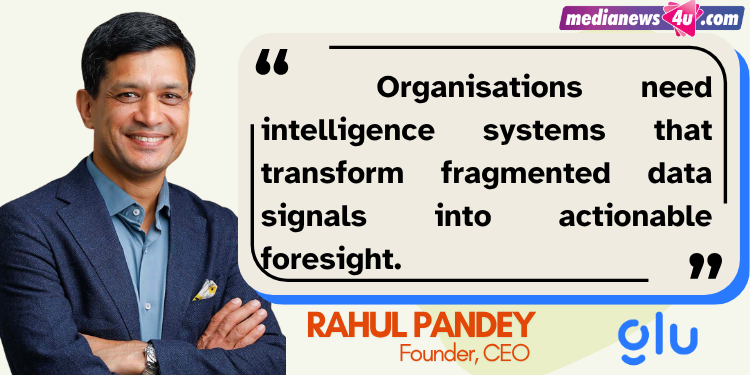 Q. How can brands measure ROI within AI driven results?
The way brands measure performance is definitely going to evolve.
For a long time, traffic and clicks were the primary signals marketers relied on. Those metrics will still matter, but they will not tell the full story anymore. Increasingly, brands will need to measure how often they are appearing inside AI generated recommendations, what kinds of queries they are showing up for, and whether AI led discovery is bringing in higher intent consumers.
One of the biggest challenges right now is attribution because AI journeys do not always lead to a direct click in the traditional sense. A consumer may discover a product through an AI recommendation and complete the purchase later through another channel entirely.
What we tell merchants to track is a slightly different set of signals. Answer share – how often you appear in AI responses for your category queries. Recommendation frequency across the major platforms. And shifts in traffic quality – higher intent visitors, shorter conversion cycles.
Over time, measurement models will likely move beyond last click attribution and focus more on influence and recommendation value because, increasingly, the buying decision is being shaped before the consumer even lands on a website.