Earlier this year MAAC (Maya Academy of Advanced Creativity), unveiled a brand campaign titled ‘MAAC Socha Hai’. This is a tribute to young creators ready to turn their imagination into a profession. Comprising of four short films, the campaign is now streaming across MAAC’s official YouTube and social media channels.
Targetting students and parents, ‘MAAC Socha Hai’ positions MAAC as the natural first choice for aspirants looking to build careers in Animation, VFX, Gaming, and Digital Content Creation. Each film captures a distinct domain taught at MAAC, transforming abstract creativity into visual storytelling grounded in purpose, skill, and aspiration.
The first film focussed on VFX as a career, following a young dreamer who experiences everyday life through a lens of transformation—where ordinary becomes magical through the power of visual effects. The story celebrates the idea that VFX is not merely technical skill, but a form of expression and emotional impact.
The second film, Animation, brought to life the characters sketched in a student’s notebook, showcasing the evolution from raw passion to refined storytelling.
The third film looked to capture the hustle and creativity of a college student navigating the fast-paced world of content—editing, ideating, and contemplating Digital Design & Content Creation as their pathway into a professional career.
The fourth film around Gaming spotlighted a teenager whose love for gaming evolves into world-building, design, and logic—marking a shift from playing games to creating them.
In the final film, MAAC Socha Hai looked to reframe academic underperformance as irrelevant when true talent lies in imagination, passion, and skill. The film weaves together all MAAC domains—Animation, VFX, Gaming, and Digital Content—showing how MAAC transforms raw talent into real careers.
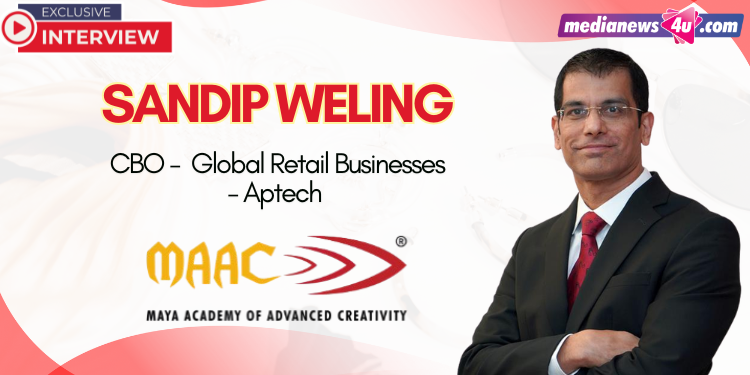
Medianews4u.com caught up with Sandip Weling, – Chief Business Officer- Global Retail Businesses at Aptech Limited
Q. The Union Budget formally elevated content creation and the “Orange Economy” from an organic social media trend into an institutionalized, skill-driven pillar of economic growth. From a training perspective, how does this policy recognition reshape the way parents and young learners perceive the long-term viability of careers in the creative technology sector?
The recognition of the creator economy and the Orange Economy in the Union Budget is a defining moment for India’s creative industries. For a long time, careers in animation, VFX, gaming, content creation, and digital design were often viewed as passion-driven pursuits rather than structured professions. Policy recognition changes that narrative.
It sends a strong signal that creative talent is becoming a key driver of economic growth, innovation, and employment. As a result, parents are increasingly viewing creative technology careers with the same confidence traditionally associated with engineering, management, or IT.
For young learners, it validates the idea that creativity, when combined with technology, can lead to meaningful and sustainable careers. This momentum will encourage more students to pursue specialised training and contribute to India’s rapidly growing creative economy.
Q. With industry estimates projecting a demand for nearly two million AVGC and digital media professionals by 2030, India faces a significant skilling challenge. How have MAAC’s newly launched Creator X and Career X initiatives been designed to address this growing talent gap at scale?
The biggest challenge facing the AVGC-XR sector today is not opportunity but the availability of industry-ready talent. As demand grows across animation, gaming, VFX, content creation, and immersive media, there is a pressing need for training & skilling models that are both scalable and future focused.
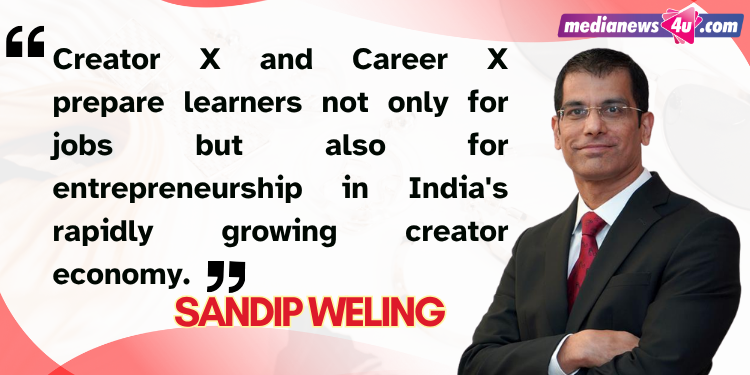
Creator X and Career X are industry-led dual pathways to address this need from two distinct perspectives. Creator X caters to the rapidly expanding creator economy by equipping learners with skills in IP creation, digital storytelling, content production, AI-assisted workflows, audience engagement, and personal branding. Career X focuses on building specialists in animation, VFX, gaming, 3D designs, and emerging technologies.
While Career X focusses on enhancing industry readiness and career opportunities. Creator X empowers aspiring creators to become entrepreneurs by building multi-platform content ventures.
Both initiatives emphasize experiential learning, portfolio development, industry mentorship, and exposure to real-world projects. Our goal is not just to prepare students for jobs, but to nurture creators, innovators, and entrepreneurs who can shape the future of India’s creative economy.
Q. The Indian Institute of Creative Technologies (IICT), Mumbai, has emerged as a key institution in advancing creative education initiatives nationwide. As a legacy brand with over 25 years of excellence, how is MAAC aligning its curriculum and approach with this broader national vision to enhance youth employability?
The emergence of institutions such as IICT reflects India’s growing commitment to building a globally competitive creative technology ecosystem. What is particularly encouraging is that the focus has shifted from education & training alone to employability, innovation, and industry readiness.
At MAAC, we have always believed that curriculum relevance is the foundation of career success. As technologies evolve rapidly, educational institutions must continuously adapt to remain aligned with industry needs. Our curricula is integrated with new technologies including Generative AI workflows, virtual production, real-time rendering, gaming technologies, and immersive media while ensuring students develop strong creative and technical fundamentals.
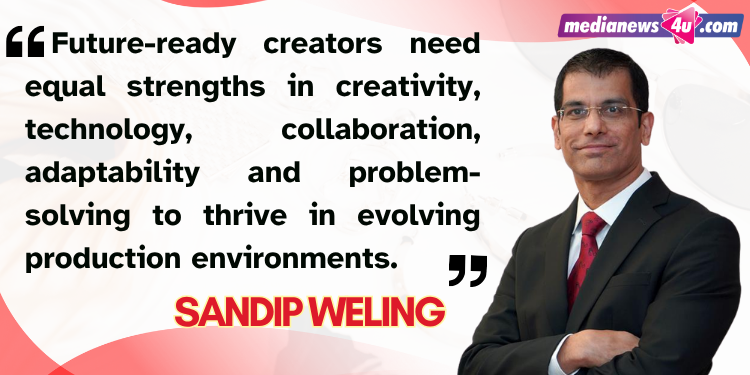
Equally important are skills such as collaboration, problem-solving, communication, and adaptability. Our focus is on preparing learners to thrive in dynamic production environments and contribute meaningfully to India’s ambition of becoming a global leader in creative technology and digital content creation.
Q. Gen AI has rapidly transitioned from an emerging concept to an integral part of animation and VFX production pipelines, significantly accelerating creative workflows. How does MAAC ensure that students build strong artistic and technical foundations while embracing AI-enabled tools and practices?
Gen AI is undoubtedly transforming the way creative content is produced, but technology alone cannot replace imagination, artistic judgment, and storytelling ability. In many ways, AI is becoming a powerful co-pilot for creators, but the creator must still define the vision. We focus on building strong foundations in design principles, animation, storytelling, visual communication, and production workflows before introducing students to AI-powered tools. This ensures learners understand the creative thinking behind every output rather than relying solely on automation.
We also encourage students to view AI as a productivity enhancer rather than a shortcut. By combining artistic fundamentals with emerging technologies, we prepare learners to work confidently in AI-enabled production environments while retaining originality, critical thinking, and creative ownership.
Q. While AI has made creative tools more accessible, the industry continues to value deep expertise in areas such as 3D execution, visual effects, and storytelling. How do MAAC’s Career X programmes equip learners with the specialist skills and creative thinking required to become innovators and storytellers rather than relying solely on prompt-based outputs?
One of the biggest misconceptions surrounding AI is that access to tools automatically translates into expertise. In reality, technology can accelerate execution, but it cannot replace creative thinking, storytelling, or technical mastery.
Career X has been designed around the belief that true value lies in specialization. Students are trained through immersive projects, production simulations, portfolio development, and collaborative assignments that mirror real-world industry environments. They learn how to solve creative challenges, communicate ideas effectively, and translate concepts into meaningful experiences.
Whether it is animation, VFX, gaming, or 3D design, our emphasis remains on originality, storytelling, and execution excellence. We want students to become creators who can imagine, innovate, and build compelling experiences not simply generate outputs using prompts.
Q. Immersive technologies such as AR, VR, and XR are increasingly finding applications beyond gaming, spanning sectors such as enterprise training, marketing, retail, and corporate communication. What emerging career opportunities can students expect in the fields of spatial computing and real-time content creation?
We are entering an era where digital experiences are becoming increasingly immersive, interactive, and intelligent. Technologies such as AR, VR, XR, and spatial computing are no longer limited to entertainment; they are transforming sectors ranging from healthcare and education to retail, and more.
This evolution is creating exciting new career opportunities, including XR Experience Designer, Spatial Computing Designer, Virtual Production Specialist, Digital Twin Specialist, Real-Time Simulation Developer, Immersive Learning Designer, Volumetric Capture & Content Specialist, Interaction Designer for Spatial Interfaces etc.
Students entering this space today have the opportunity to work at the intersection of creativity and technology, contributing to experiences that redefine how people learn, interact, shop, and communicate.
Q. Creative careers today extend well beyond traditional studio placements, encompassing freelancing, creator-led businesses, and digital monetization models. How do MAAC’s integrated learning modules prepare students to build and sustain independent creative enterprises?
The creator economy has fundamentally changed how creative professionals build careers. Success is no longer limited to studio employment; individuals can now build brands, monetize content, launch businesses, and collaborate with audiences globally.
Recognising this shift, MAAC’s learning model incorporates elements of entrepreneurship alongside technical and creative training. Through Creator X, learners gain exposure to content strategy, audience engagement, personal branding, platform dynamics, and monetization opportunities.
We encourage students to think beyond employment and explore how creative skills can be transformed into sustainable business ventures. By combining creativity with entrepreneurial thinking, we aim to equip learners with the confidence and capabilities needed to build independent careers in the digital economy.
Q. As conversations around initiatives such as the National Creator Economy Bill gain momentum, there is increasing emphasis on areas such as monetisation transparency, intellectual property, and digital governance. Do media education institutes now have a responsibility to incorporate topics such as compliance, IP ownership, and legal awareness into creative education?
Absolutely. As the creator economy becomes more structured and commercially significant, legal awareness is no longer optional, it is essential. Today’s creators are not only artists; they are entrepreneurs, brand builders, and business owners.
Understanding ethical usage of AI, intellectual property rights, copyright laws, licensing frameworks, platform policies, and monetization regulations is critical for protecting creative work and ensuring sustainable growth. Educational, Training & Skilling institutions have a responsibility to equip learners with this knowledge alongside technical and creative skills.
We believe future-ready professionals must understand both the creative and business dimensions of the industry. Building awareness around ethical content creation, IP ownership, compliance, and digital governance helps learners make informed decisions and navigate an increasingly complex digital landscape.
Q. Landmark regional initiatives, including the Rs. 3,268-crore Maharashtra AVGC-XR Policy, have granted industry and essential service status to creative studios, encouraging further investment and expansion. How do you see such policy interventions influencing domestic job creation, and how is MAAC positioning its centre network to capitalize on these opportunities?
Policy interventions such as the Maharashtra AVGC-XR Policy have the potential to become game changers for the industry. By recognizing the sector’s strategic importance and encouraging investment, these initiatives can accelerate the growth of studios, startups, technology infrastructure, and innovation hubs.
More importantly, they create a multiplier effect on employment. As new investments flow into the ecosystem, demand for skilled professionals across animation, gaming, VFX, content production, and immersive technologies will increase substantially. MAAC is preparing for this growth by continuously strengthening its curriculum, expanding industry partnerships, and ensuring that learners are equipped with skills aligned to future market requirements. Our centre network plays a crucial role in creating a robust talent pipeline that can support the industry’s next phase of expansion.
Q. Despite having one of the world’s largest gaming and digital content audiences, India has historically been viewed more as a service provider than a creator of original intellectual property. What shifts in creative education are necessary to transform India into a global hub for “Create in India” IP development?
For decades, India has been recognised as a global execution powerhouse. The next chapter of growth, however, must be driven by ownership and innovation. Nations that create successful intellectual properties generate significantly greater economic and cultural value than those that only provide services.
To achieve this shift, creative education & training must place greater emphasis on storytelling, world-building, design thinking, innovation, and entrepreneurship. Students should be encouraged to experiment, take creative risks, and develop original ideas from the earliest stages of learning.
India possesses a rich cultural heritage, diverse narratives, and immense creative talent. By combining these strengths with world-class technology and creative education, we can nurture a generation of creators capable of developing globally relevant intellectual properties that originate from India and resonate with audiences worldwide.
Q. Under the broader vision of a developed India, youth-led innovation and the creative economy are receiving increasing policy attention. In your dual role overseeing Global Retail for Aptech and MAAC, what is your 12–18-month vision for expanding this creative-first education model across tier-2 and tier-3 cities?
The future of India’s creative economy will be shaped not only by metropolitan cities but also by the tremendous talent emerging from tier-2 and tier-3 markets. These regions are witnessing rising digital adoption, growing entrepreneurial aspirations, and increasing awareness of creative careers.
Our focus will be on enabling access to high-quality creative education and ensuring that aspiring creators from tier 2 and tier 3 markets can participate in emerging opportunities. We intend to strengthen our centre network, introduce innovative learning pathways, and leverage technology-enabled education to make industry-relevant training more accessible.
By empowering young talent with future-ready skills, we look forward to contributing meaningfully to India’s vision of becoming a global powerhouse in creative technology, digital content, and innovation-driven growth.