While India’s consumer and technology sectors continue to witness the emergence of new-age brands, categories such as electricals, switchgear, wiring, and lighting remain largely dominated by legacy players with decades of market presence.
Against this backdrop, VYNA Electric is taking a different approach—building a modern electrical brand from the ground up with a strong focus on reliability, accessibility, product breadth, and channel-first growth.
Within a short span, the company has established a presence across multiple product categories and expanded its distribution footprint through a rapidly growing partner network. More importantly, VYNA’s journey offers an interesting perspective on what it takes to build brand trust and market relevance in a category where consumer decisions are often driven by familiarity and legacy.
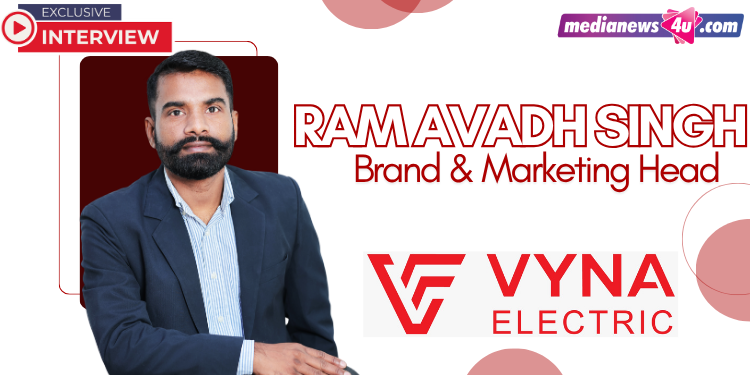
Medianews4u.com caught up with Ram Avadh Singh, Brand & Marketing Head, VYNA Electric
Q. Your initial launch covered seven northern and central states, including Delhi, UP, and Rajasthan. Why did you pick these states to test the market first?
The choice came from a strong understanding of these markets and the relationships built over years through our larger journey in the power infrastructure sector.
Delhi, Uttar Pradesh, Rajasthan, Haryana, Punjab, Uttarakhand, and Chhattisgarh bring together several important factors for a consumer electrical brand — urban growth, infrastructure development, active construction, established dealer networks, and a large base of electricians and contractors who influence product selection.
Starting with these states allowed us to stay close to the ground, gather direct market feedback, and build a strong distribution foundation before moving into newer territories.
 Q. What is the single biggest complaint you hear from local electricians about the current electrical products available on the market today?
Electricians most often speak about inconsistency. A product may look good on the shelf, but the real test happens during installation and after months of use. Electricians value products that are easy to install, dependable in performance, and capable of handling everyday Indian operating conditions.
For them, every installation also reflects their own reputation. They prefer products that help them finish work confidently, reduce callbacks, and avoid repeated complaints from customers.
Q. You recently hosted your first big partner meet in Goa and announced that you hit 100 distribution partners in just six months. How did you convince 100 business partners to take a financial risk on a completely unknown brand so quickly?
Trust played an important role. VYNA Electric may be a new consumer brand, but the organisation behind it brings years of experience in India’s power infrastructure sector. Many partners recognised that foundation and saw the brand as a serious long-term commitment.
Beyond that, we spent time listening to distributors and understanding their priorities — product availability, margins, service support, market demand, and business growth. The response showed us that strong relationships, clear intent, and consistent support still matter deeply in this industry.
Q. When a regular person goes shopping for home switches, they usually just care about the price and the color. How do you market a highly technical feature without sounding boring?
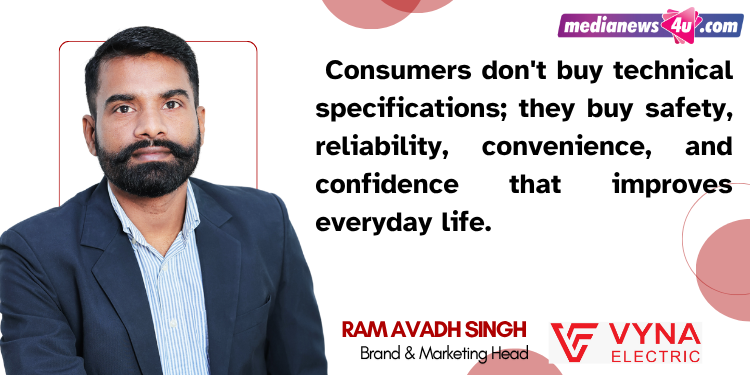
Consumers rarely buy technical specifications. They buy safety, convenience, confidence, and peace of mind. Our approach is to translate engineering into everyday relevance. A fire-retardant switch is not just about material quality; it is about safety at home. A reliable RCCB is not just a protection device; it is about reducing risk during unexpected electrical faults.
The communication has to be simple. If people can immediately understand how a feature helps them in daily life, the feature becomes meaningful.
Q. What percentage of your marketing budget goes to actual homeowners versus local contractors and electricians?
The electrical category remains highly relationship driven. Electricians, contractors, dealers, and retailers continue to play a major role in influencing purchase decisions. At this stage, a larger share of our marketing investment goes into trade engagement, electrician programmes, dealer activation, and market development initiatives. These are the touchpoints where trust is built and recommendations are shaped.
Homeowner-focused communication is also growing as brand awareness expands. Both audiences are important, but they need different messaging and different engagement formats.
Q. Do Instagram and YouTube influencer ads actually sell wires in small towns, or are they a waste of your marketing budget?
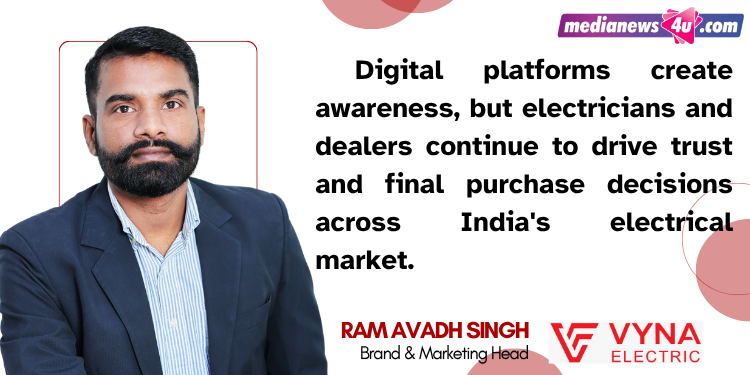
Digital platforms are useful, but they work differently in this category. Instagram, YouTube, and other digital channels help build familiarity, even in smaller cities and towns. Consumers may come across a brand online before they visit a retailer or speak to an electrician.
However, electrical products are still largely trust-led purchases. The final decision often happens through recommendations from electricians, dealers, contractors, or local influencers. So, for us, digital is not a replacement for offline networks. It supports them by creating awareness and recall.
 Q. Every electrical company has the ‘safe and stylish’ message in their ads. What unique attributes in marketing make consumers remember VYNA over the competition’s noise?
For VYNA Electric the story begins before the consumer brand was launched. VYNA Electric comes from an organisation with deep experience in India’s power infrastructure sector. That background gives us a practical understanding of safety, reliability, and performance. We are bringing that engineering-led thinking into homes and everyday electrical products.
Our positioning, “Engineered for Life,” reflects this philosophy. It is about products designed for real-world conditions, regular use, and long-term dependability — not just temporary trends or surface-level styling.
Q. Are hyper-local ground events for electricians a better use of your ad budget than mass media campaigns?
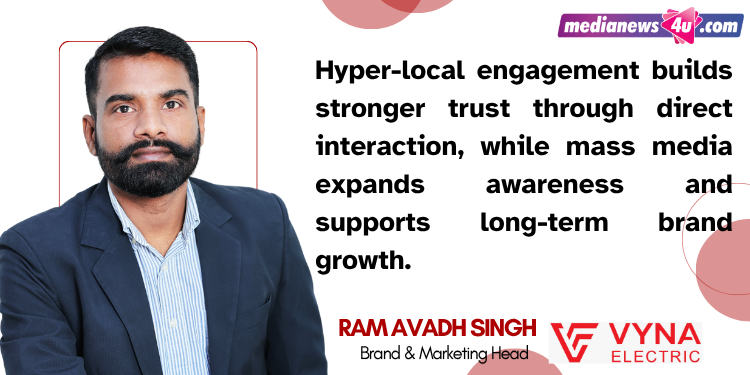
Both serve different purposes. Ground engagement creates trust because it allows direct interaction with the people who install, recommend, and influence product choices every day. When electricians can see the product, ask questions, and share feedback, the relationship becomes much stronger.
Mass media helps build wider awareness and scale. For a growing brand, however, hyper-local programmes often create stronger early traction because they build meaningful conversations within local markets. As the brand grows, broader communication platforms will become increasingly important.
Q. What is the biggest marketing mistake you see your older, legacy competitors making in their ads?
Legacy brands have played a major role in building the category, so there is respect for that. But one gap we see is that many campaigns still focus heavily on products and features, while giving limited attention to education and context.
Consumers are becoming more aware of electrical safety, energy efficiency, and long-term reliability. Brands that help people understand these subjects in simple language can build stronger trust than those that rely only on product claims. For us, education-led communication is an important way to create both engagement and differentiation.
Q. Many new home appliance brands launch online first through websites like Amazon or Flipkart to save money. Why did VYNA choose the expensive, old-school route of physical showrooms and dealer networks right from day one?
Electrical products are different from many other consumer categories. A homeowner may discover a brand online, but the final recommendation often comes from an electrician, contractor, retailer, or dealer. Physical visibility remains extremely important because customers want to see the product, and the trade needs confidence before recommending it.
Dealer networks, product displays, retail presence, and local market relationships create credibility in this category. Our objective was to build a strong offline foundation while also developing our digital presence in parallel.
Q. The company claims that its products are built for Indian conditions. What is one specific local hazard your switches can survive that a Western switch wouldn’t?
India presents a wide range of operating challenges — dust, humidity, temperature variation, voltage fluctuations, and different installation environments across regions.
Products designed for these conditions are better prepared for long-term, reliable performance in actual usage. Our focus is on engineering products that can handle these everyday realities while maintaining durability, safety, and consistency across different parts of the country.
When we say built for Indian conditions, we mean products designed for how they are actually used on the ground.
Q. Small-town retail runs on long credit cycles, with shopkeepers delaying payments for months. How do you keep cash flowing while keeping these traditional dealers happy?
The answer lies in maintaining balance and discipline. Healthy channel relationships are built through transparency, regular communication, and mutual growth.
We work closely with our partners to understand local market realities while also maintaining systems that support sustainable business operations. Strong inventory planning, responsible financial practices, and clear expectations help create an ecosystem where both the company and its channel partners can grow together.
 Q. Moving forward the plan is to add fans, appliances, and grooming tools soon. Aren’t you risking stretching the VYNA brand name too thin, too early?
Expansion only makes sense when it fits the larger vision of the brand. Consumers increasingly prefer trusted brands that can offer multiple solutions under one umbrella. However, every new category must be evaluated carefully through the lens of quality, relevance, usability, and consumer value.
Our approach will be measured and category-led. The goal is to build a complete lifestyle electrical ecosystem while maintaining the reliability and standards that define the VYNA brand.