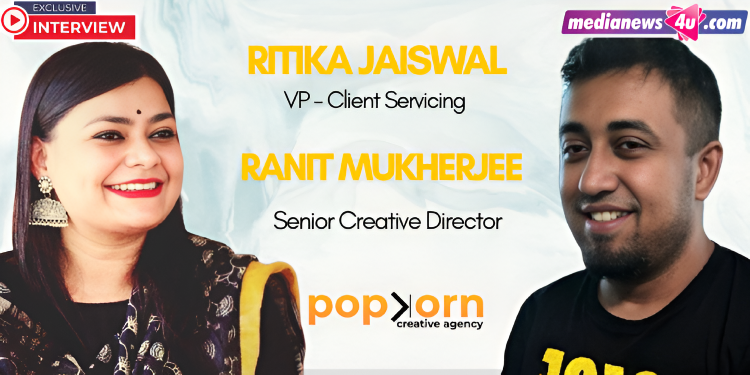
popkorn creative agency, is part of the Value 360 Group, building work at the intersection of insight, emotion and craft. The agency partners with brands across categories to produce campaigns that move past messaging into meaning, earning its clients a place in the lives of the people they serve.
Earlier this year it helped Medtronic, which offers medical technology, cincpetualise and launch the ‘Say Yes to a Better Tomorrow,’ campaign in India aimed at deepening public understanding of Parkinson’s disease. The campaign has been developed in partnership with popkorn creative agency, part of Value 360 Group.
India today has over one million people living with Parkinson’s, a number set to grow with the country’s ageing population. Yet conversations around the condition remain clinical and remote, often confined to the doctor’s chamber. ‘Say Yes to a Better Tomorrow’ sets out to change that, anchoring the dialogue not in the language of clinical but in the everyday textures of family life.
A grandfather, a grandson, and the moments worth fighting for At the heart of the campaign is a film titled ‘Sorry Dadu,’ which traces the bond between a grandfather and his young grandson through the small rituals they share. Seen through a child’s eyes, the tremors and rigidity that define Parkinson’s become something more recognisable:Through an honest portrayal of everyday challenges, the film brings to life what living with Parkinson’s truly feels like building empathy and awareness, while reinforcing that with timely support, care and treatment, a better tomorrow is within reach..
Medianews4u.com caught up with Ranit Mukherjee, Senior Creative Director, popkorn and Ritika Jaiswal, VP, Client Servicing, popkorn
Q. popkorn builds work at the intersection of insight, emotion and craft. What does this entail?
Ranit Mukherjee: For us it means one simple thing – If it doesn’t feel right, If it doesn’t affect us, it doesn’t go out.
The insights, emotion and craft should not just be on the paper. They all need to serve their purpose. When those three come together, the work feels true.
And if it feels true, people actually give it their time.
Most days, that only happens when the room is aligned and everyone’s genuinely trying to make something worth making.
Q: The agency partners with brands across categories to produce campaigns that move past messaging into meaning. What role is AI playing in enabling this?
Ranit Mukherjee: AI is a member of our team. We use it as a critic sometimes, sometimes we use it to sharpen the rough edges. It has been a good member till now. And most importantly, it’s getting along with the team at large.
Q: What innovative work can one expect in the coming months?
Ranit Mukherjee: Honestly, the roadmap ahead is ambitious. We want to create work that is innovative not for the sake of being innovative but to own a space in people’s mind and heart. We are rather pushing simplicity first. I think that’s the need of the hour. Simplicity has the power to stick. At popkorn, we are die hard romantics when it comes to advertising, so whatever we do next, it’s our way of showering love to work.
Q. When you work with a client like Medtronic does the campaign journey start with first understanding what the business objective is?
Ritika Jaiswal: Absolutely, but with a crucial caveat: at popkorn, we believe that for brands like Medtronic, a business objective is inseparable from a human objective. When Medtronic approached us for their Parkinson’s awareness campaign, the macro business objective was clear which was to deepen public understanding of Parkinson’s disease in India and encourage families to seek timely assistance. However, to achieve that, we had to look past clinical statistics and identify the human friction point.
● The reality: Over a million people in India live with Parkinson’s, yet conversations remain sterile and confined to doctor chambers.
● Our starting point: We didn’t start by marketing a medical answer, we started by unpacking the emotional shift within a family.
The journey for the “Sorry Dadu” campaign began by identifying that the primary caregivers and decision-makers are family members. Therefore, our creative strategy anchored a corporate healthcare objective into the relatable, everyday textures of an Indian household. By aligning Medtronic’s business goal with a profound emotional truth, we transformed a clinical awareness drive into a movement of empathy.
 Q. Is a data drive approach today a must for campaigns to standout and target effectively?
Ritika Jaiswal: Look, you simply cannot ignore data today. If you aren’t using it, you’re basically shouting into a dark room and hoping someone hears you. But let’s be real about what data actually is…it isn’t just a bunch of stats For us at popkorn, data is simply human behavior written down in numbers.
But here is where a lot of people miss the point: they stop at the numbers. Data is just a record of what happened in the past. It tells you where people are and what they are doing online. That’s definitely helpful because it keeps you from wasting money showing ads to people who couldn’t care less.
However, numbers alone can’t tell you the whole story. You need real-life observation and sharp insight to make sense of them. This is the heart of how we work.
While data tracks what a consumer is doing, keeping your eyes open and observing them uncovers why they are doing it and what they are secretly struggling with. That insight is the honest, human truth that helps us figure out our actual game plan.
Once you have that truth, that’s when creativity comes in to make people actually feel something and take action.
Without combining data, real observation, and good storytelling, a campaign is just an expensive guess. Data and insights don’t ruin creativity…they guide it. They make sure our stories don’t just pop up on a phone screen, but actually mean something to the person watching. If you only look at the spreadsheet and ignore the real person behind it, you’re just going to make boring, lazy, forgettable work.
Q. For the campaign aimed at deepening public understanding of Parkinson’s disease, is empathy very important in the messaging?
Ranit Mukherjee: Yes it was. And it’s not just “important”. It’s non-negotiable. Because Parkinson’s isn’t a subject, it’s a daily experience, for the patient and let’s not forget, also for the caregivers. If you don’t start with empathy, you either sensationalise it or you flatten it into information. Both don’t really cut it. We kept it simple because you don’t need drama to make people feel something real.
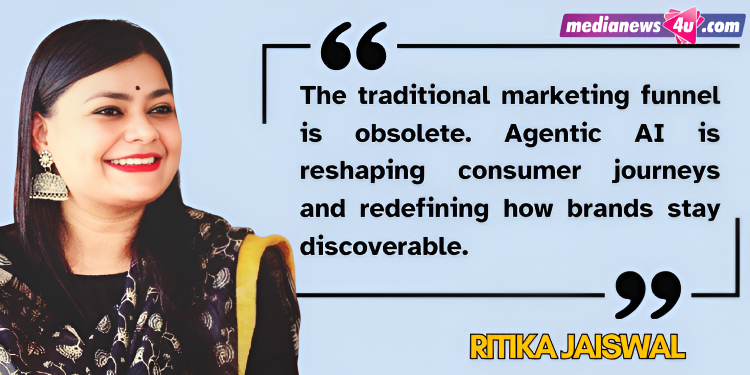
Q. Is it a challenge to ensure consistency of brand messaging across platforms?
Ranit Mukherjee: It is. Because all platforms work a little differently. But good work works across all. We are trying our best to create what makes an impact no matter which platform it pops in.
 Q. In terms of tools to measure the efficacy of PR and marketing activities done what advancements would you like to see?
Ranit Mukherjee: I want good advertising to be celebrated more. I want the benchmark to be set higher. Anything that goes viral becomes like a reference point, but chasing virality doesn’t do much for the brand. Advertising should create culture markers, it should be our mirror, it should be the mouthpiece of our culture.
Q. Is there a greater focus on hyper personalisation when it comes to crafting messages and campaigns?
Ritika Jaiswal: Yes, but the industry is getting it fundamentally wrong. Most brands mistake hyper-personalization for basic automated retargeting like dropping your first name into an email or chasing you around the web with an ad for a product you bought five minutes ago. That’s just tracking. Brands are changing the machinery of how they deliver an ad, but keeping the message exactly the same for everyone.
The pivot: from delivery to content
The strategy must shift to creative personalization. Data shouldn’t just be a trigger to follow a user; it should dictate which version of the story they see based on their immediate situation.
● Retail: A shopper looking at a dress via a search for “formal interview tips” needs a narrative about professional confidence. Someone looking at the exact same dress via “weekend trends” needs a narrative about style.
● Travel: A hotel booking for a Monday night signals business utility, requiring a creative asset focused on seamless check-ins. A booking for a Friday night signals leisure, requiring a focus on relaxation.
● Healthcare: If data shows a user is searching “symptoms in parents,” the tone must instantly switch from cold clinical data to calm, supportive guidance tailored for a caregiver.
Personalization works only when the creative matches the exact human reality of the person looking at the screen. You need to speak to their current situation, not their internet search history. If you’re only looking at personalisation tools while ignoring the creative structure, you’re missing the point entirely.
Q. Is one of the big challenges before clients and popkorn about holding the attention of Gen Alpha which has no tolerance for mediocrity?
Ritika Jaiswal: Gen Alpha doesn’t have a short attention span, they have a flawless, built-in BS detector. They have been babysat by algorithms since birth. They can smell a corporate marketing brief from a mile away, and they have absolutely zero tolerance for forced trends, hollow brand stories, or what I call “safe advertising.”
The biggest mistake I see brands make is trying to match Gen Alpha’s speed by turning every brand asset into a chaotic, superficial, three-second short-form video.
That is a losing battle.
To hold their attention, you have to trade corporate polish for radical substance and authenticity. Look at how younger cohorts assess physical experience spaces like that of a Coffee Bean and Tea Leaf outlet or premium, disruptive concepts like Evocus. They don’t want to be “advertised” to, they want to align with spaces and products that feel real and mirror their world.
Even with a heavy, clinical topic like Medtronic’s Parkinson’s awareness initiative, younger audiences didn’t tune out the long-form film. Why? Because we didn’t give them a corporate lecture. We gave them an unvarnished, vulnerable slice of domestic life told through the innocent eyes of a child trying to understand his grandfather.
The difficulty doesn’t lie in engaging Gen Alpha, but in encouraging our clients to be transparent, transparent, and genuinely themselves.
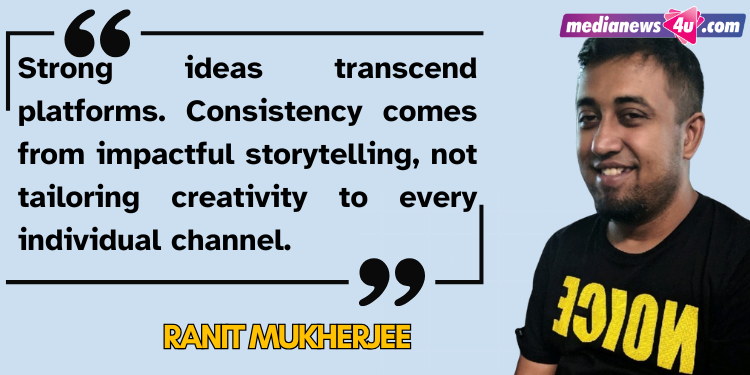 Q. Has the traditional funnel become disrupted as Agentic AI growingly determines consumer intent?
Ritika Jaiswal: Let’s stop using polite words like “disrupted.” The traditional marketing funnel isn’t just disrupted…it’s dead. If an agency is still walking into pitch meetings talking about a linear journey of “Awareness leading to Consideration,” they are fighting a war which ended three years back.
Here is what is actually happening: Agentic AI doesn’t just track consumer intent, it completely intercepts it.
We need to clear up what we actually mean by this, because a lot of people confuse Agentic AI with basic chatbots. We aren’t talking about ChatGPT or Google Gemini where a human types a question and reads a paragraph. We are talking about autonomous systems like OpenAI’s Operator, Google’s autonomous Jarvis agents, and the advanced agentic layers built into Apple Intelligence.
These are systems where the human gives a single command “I need to book a four-day wellness getaway in the hills for my parents next month, keep it under this budget, and make sure it has a spa” and the AI agent goes out, navigates websites, compares options, filters out the sponsored clutter, and executes the entire task.
Think about the terrifying relevance of this for a brand: The AI agent has bypassed the top of the funnel entirely. The consumer didn’t see your billboard, they didn’t watch your pre-roll ad on YouTube, and they didn’t scroll past your paid Google search link.
AI is no longer just the tool we use to make ads faster…AI has become the bouncer protecting the consumer from your ads. You cannot buy impressions or shout loud enough to win over an autonomous machine that has zero emotional reaction to a corporate commercial.