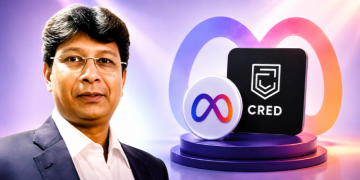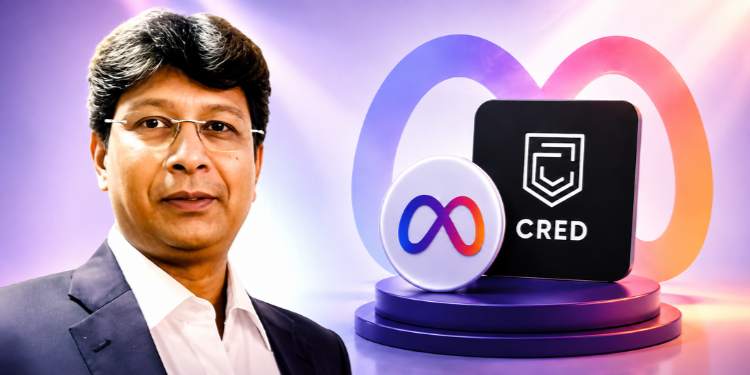
Every few years, an appointment comes along that the industry wants to read as a single story, when it is actually five stories wearing one headline. Meta naming Kunal Shah as global head of WhatsApp, alongside a $900 million investment in CRED, is one of those moments. The easy version of this story is a celebration, an Indian founder joining the small, rarefied company of Satya Nadella, Sundar Pichai and George Kurian at the helm of a global technology platform. That version is true, and it is worth acknowledging. But three decades of watching how media, advertising and technology businesses actually get built have taught me that the interesting story is rarely the headline. It is in the finance, the advertising engine, the marketing philosophy, the brand tension, and the business model underneath it. This is an attempt to look at all five, honestly.
Meta didn’t just hire a leader. It bought a decade of behavioural insight and bet that the person who built it could scale it globally.
Finance: What Was Actually Bought
Start with the mechanics, because they are more modest than the headlines suggest. This is a minority investment, not an acquisition, Meta has taken roughly a 20 percent stake in CRED at a $4.5 billion valuation, a figure that sits nearly a third below CRED’s 2022 peak. Kunal Shah retains his personal shareholding but steps back from an operational role, while CRED’s head of strategy, Miten Sampat, takes over as interim CEO.
The financial picture beneath the deal is worth sitting with. CRED closed FY25 with operating revenue of roughly ₹2,735 crore against a loss of about ₹1,457 crore. For context, Paytm, CRED’s closest domestic comparison in the payments and financial services space, posted Q1 FY27 operating revenue of ₹2,448 crore with a profit after tax of ₹220 crore, its highest ever quarterly EBITDA, on the back of UPI transaction value growing 45 percent year-on-year. Comparable topline, very different bottom line. That contrast matters, because it tells you plainly that Meta was not buying a profitable business. It was buying something that does not show up on a balance sheet: a decade of understanding how India’s most creditworthy, digitally engaged consumers behave, trust, and spend.
Advertising: The Engine That Already Exists
It is tempting to frame this deal as the beginning of WhatsApp’s advertising ambitions. It is not, that engine is already running, and running fast. Click-to-WhatsApp ads are Meta’s fastest growing ad format globally, having generated roughly $1.5 billion in revenue in 2025, up 80 percent year-on-year on Meta’s own earnings disclosures. Meta’s broader “Other Revenue” line, driven largely by WhatsApp’s paid messaging, grew 59 percent year-on-year in a single recent quarter. India alone has more than 15 million businesses on WhatsApp Business, the largest count of any market in the world.
So the honest question is not whether this deal creates an advertising business for WhatsApp. It is whether CRED, derived behavioural understanding, creditworthiness signals, spending patterns, trust markers, sharpens the targeting layer sitting on top of an engine that already works. Meta has stated that no customer data changes hands as part of the transaction. That claim deserves to be taken at face value and watched closely at the same time, because the value here was never framed as being about raw data. It is about insight, and insight travels in far less traceable ways than a database transfer.
Marketing: Two Very Different Playbooks Meeting
CRED built its brand on scarcity an invite only entry point, gamified rewards, a deliberately premium and exclusive positioning aimed at a narrow, high value user base. WhatsApp’s entire marketing history has run in the opposite direction: ubiquity, utility, a free product built for every income bracket and geography it touches. Shah now leads an organisation whose growth story was never about exclusivity.
Whether a scarcity-and-status playbook can be usefully imported into a mass utility platform, or whether it simply does not translate, is one of the more interesting open questions in this appointment. Shah has, notably, said very little publicly since the announcement, a striking silence from a founder whose public voice and personal brand were central to CRED’s own marketing for years. Meta’s own leadership has done the talking instead. Chief Product Officer Chris Cox, in an internal memo, described Shah as bringing “an intuitive understanding of the immense global potential of WhatsApp’s product.” Mark Zuckerberg called it a “builder mentality and global perspective” that would serve Shah well running the world’s largest messaging platform. Both are Meta’s words about Shah, not yet Shah’s own words about his plans.
Brand: Trust Meets Trust, Differently Defined
Here is the tension worth sitting with. CRED’s brand equity was built on financial trust, creditworthiness, timely payments, a curated sense of belonging to a reliable cohort. WhatsApp’s brand equity was built on a different kind of trust entirely, end-to-end encryption, privacy, the promise that a conversation stays a conversation. Shah’s appointment asks, implicitly, whether these two forms of trust reinforce each other or quietly compete.
That question was not only raised inside boardrooms. Days after the announcement, a widely shared LinkedIn post from a Mumbai based entrepreneur argued that the celebrations around the appointment had overshadowed a harder question: what did Meta actually buy, and did India’s data protection framework keep pace with a deal of this scale. Meta’s response, that no customer data is being transferred, addressed the letter of that concern without fully resolving the spirit of it. As global platforms deepen commercial partnerships with domestic fintech companies, the question of whether financial trust and communication platform trust can share the same roof, without either data flowing directly or India’s regulatory posture catching up, is not going away.
Revenue and Business: A Smaller Battle Than It Looks
The scoreboard, for now, favours WhatsApp on one dimension only. WhatsApp Pay recently overtook CRED in monthly UPI transaction volume for the first time, roughly 150 million transactions to CRED’s 142 million in a recent month, per NPCI data. But look at value rather than volume and the picture flips entirely: CRED processed close to ₹55,100 crore in that same month against WhatsApp Pay’s roughly ₹11,400 crore. WhatsApp is winning on frequency and small payments; CRED still owns the high-value, high-trust segment.
Zoom out further and the scale gap becomes even clearer. Despite WhatsApp’s reach, more than 500 million users in India alone, WhatsApp Pay still holds only about 0.65 percent of India’s overall UPI market by share, a fraction of what PhonePe and Google Pay command. A regulatory cap that limited WhatsApp Pay’s user base for years, only recently lifted, explains much of that gap. No amount of founder instinct changes that overnight. What Shah brings is not a shortcut past structural headwinds, it is, at best, a sharper sense of which battles are worth fighting first.
The bigger story here is not that Meta invested $900 million in an Indian fintech company. It is that Meta has decided the next phase of one of the world’s largest platforms needs a founder’s instinct for trust, not another product roadmap.
The Question Worth Asking
Set aside the celebration and the skepticism both, and what remains is a genuinely open experiment. A company built on financial exclusivity is now shaping the commercial future of a platform built on universal access. A founder known for his public philosophy has gone quiet at the exact moment his biggest bet is being placed. And a regulatory conversation about what “no data transfer” really means in an age of behavioural insight has only just begun.
Whether this becomes one of the defining technology leadership stories of the decade, or a cautionary tale about the limits of importing one playbook into a very different business, is not a question anyone can answer yet, including, it seems, Shah himself. But it is worth watching closely, because the answer will say as much about the future of trust in consumer technology as it will about any one founder’s career.
About the Author
GV Krishnamurthy (GVK) is Partner at AdNexa.ai and a veteran media strategist with over three decades of experience spanning broadcast, print, digital, and advertising strategy across India. A committee member of the Advertising Club Bangalore, GVK writes regularly on media accountability, measurement gaps, and structural shifts in India’s advertising ecosystem. Views expressed are personal.
(Views are personal)