Introduction: The Enduring Flame of Sholay
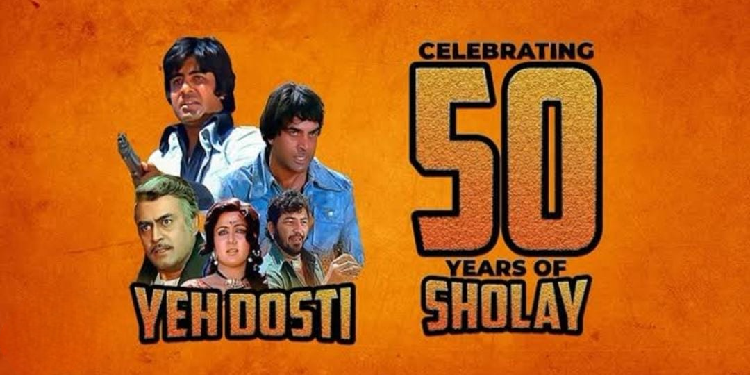
As the calendar turns to August 15, 2025, a wave of nostalgia, excitement, and profound admiration washes over the Indian cinematic landscape. It marks the golden jubilee of Ramesh Sippy’s ‘Sholay’, not just a film, but a pulsating cultural phenomenon that has etched itself into the very soul of a nation. For five decades, this epic has captivated hearts, sparked imaginations, and set an unparalleled benchmark for storytelling. It’s a saga of friendship, revenge, and justice that transcends generations, its dialogues echoing in everyday conversations, its characters living legends. And now, as we celebrate this monumental milestone, there’s even more thrilling news: the meticulously restored, uncut 50th anniversary version of ‘Sholay’ is set to have its world premiere in Bologna, a testament to its global resonance, with MediaNews4U.com proudly poised to share this cinematic event with the world. This article dives deep into the enduring legacy, the profound cultural tremors, and the strategic brilliance that makes ‘Sholay’ an eternal flame in the annals of Indian cinema.
The Unstoppable Juggernaut: Financial Triumph and Cinematic Benchmark
In a tale as dramatic as the film itself, ‘Sholay’ defied initial skepticism to become an unprecedented box office phenomenon, a true phoenix rising from the ashes of a lukewarm opening. Crafted with a budget of approximately ₹2.5-3 crore in 1975, this cinematic marvel didn’t just break records, it shattered them, raking in over ₹30-35 crore worldwide and reigning as the highest-grossing Bollywood film for nearly two glorious decades. Imagine the sheer scale of its success: adjusted for inflation, its earnings today would soar past an astonishing ₹3,000 crore, firmly cementing its legendary status as an economic powerhouse in Indian cinema.
But ‘Sholay’ was more than just a financial triumph, it was a seismic shift, a paradigm-altering event that redefined the very fabric of Indian filmmaking. It wasn’t merely a movie; it was a blueprint for ambition, a masterclass in grand-scale storytelling, and a testament to technical innovation. It single-handedly elevated the action-adventure genre, inspiring a generation of filmmakers and setting an almost insurmountable benchmark for multi-starrer blockbusters. Its monumental success proved, beyond a shadow of a doubt, that Indian cinema could dream bigger, build grander, and achieve unparalleled popular and financial returns, forever expanding the horizons of what was deemed possible.
A Global Phenomenon: International Acclaim and Unrivaled TRP Dominance
‘Sholay’ wasn’t content to merely conquer India; its magnetic pull extended far beyond national borders, captivating audiences across the globe. Its astonishing success in the Soviet Union, where it sold an incredible 60 million tickets in its initial run, stands as a powerful testament to its universal appeal. This wasn’t just a film; it was a cultural ambassador, effortlessly transcending linguistic and cultural divides with its timeless themes and unforgettable characters. The sheer excitement surrounding its 50th anniversary is palpable worldwide, culminating in the thrilling news that the meticulously restored, uncut 50th anniversary version of ‘Sholay’ is set to have its grand world premiere at the prestigious Il Cinema Ritrovato festival in Bologna, Italy! This monumental event further solidifies its status as a global cinematic treasure, a moment of immense pride for Indian cinema.
And when it comes to captivating the masses, ‘Sholay’ remains an undisputed champion on the small screen. Its television premieres have consistently delivered jaw-dropping TRP (Television Rating Point) records, proving its enduring power to mesmerise. When it first graced Indian television screens in 1995, it achieved an almost mythical TRP of 76 – a staggering figure that meant 76% of all television sets in the country were tuned in to witness its magic! This phenomenal, almost unbelievable viewership, decades after its initial release, isn’t just a statistic; it’s a vibrant testament to its unwavering popularity and its unshakeable position as a cultural touchstone, continuing to ignite passion and captivate new generations with every telecast.
Sholay in Our Lives: Dialogues, Archetypes, and Stardom
Beyond the silver screen, ‘Sholay’ seeped into the very fabric of Indian society, transforming into a cultural lexicon. Its dialogues aren’t just lines from a movie; they are ingrained in our collective consciousness, used in everyday conversations, office banter, and family gatherings. Who hasn’t, at some point, playfully asked, “Kitne aadmi the?” or declared, “Basanti, in kutton ke saamne mat naachna!”? These aren’t mere quotes; they are emotional triggers, instantly conjuring images and feelings, reflecting situations in our own lives, whether it’s a boss demanding results (Gabbar), a friend’s unwavering loyalty (Jai-Veeru), or a spirited individual refusing to be silenced (Basanti).
The film’s characters became archetypes, their personalities so vividly etched that they transcended the screen. The stoic yet vengeful Thakur, the mischievous and loyal Jai, the flamboyant and romantic Veeru, the feisty and independent Basanti, and the terrifying, iconic villain Gabbar Singh – each became a symbol, a reference point for human traits and relationships. We see a ‘Thakur’ in a resolute leader, a ‘Basanti’ in a free spirit, and even a ‘Gabbar’ in a challenging adversary. This deep psychological penetration is a rare feat, cementing ‘Sholay’s’ place not just in cinema, but in our very understanding of human nature and societal roles.
Moreover, ‘Sholay’ was a launchpad and a reaffirmation of superstardom. For Amitabh Bachchan and Dharmendra, it solidified their positions as titans of Indian cinema. Hema Malini became the quintessential dream girl, and Jaya Bhaduri’s quiet strengthresonated deeply. But perhaps the most astonishing transformation was that of Amjad Khan, who, as Gabbar Singh, created a villain so terrifyingly charismatic that he became an icon, forever changing the landscape of cinematic villainy. The film didn’t just tell a story; it created legends, shaping the careers and public personas of its stellar cast for decades to come.
Conclusion: The Ever-Burning Embers of Sholay
Fifty years on, the embers of ‘Sholay’ continue to glow brightly, illuminating the path for future generations of filmmakers and captivating audiences with its timeless narrative. It is a film that defied expectations, broke barriers, and created a legacy that remains unparalleled in Indian cinema. From its groundbreaking financial success and global reach to its profound impact on popular culture and the careers of its stars, ‘Sholay’ is more than just a movie; it is a cultural institution, a source of endless inspiration, and a testament to the enduring power of a truly great story. As we celebrate this golden jubilee, we don’t just look back at a film; we celebrate a phenomenon that continues to live, breathe, and inspire, proving that some stories, like the spirit of Ramgarh, are truly immortal.
(Views are personal)