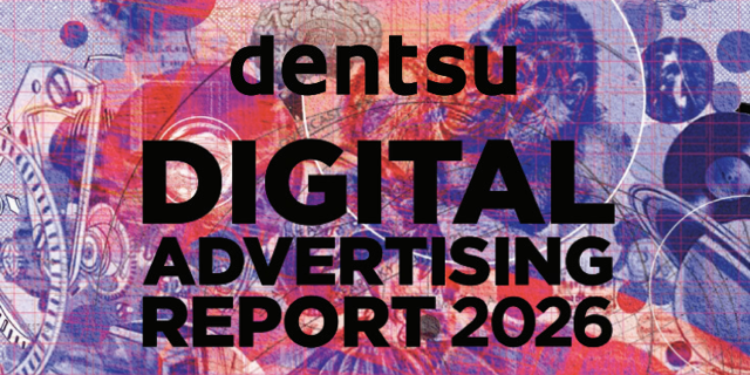
Mumbai: India’s advertising industry is undergoing a structural transformation, moving beyond a simple shift from traditional to digital media and entering a phase where commerce, content, data and technology are increasingly converged, according to the dentsu Digital Advertising Report 2026.
The report estimates that India’s total advertising spends closed 2025 at ₹1.21 lakh crore, growing 8.3% year-on-year, and are projected to reach ₹1.40 lakh crore by 2027, translating into a CAGR of over 7%. While this growth appears steady on the surface, the underlying composition of spends reveals a far more consequential change: digital media has become the industry’s primary growth engine and strategic anchor.
Digital Becomes the Default, Not the Alternative
Digital advertising accounted for ₹71,621 crore in 2025, representing 59% of total advertising spends. By 2027, this share is expected to rise to around 70%, with digital ad spends projected to touch ₹98,034 crore. The report highlights that this is no longer a cyclical reallocation driven by temporary consumption shifts, but a long-term rebalancing of advertising priorities.
Mobile-first consumption, short-form video, creator-led ecosystems, embedded payments, and AI-powered optimisation are cited as key drivers accelerating digital adoption across categories. Traditional media continues to play an important role, particularly television for live sports and high-impact entertainment, and print for trust-led communication in sectors such as government and education. However, their relative share is steadily declining as advertisers prioritise measurable, addressable and commerce-linked media environments.
Retail Media Emerges as the Fastest-Growing Segment
One of the most significant findings of the report is the rapid rise of retail media as a core advertising pillar. Advertising spends on e-retail platforms reached ₹17,601 crore in 2025, growing nearly 56% year-on-year and accounting for almost one-fourth of total digital ad spends.
The report notes that retail platforms are evolving from pure transaction environments into full-funnel media ecosystems, combining discovery, storytelling, conversion and closed-loop measurement within a single system. Powered by first-party shopping and streaming data, retail media allows advertisers to link exposure directly to purchase outcomes, addressing one of advertising’s longstanding measurement challenges.
This shift is also forcing organisational changes within brands, with trade marketing, ecommerce, media and CRM teams increasingly required to operate from a unified consumer view.
Video, Social and Search Continue to Dominate Digital Mix
Within digital advertising, social media and online video together account for nearly 60% of spends, underlining the growing importance of immersive and high-engagement formats. Social media leads with a 29% share, closely followed by online video at 28%. Paid search remains a critical channel for intent-driven marketing, contributing 23% of digital spends, though its growth is stabilising as advertisers diversify away from over-dependence on lower-funnel formats.
The report projects that online video is likely to overtake social media as the single largest digital format over the next two years, driven by deeper OTT penetration, short-form video adoption and AI-led personalisation.
Programmatic and AI Reshape Media Buying
Programmatic buying continues to gain share, accounting for 42% of digital media spends in 2025, or over ₹30,000 crore. The report forecasts this to rise further as AI-led optimisation, first-party data usage and outcome-based buying models become standard practice.
Rather than being viewed as a tactical efficiency tool, programmatic is increasingly positioned as the default operating layer of digital media, spanning video, connected TV, digital outdoor and retail media. Attention metrics and outcome-based measurement are also gaining prominence over traditional impression-led benchmarks.
Sectoral Trends Reflect Digital-First Consumption
FMCG remains the largest advertising category, contributing 30% of total spends, followed by e-commerce at 18%. E-commerce also recorded the highest growth in advertising spends, reflecting intense competition, quick-commerce expansion and performance-led acquisition strategies. Telecom, BFSI, automotive and real estate continue to increase digital investments as consumer journeys become more data-driven and payments-enabled.
The report highlights that sectoral media mixes are becoming more differentiated, with digital-heavy categories focusing on video, social and search, while others continue to leverage television for reach and credibility.
Attention, Not Impressions, Becomes the New Currency
Beyond numbers, the report places strong emphasis on a qualitative shift underway in advertising effectiveness. With media supply expanding rapidly, attention is emerging as the true scarce resource, replacing impressions as the primary measure of impact. Time spent, interaction quality and cultural relevance are increasingly seen as better indicators of effectiveness than raw reach.
The next phase of growth, the report suggests, will be driven by experience-led media, purpose-driven storytelling and culturally resonant content, particularly as regional language audiences, women creators and micro-communities gain prominence.
A Decade Defined by Convergence
Looking ahead, the report outlines a decade in which advertising will be shaped by deeper convergence between media and commerce, AI-governed ecosystems, hybrid online-offline experiences, and brands increasingly acting as content creators rather than mere advertisers.
As India’s advertising industry scales toward ₹1.4 lakh crore, the report concludes that success will depend less on how much media brands buy, and more on how intelligently they integrate creativity, data, technology and culture to earn consumer attention and trust
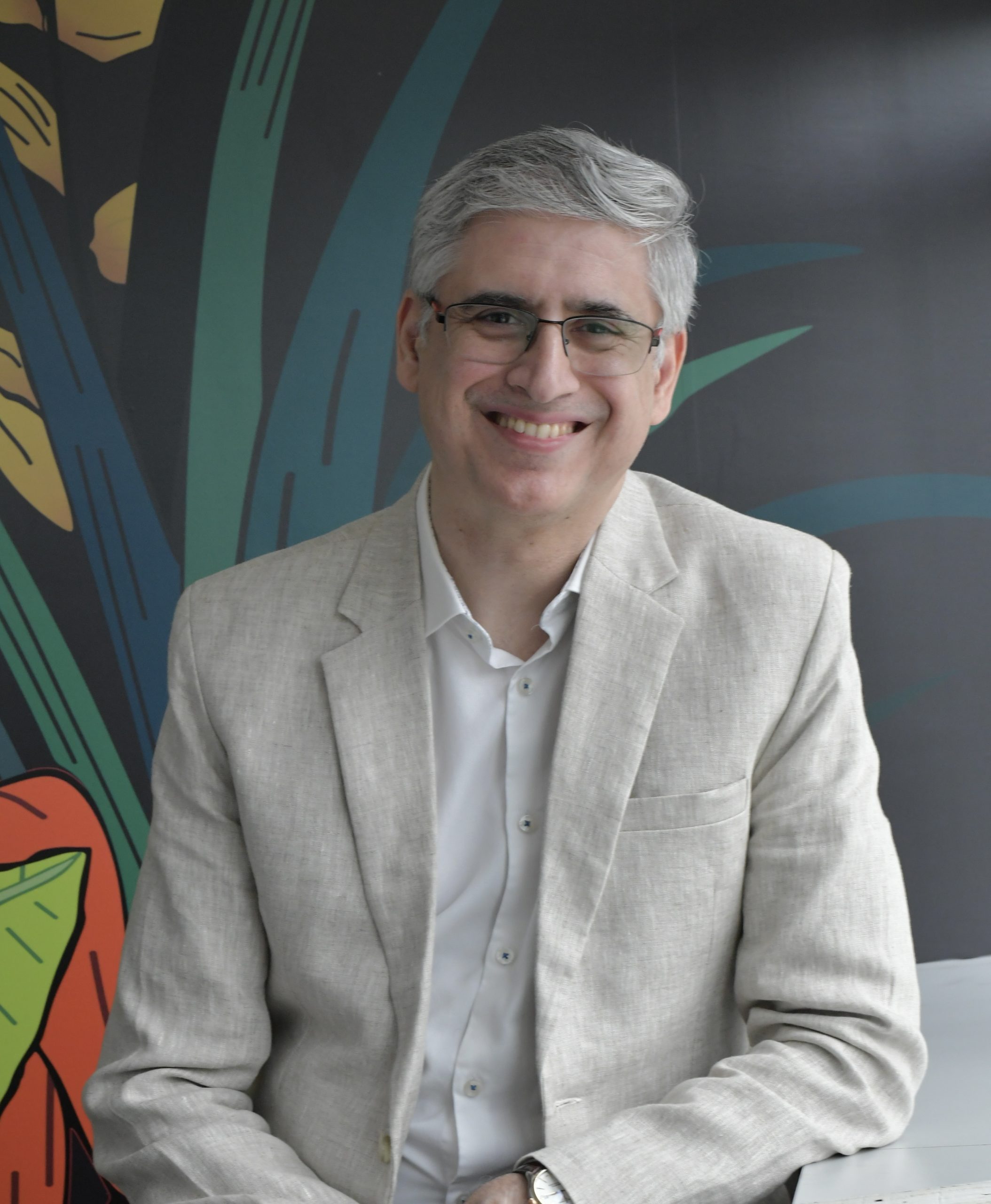
Commenting on the special edition, Harsha Razdan, CEO, South Asia, dentsu said, “Reaching ten editions of this report gives you perspective. You realise how much has changed, and how much hasn’t. Tools have evolved, the pace has accelerated, and expectations are higher. But the most meaningful shift has been human. People are far more deliberate about what they give their attention to. Innovating to Impact grew out of that learning. It is about doing work that earns its place, respects people’s time, and delivers outcomes that last.”
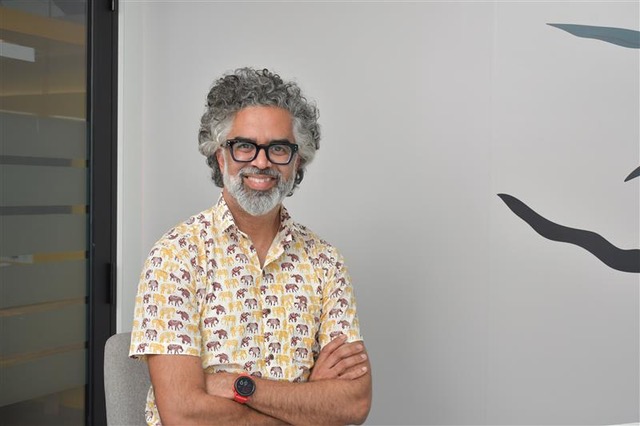
Narayan Devanathan, President and Chief Strategy Officer, South Asia, dentsu added, “A decade ago, the challenge was understanding rapid change. Today, it is navigating complexity with clarity. The next phase of growth will belong to organisations that can bring creativity, data, media and technology together in ways that work in the real world. This report is designed to help leaders move beyond channels and focus on building relevance, resilience and long-term value.”