Founded in 2008, Loylty Rewardz, a BillDesk Group company, is a leading provider of customer engagement and loyalty solutions. The company is headquartered in Mumbai and caters to 25+ clients in India, MENA, and Southeast Asia across banking, retail, and other industries.
Loylty Rewardz specialises in end-to-end loyalty programs powered by data-driven, technology-led, Martech products and services that are designed to meet and manage business objectives and challenges throughout the customer lifecycle. In addition, Loylty offers a unique ecosystem through its retail partner network that enables customers of its loyalty program accounts to redeem reward points online and offline across 60+ brands nationwide.
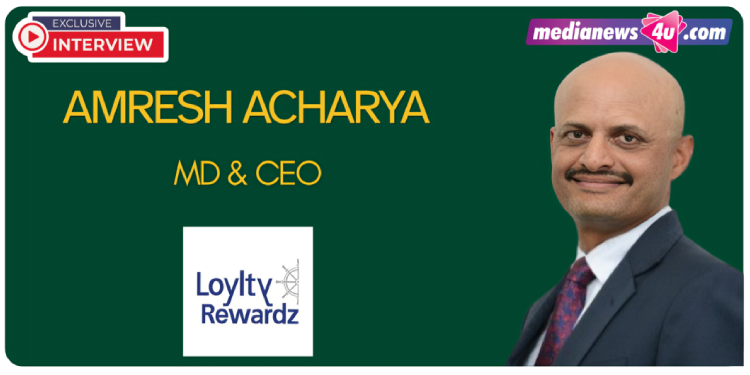
Medianews4u.com caught up with Amresh Acharya MD, CEO Loylty Rewardz.
Q. What goals has Loylty Rewardz set for itself in 2026? What is the game plan to get there?
We have four priorities for 2026:
First, we are on a next-generation technology path, with AI forming the backbone of our platform.
Second, we are continuing to deepen our presence in the non-banking space, which is growing into a meaningful part of our business.
Third, we are investing in the quality of our client engagement, to be better partners to the businesses we work with.
And fourth, consolidating and expanding our international business.
 Q. Are geopolitical tensions a challenge in the category?
Geopolitical tensions are, to me, simply a cost of doing business. They have always existed and they always will. The question is not whether they will affect you, they will, but whether your business is resilient enough to see it through.
Take COVID, for instance. It was not a geopolitical event but the impact was severe across industries.
Or consider the ongoing conflict in the Middle East, it has had a measurable impact on airline traffic, which in turn affects businesses like ours. These things can happen anywhere, anytime. You have to plan for turbulence, not just fair weather.
Q. Are loyalty programmes often just a gimmick without offering meaningful value? If so, what should the focus be?
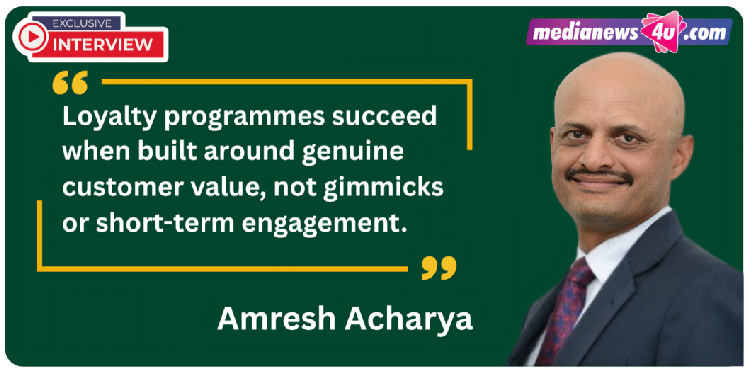
Whether a loyalty programme is a gimmick or genuinely valuable depends on how it’s designed.
That is true of any marketing activity, not just loyalty. If there is genuine intent to serve the customer, if the program is built with the customer’s interests actually in mind, it will deliver value.
Some of the most successful engagement programs in the world, run by airlines, banks, hotel chains, and retailers, are genuinely valued by their customers. In the same categories, you will find equally forgettable ones. The difference is not the industry or the platform. It is the sincerity of execution because eventually, gimmicks get found out. The programmes that endure over time are the ones that deliver real value, consistently.
The great part is you can work with an engagement program provider like us to learn best practices and ensure your program delivers both business and customer value.
Q. Is it imperative for the industry to shift from transactional cashback to meaningful engagement?
Transactional cashback and meaningful engagement are not opposites. Both have their place and the right balance depends on where you are in the product lifecycle and which customer segment you are addressing.
Cashback can be very effective at getting new customers to try a product. Once they are in, deeper engagement mechanics help bring them back. In many cases, one transitions into the other.
That said, in the long run, pure cashback can become expensive and tends to attract a certain type of customer who is deal-hunting rather than genuinely loyal. Data shows that a certain percentage of customers, maybe in the range of 10 to 15 percent in some segments, are simply chasing the best deal. They are not the customer you want to build a loyalty programme around. For sustained, profitable engagement, you need to go deeper than
cashback.
 Q. The company anticipates a 15–20% surge in discretionary spending, particularly within the electronics and apparel sectors. How will the company leverage this opportunity?
The programmes we run for banks and non-banking clients give customers the ability to transact and earn rewards across a wide range of spending categories. When we see a particular sector showing growth, electronics and apparel in this case, our approach is to ensure that the partners we work with in those categories are given greater prominence and visibility within our platforms.
This means our promotions, our engagement touch points, and the customer-facing elements of the programs are shaped to make those categories more accessible to the right customers at the right time. It is about connecting the customer’s earned rewards to the categories they are already inclined to spend in, and making that connection as seamless as possible for our banking and non-banking partner clients.
Q. DPDP forces loyalty programmes to move away from hoarding behaviour and toward explicit value exchange. How will this impact tactics in the future?
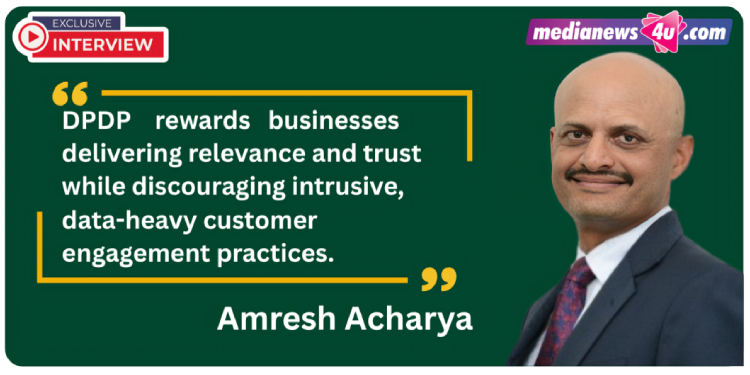
Honestly, if DPDP is forcing businesses to treat customer information well, that says something about how those businesses were operating in the first place. If you are running a genuine program, one where every communication is relevant and adds value, then DPDP changes very little for you. You were already doing the right thing.
What DPDP will do is discipline the ones who were spamming customers. Customers will be selective about who they give consent to. Businesses that have consistently delivered value will retain that consent. Those that have been intrusive or irrelevant will lose it.
And ultimately, the question was never about how much data you have, it is what you do with it. Data accumulated indiscriminately and used to bombard customers with unwanted messages is the problem.
Q. Any recent examples of clients who successfully implemented a loyalty programme at scale? What have been the key learnings?
I will speak to the learnings rather than to specific clients. What we have seen across clients ranging from large banks to NBFCs to smaller institutions and general retail partners is that a loyalty program takes time to yield its full potential. The currency has to be earned, customer habits have to form, and the engagement has to deepen over multiple interactions.
Programmes that are given the time and investment to mature deliver meaningful results. The key learning, really, is patience combined with discipline. You have to design it right from the start, stay committed to the original proposition, and resist the temptation to cut corners when results are not immediate. Programs that stick to those principles tend to do very well over time.
Q. D2C brands are sharpening their focus on loyalty programmes. How will this help drive repeat purchases, and is it tough to stand out if everybody has one?
A well-designed loyalty programme is meant to bring the customer back. It creates relevance, reinforces the relationship, and over time, builds a habit. A D2C brand that invests seriously in this will see repeat customers, and maybe even generate new customers through referrals.
A loyalty programme is not meant to make you stand out. It’s meant to bring relevance to the customer you already have. The product, the experience, the pricing, the brand identity – all of these contribute more fundamentally to whether a customer chooses you over someone else. A loyalty programme can deepen the customer relationship but it cannot be a substitute for the fundamentals. The difference will be in how well you understand your customers and use that to serve your them better through the program.
Q. Why do experiential and lifestyle-based rewards score high, especially with Gen Z?
Gen Z simply has a different relationship with what constitutes value. Data shows that they are less focused on asset accumulation in the way previous generations were and more oriented toward experiences.
That shift reflects how they have grown up, what they see around them, and what their peer group values. Rising per capita incomes, greater exposure through social media, and changing aspirations have all played a role.
This is not just about rewards. It reflects a broader shift in how this generation purchases and consumes across categories. Rewards programs are a mirror of consumer behaviour. Gen Z’s preference for experiential rewards is simply the program reflecting what this generation actually values.
 Q. In emotionally driven categories like fashion and beauty where selfexpression is important, is exclusivity key in a rewards programme?
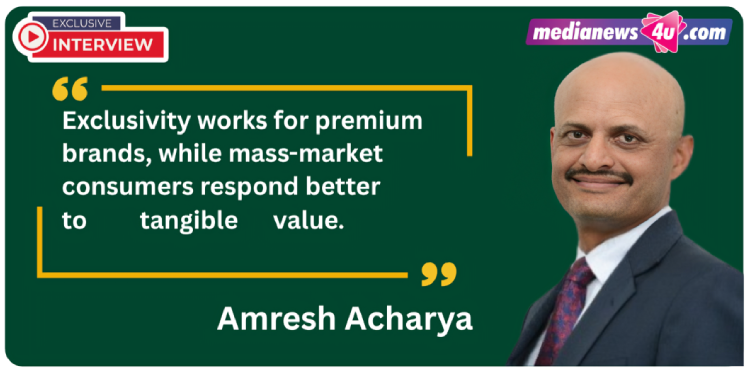
It depends entirely on the brand and the segment it serves. Exclusivity is not universally the right answer, it is the right answer for specific types of programs.
For a luxury fashion house, a premium hotel chain, or a high-end airline, exclusivity is central to the proposition. The program needs to feel as aspirational as the brand itself. A lounge invitation, a private preview, a complimentary airport transfer – these things carry weight because they reinforce the sense of privilege that the customer expects from a brand at that level.
But for a mass-market fashion or beauty brand, value to the customer in the form of discounts, rewards, or access to popular products is what resonates. Exclusivity, in that context, might actually alienate more customers than it attracts.
Q. Could you talk about the challenge of the trust gap that exists in loyalty programmes, and how can brands rebuild emotional connections?
The trust gap in loyalty programs almost always comes from one thing: promises that are not kept. Brands make a commitment to the customer – earn these points, redeem them this way- and then, somewhere along the line, the terms change.
Rewards expire unexpectedly. Redemption conditions change midway through the program’s life. The customer realises that what was promised and what is actually delivered are two different things.
This happens, more often than not, for cost reasons. Someone decides the program is getting expensive and finds ways to claw back value from the customer without being transparent about it.
Rebuilding trust is not complicated in theory, even if it requires discipline in practice. It comes down to honesty. Deliver what you promised. If the proposition has to change, be upfront about it. Treat the customer as a partner in the program rather than as someone to be managed.
Q. How have AI and predictive intelligence been integrated into the platform to enable a move from reactive rewards to intuitive, need-based experiences?
What technology of this kind does well is help us move from treating customers as a homogeneous group to treating customers as unique, characteristic-rich segments. When you are dealing with millions of customers across multiple programs, the ability to segment meaningfully, to identify patterns in behaviour, and to deliver the right message or offer at the right moment in real-time is where the real value lies.
A customer with a specific area of interest should see that reflected in the program. The goal is for each customer to feel that the program understands them, not just that it exists. That shift from mass communication to contextual, timely, individual engagement is what modern technology enables.
Q. How do you measure true ROI by shifting focus from acquisition to lifetime value and retention?
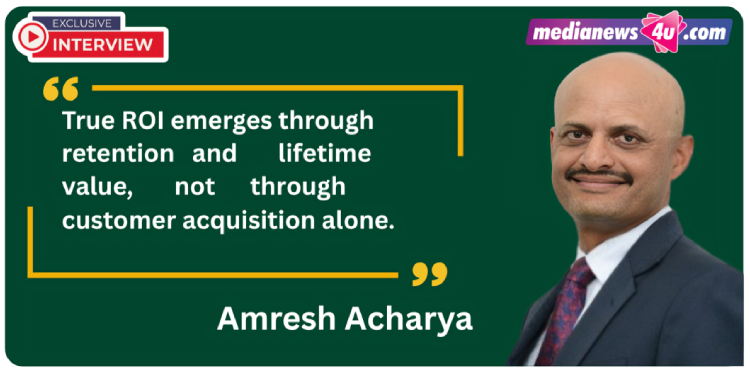
Acquisition cannot be used to measure ROI, it’s just an investment in the cost. ROI can only be measured when the return happens. And that return comes over time as the customer uses the product, generates revenue, and stays with you. For any product that lends itself to a loyalty program, that return is by definition a long-term phenomenon.
The products we work with are, almost entirely, products with a long usage cycle. The customer is not acquired once and forgotten. They are retained over years, and the value of that relationship compounds. The investment in acquiring the customer only makes sense when viewed against the returns generated across that lifetime.
Loyalty is fundamentally about retention and lifetime value. Acquisition marketing is a different tool, suited to a different problem. For products where a customer might only transact once, loyalty is the wrong instrument entirely. For products built for long-term relationships, it is the only instrument that makes commercial sense.
Q. What marketing campaigns and innovations can we expect to drive awareness on both the B2C and B2B sides?
We are a B2B2C and a B2B business, we do not have a standalone B2C operation. Everything we do flows through our clients to their end customers.
Our focus, on the innovation side, comes down to three things:
First, leveraging customer insights to build a more accurate picture of customer segments
and their complex preferences.
Second, combining our marketing automation and engagement tools to reach the right
customer with the right offer at the right moment.
And third, applying AI and machine learning to make that entire process faster, more precise,
and more relevant at scale.
 Q. How much R&D goes into programmes designed as interconnected ecosystems that help shape long-term habits in line with business objectives?
The programmes we run involve deeply interconnected systems on the client side – the product, the sales channel, the customer data, the inventory system, which need to speak to our platform in order to deliver the outcome the client wants.
Before any programme goes live, there is an intensive discovery phase. We need to understand what the client is actually trying to achieve, which of their systems hold the relevant information, and how our platform needs to be configured or customised to connect with all of it. In some cases, the client needs to invest in technology upgrades on their end before we can get started.
That discovery and development process can take weeks because the risk of getting it wrong is expensive in time and money for both parties. So it is not just R&D but learning, consulting, discovery, and development, all working together.