Tuesday, May 26, 2026
MediaNews4U
  • Exclusive
  • Advertising
  • Media
    • Radio
    • Cable & DTH
    • Print
    • Digital Frontier
    • Gaming Nexus
  • Television
  • OTT
  • Ad-Tech
  • Marketing
  • Campaigns
  • Analysis
  • Opinion
    • Opinion
    • Think Through
    • Prescience 2023
    • Prescience 2024
  • People
  • Events
    • Leader Speak
    • STRAIGHT TALK
    • Gamechangers
    • Print & TV Summit
MediaNews4U
  • Exclusive
  • Advertising
  • Media
    • Radio
    • Cable & DTH
    • Print
    • Digital Frontier
    • Gaming Nexus
  • Television
  • OTT
  • Ad-Tech
  • Marketing
  • Campaigns
  • Analysis
  • Opinion
    • Opinion
    • Think Through
    • Prescience 2023
    • Prescience 2024
  • People
  • Events
    • Leader Speak
    • STRAIGHT TALK
    • Gamechangers
    • Print & TV Summit
MediaNews4U.com
Home Authors Corner

Hybrid Identities: Marketing to a Generation That Refuses Labels

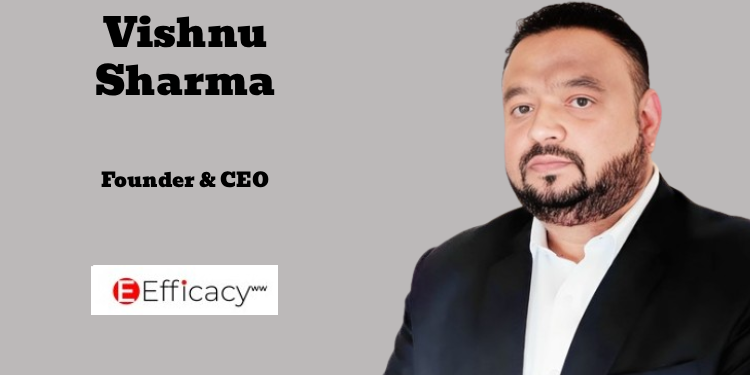
In this article, Vishnu Sharma, Founder & CEO, Efficacy Worldwide, explains that modern consumers, especially Gen Z, embrace hybrid identities across platforms and moments, requiring brands to move beyond demographics toward contextual, authentic, and behaviour-driven engagement strategies.

by Guest Column
May 26, 2026
in Authors Corner
Reading Time: 4 mins read
A A
Hybrid Identities: Marketing to a Generation That Refuses Labels
Share Share ShareShare

Marketing built its entire foundation on segmentation: age, gender, income bracket, and geography. Those variables worked when mass media meant a few television channels, a morning newspaper, and a mostly shared cultural script. The logic looked clean: find the common denominator, write it, and repeat.

That logic now faces strain. Traditional segmentation still matters, but it no longer tells the full story.

The real shift lies in identity itself. Younger consumers do not always live inside one stable self. They move through different moods, communities, aesthetic codes, and value systems across the same day. A single person may shift from finance-led content in the morning to creator commerce in the afternoon, gaming communities in the evening, and luxury aspiration at night.

This does not point to confusion. It points to hybrid identity behaviour.

Marketers now need to understand not only who a consumer is but also which self they express in a given moment. That shift changes how brands plan media, shape creative, and build relevance.

One Person, Many Tribes

Traditional tribe theory treated consumers as members of one dominant subculture. That model created neat segments. It also created neat misses.

Today, one consumer can belong to many tribes at once and move between them with ease. Gen Z identities span body acceptance, gender expression, digital fandoms, micro-aesthetic communities, and social cause affiliations. Some consumers move through these spaces by instinct, not strategy. They expect brands to stay current.

That reality now shows up across consumer durables, healthcare, BFSI, mobility, hospitality, education, and public outreach. The same person can behave like different audiences depending on the platform, purpose, and context.
The user who interacts with financial products through performance-led campaigns may later consume entertainment-led creator content, respond to emotionally driven brand storytelling on television, or discover products through social-first communities. A single campaign rarely reaches all of those states with equal force.

Many brands still rely on one campaign architecture, add youth slang, cast a diverse ensemble, and stop there. Younger audiences now spot the gap between performance and intent very quickly.

The Indian Complexity No One Can Ignore

India makes this conversation even more important.

Indian Gen Z carries a distinct double movement. They embrace global culture and local pride at the same time. They do not treat those forces as opposites. They treat them as part of the same identity.

This generation does not behave as one market. Behaviour changes across metros, Tier 2 cities, and Tier 3 cities. It also changes across language groups, income levels, and educational backgrounds.

That complexity now shapes ATL planning, digital campaigns, social media engagement, influencer ecosystems, OOH, cinema advertising, sports marketing, programmatic media, and Connected TV. Audiences are no longer split only by who they are. They split by where they live, what content they consume, which device they use, which language they prefer, and what they want in that moment.

Modern planning in India now needs more than broad demographic buckets. It needs attention to language ecosystems, device behaviour, regional consumption spikes, creator affinity mapping, attention decay, commerce intent signals, OTT and CTV viewing patterns, and cross-platform identity persistence.

A Tier-2 consumer in Indore may watch Korean pop culture, use fintech apps, follow cricket on Connected TV, discover beauty brands through regional creators, and still express strong cultural rootedness. That pattern no longer looks unusual. It looks normal.

Brands that speak only to the urban, English-fluent, global-facing segment leave too much of the market untouched.

Stop Selling to People. Start Meeting Them in Moments.

This generation does not always carry a fixed identity that marketers need to locate. They move through identity moments, and each moment brings a different mindset, need, and frame of reference.

Someone who shops for running shoes on a Tuesday morning at 6 a.m. may sit in an aspiration-driven self-improvement moment. That same person who browses vintage clothing on Sunday evening may sit in a countercultural aesthetic moment. The person has not changed. The context has.

That shift changes media planning.

Discovery may happen through creator content. Validation may happen in peer communities. Conversion may happen through performance media. Long-term affinity may grow through brand storytelling. These touchpoints rarely work in isolation. They work when brands connect them.

That calls for more than one big campaign aimed at Gen Z. It calls for multiple micro-engagements that speak to specific identity moments and keep the brand thread intact.

Today’s marketing ecosystem gives brands many tools for this. They can use behavioural targeting, first-party data, social listening, attention analytics, predictive segmentation, cross-device attribution, programmatic planning, and platform-level engagement maps. The challenge no longer sits in the lack of tools. It sits in how brands use them.

The purchase journey no longer runs in a straight line. Consumers now move between discovery, evaluation, peer validation, and loyalty in non-linear loops. Real-time community feedback often speeds up that movement.

What Authentic Commitment Actually Costs

Brands use the word ‘authenticity’ often. Consumers still judge whether brands mean it.

Younger audiences notice when brands perform values instead of building them into their business. They notice greenwashing. They notice symbolic campaigns. They notice diversity in ad casting that never reaches decision-making tables.

Real commitment costs more than a campaign. It asks brands to build inclusive representation into leadership and process, not just into visuals. It asks brands to back sustainability with public proof, not vague labels. It asks brands to stay consistent across television, digital, creator ecosystems, outdoor media, social platforms, and performance channels.

Authenticity breaks fast when a brand shifts its message opportunistically from one channel to another. Young consumers now compare what a brand says with what it does, and they do that in real time.

The New Brief

Do not retire demographic personas. Expand them.

Move beyond the “18–24 urban female” brief as a complete answer. Start writing briefs around identity stacks: clusters of values, aesthetic affiliations, behavioural signals, and psychological states that sit together in one moment.

For modern marketers, the question no longer sits only in who the audience is. It sits in how the audience changes across contexts, platforms, and moments.

Ask not just who your consumer is. Ask what moment you met them in, what signals shaped that moment, and which version of themselves came forward when you arrived.

This generation does not reject labels just to rebel. It refuses labels because labels often stay too small for the people they try to hold.

(Views are personal)

Tags: Efficacy WorldwideVishnu Sharma

RECENT POSTS

The Attention Economy Has Made Us Impatient: Manish Tripathi on What It Means for Brands
Authors Corner

The Attention Economy Has Made Us Impatient: Manish Tripathi on What It Means for Brands

May 26, 2026
0

There was a time when brands had the luxury of time. A consumer would read a newspaper advertisement in the...

Read moreDetails
Sustainability Is the New Showstopper: How Events Are Entering the ESG Era
Authors Corner

Sustainability Is the New Showstopper: How Events Are Entering the ESG Era

May 25, 2026
0

There was a time when the success of an event was judged by how loud it was, how bright it...

Read moreDetails
Why Improving Lead Quality Is Becoming More Important Than Increasing Lead Volume
Authors Corner

Why Improving Lead Quality Is Becoming More Important Than Increasing Lead Volume

May 22, 2026
0

As consumers become more conscious about data privacy and platforms tighten access to user-level signals, reaching the right customer through...

Read moreDetails
Less Visibility, More Power: The New Playbook for Leadership Branding
Authors Corner

Less Visibility, More Power: The New Playbook for Leadership Branding

May 20, 2026
0

There is a strange race happening in the corporate world right now, especially on LinkedIn. Every leadership profile suddenly looks...

Read moreDetails
Marketing to Families Means Speaking to Mothers First
Authors Corner

Marketing to Families Means Speaking to Mothers First

May 19, 2026
0

The Emotional Centre of Family Decision-Making In every Indian home, there is a deeply influential person who is shaping every...

Read moreDetails
How Brands Can Win IPL Through Mobile Gaming
Authors Corner

How Brands Can Win IPL Through Mobile Gaming

May 19, 2026
0

When you open a gaming platform during IPL, you enter a carefully constructed system built around participation. But "gaming platform"...

Read moreDetails

LATEST NEWS

upGrad appoints Mukesh Mundra as Chief Financial Officer

upGrad appoints Mukesh Mundra as Chief Financial Officer

May 26, 2026
The Attention Economy Has Made Us Impatient: Manish Tripathi on What It Means for Brands

The Attention Economy Has Made Us Impatient: Manish Tripathi on What It Means for Brands

May 26, 2026

ANALYSIS

influencer
Analysis

India’s creator economy hiring surges 919% as brands move influencer roles in-house: Indeed

May 25, 2026
0

Mumbai: The country’s creator economy is entering a more formalised phase, with content creation increasingly shifting from independent platforms into...

PEOPLE

upGrad appoints Mukesh Mundra as Chief Financial Officer
People

upGrad appoints Mukesh Mundra as Chief Financial Officer

May 26, 2026
0

Mumbai: upGrad has announced the appointment of Mukesh Mundra as its Chief Financial Officer (CFO). Based in Mumbai, Mukesh will...

MARKETING

Kotak Mahindra Bank elevates Celia D’Souza to Vice President – Marketing
Marketing

Kotak Mahindra Bank elevates Celia D’Souza to Vice President – Marketing

May 25, 2026
0

Mumbai: Kotak Mahindra Bank has promoted Celia D’Souza to the position of Vice President – Marketing, marking a new milestone...

Subscribe to Newsletters

ADVERTISING

Team Pumpkin wins Social Media Mandate for Lavie
Advertising

Team Pumpkin wins Social Media Mandate for Lavie

May 25, 2026
0

National: Team Pumpkin has secured the social media mandate for Lavie, strengthening the agency’s portfolio in the fashion and lifestyle...

PRINT

Jagran Prakashan named Publisher of the Year at ABBY Creative Awards 2026 Powered by One Show
Print

Jagran Prakashan named Publisher of the Year at ABBY Creative Awards 2026 Powered by One Show

May 21, 2026
0

Mumbai: The ABBY Creative Awards 2026 Powered by One Show has announced its Publisher of the Year results at Goafest...

AUTHOR'S CORNER

Hybrid Identities: Marketing to a Generation That Refuses Labels
Authors Corner

Hybrid Identities: Marketing to a Generation That Refuses Labels

May 26, 2026
0

Marketing built its entire foundation on segmentation: age, gender, income bracket, and geography. Those variables worked when mass media meant...

UPLIFT MEDIANEWS4U DIGITAL PVT LTD
No. 194B , Aram Nagar 2, JP Road,
Versova, Andheri West
Mumbai - 400061

For editorial queries:
[email protected]
[email protected]

For business queries:
Smitha Sapaliga - +91-98337-15455
[email protected]

Recent News

Hybrid Identities: Marketing to a Generation That Refuses Labels

Hybrid Identities: Marketing to a Generation That Refuses Labels

May 26, 2026
upGrad appoints Mukesh Mundra as Chief Financial Officer

upGrad appoints Mukesh Mundra as Chief Financial Officer

May 26, 2026
The Attention Economy Has Made Us Impatient: Manish Tripathi on What It Means for Brands

The Attention Economy Has Made Us Impatient: Manish Tripathi on What It Means for Brands

May 26, 2026

Newsletter

Subscribe to Newsletters

Medianews4u.com © 2019 - 2025 All rights reserved.

  • The South Side Story 2023 Download Report
  • Goafest 2023: Day 3
  • Goafest 2023: Day 2
  • Goafest 2023: Day 1
  • Straight Talk Gallery 2022
  • The South Side Story 2022 Download Report
  • Focus 2022
  • Futurescope Conclave Gallery 2022
  • The South Side Story 2021 Download Report
  • FOCUS 2021
  • Exclusive
  • Exclusive
  • Advertising
  • Media
    • Radio
    • Cable & DTH
    • Print
    • Digital Frontier
    • Gaming Nexus
  • Television
  • OTT
  • Ad-Tech
  • Marketing
  • Campaigns
  • Analysis
  • Opinion
    • Opinion
    • Think Through
    • Prescience 2023
    • Prescience 2024
  • People
  • Events
    • Leader Speak
    • STRAIGHT TALK
    • Gamechangers
    • Print & TV Summit

Medianews4u.com © 2019 - 2025 All rights reserved.