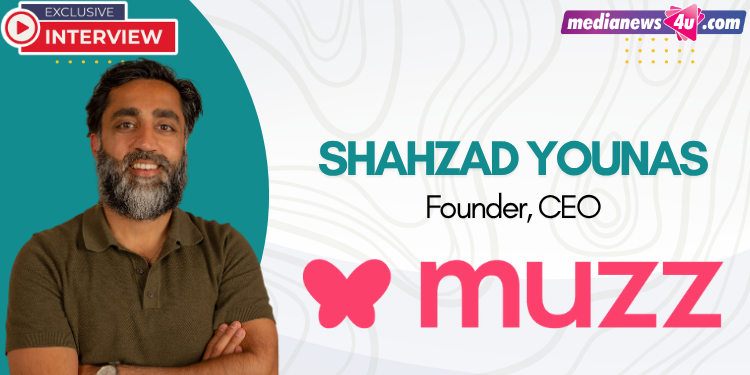
Muzz is a Muslim marriage app, operating in 190+ countries with 17 million single Muslims on the platform. Founded by Shahzad Younas, Muzz was built with a single purpose: to help Muslims find a life partner within their faith.
The platform has facilitated over 800,000 marriages globally and is built around the belief that every Muslim deserves a safe, serious, and accessible path to marriage. 90% of members find their partner without ever paying.
Medianews4u.com caught up with Shahzad Younas, Founder, CEO Muzz
Q. What was the gap in the market that led to the launch of Muzz?
There was simply nothing built for us. Matrimonial websites felt outdated and family-run. Dating apps were built around casual exploration. Neither worked for Muslims because Muslims don’t date, they marry. The intention is different from day one. We built Muzz for that intention.
 Q. Muzz is free for most users. What has been the big challenge in that?
When something is free, people can treat it casually. They browse without intent, create profiles they never update. That dilutes the experience for people who are serious. So the challenge has never really been the revenue model, it’s been keeping the platform intentional when the barrier to entry is low. That’s why verification, moderation, and a detailed sign-up process matter so much to us.
Q. What is the business model and how is it being finetuned?
Freemium. The platform is free in a meaningful way , you can genuinely find a partner without ever paying. Gold membership adds things like unlimited likes, boosts, and priority filters. But those features have to earn their price. We’re constantly asking ourselves: is this feature actually useful, or is it just a paywall? We’re not in the business of making marriage harder to find unless you pay.
Q. How is Muzz leveraging technology to offer a seamless experience?
Selfie verification on every profile is the baseline, it immediately raises the quality of the pool. Smarter matching using what people tell us about their religiosity, lifestyle, and marriage timeline. Automated moderation alongside a human team. And features like the Wali function, where users can bring a trusted person into their app experience. Technology should always serve the intention. We’re not building features to impress anyone.
 Q. Why is faith-first technology the next big wave in India?
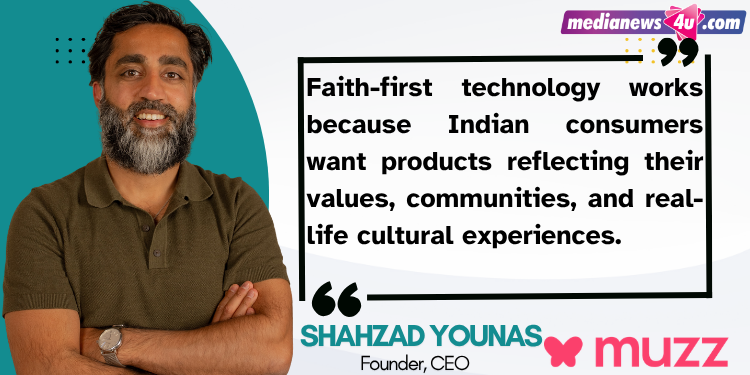
Because India is not one market, it’s hundreds of communities inside one country. For a long time, technology tried to serve all of them with one generic product. That’s changing.
For Indian Muslims, faith isn’t a filter you add on top of normal life. It’s how you approach marriage, family, and community. A product built genuinely around that will always outperform a generic one. People want depth, not just scale.
Q. What are Muzz’s goals for India in 2026 and what’s the gameplan?
The goal isn’t a download number. It’s to become the name Indian Muslims trust when they’re serious about finding a partner. The sequence is simple: build trust before building scale, go deep in one city before spreading across many, and build offline presence before expecting online to compound. Mumbai is likely the first real proof of concept. Get it right there, then replicate.
Q. What marketing tactics will be adopted to grow awareness?
Content that speaks to the real tension young Indian Muslims feel, between family, personal choice, and faith. WhatsApp communities, small curated gatherings, and real user stories. And making sure one message is consistent everywhere: Muzz is not a dating app.
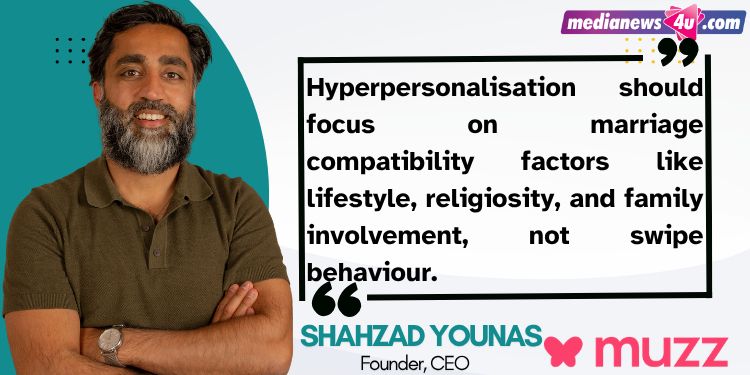 Q. Will the media mix be led by digital or will traditional media play a role?
Digital, that’s where our users are and where trust is built in this category. But traditional media does something digital can’t easily do in India: it signals legitimacy to the generation above our users. So digital-first, but not digital-only.
Q. Why has Muzz stayed away from gamification?
Because gamification is designed to keep you on the app. We’re designed to get you off it, married. Those are opposite goals. Streaks, badges, daily challenges — all of that makes marriage feel like a game, and marriage is not a game. Our users are serious people. The product should reflect that.
Q. Is word of mouth going to be crucial for India?
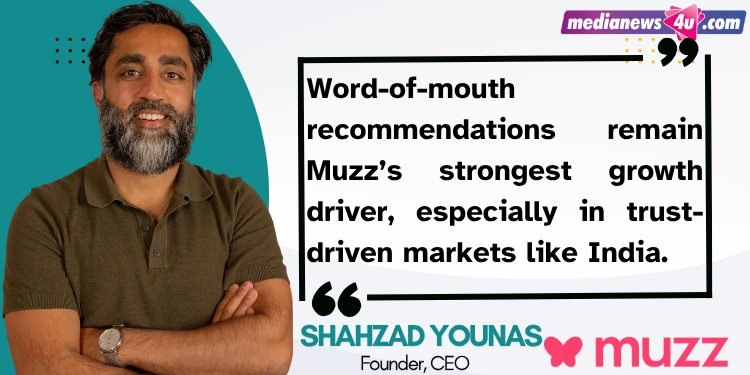
It’s not just crucial, it’s the whole thing. We have 800,000 marriages globally, and the most powerful marketing we’ve ever done is someone telling their cousin “I found my husband on Muzz.”
In India especially, trust travels through personal networks. A recommendation from someone you know carries more weight than any campaign we could run. The goal is to build something so good that people talk about it without being asked.
Q. How does Muzz ensure safety and validate user profiles?
Every profile is selfie-verified, that’s the baseline, not a premium feature. We offer ID verification with a government document for a blue tick. We have a team of 30 women who personally review every report. Automated moderation runs alongside them. We’ve permanently removed over 500,000 accounts.
And the Wali feature lets users bring a trusted person. In India we’re also thinking carefully about blur photos and screenshot blocking, because for a Muslim woman, being seen on any platform carries real social risk. Safety is the infrastructure everything else is built on.
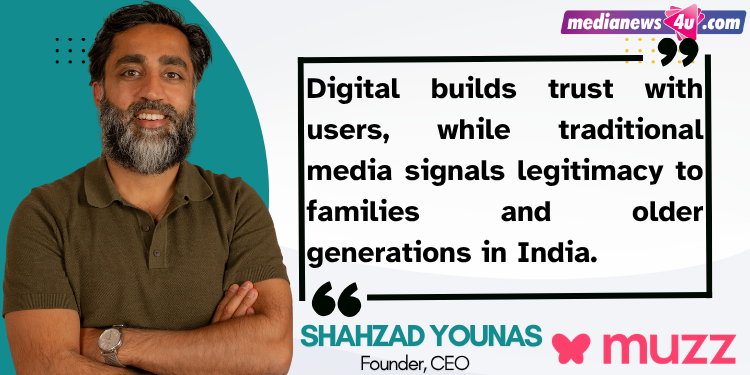 Q. Is hyperpersonalisation key for success in the marriage app category?
Yes, but not in the way it’s usually meant. It’s not about showing you more of what you already swiped on. It’s about relevance, matching on the things that actually matter for building a life together. Religiosity, family involvement, marriage timeline, lifestyle.