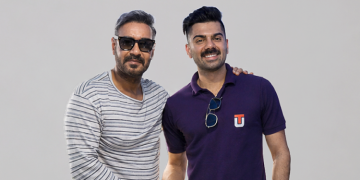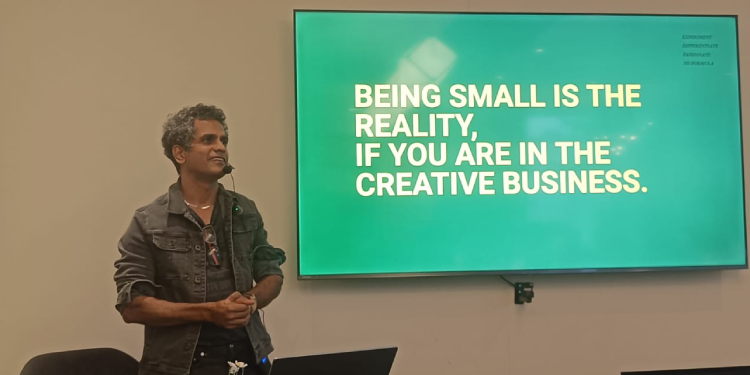
Chennai: Santosh Padhi’s AdTalk, aptly titled “Small Has All,” was part philosophy, part memoir, and part critique of the modern advertising industry. Through stories of triumph, failure, resilience, and reinvention, Paddy argued that creativity thrives not in large structures but in small, focused teams built on trust, ownership, and conviction.
There is a government campaign from 1969 that Santosh Padhi is grateful his parents ignored. The Hum Do Hamare Do family planning drive was, he concedes, a world-leading public health initiative, but had his parents taken it seriously, Paddy—born in 1973 as the youngest of three—would not exist. “I wouldn’t be here,” he told the packed auditorium with a grin, adding, “So I’m glad they didn’t listen,” before pausing to deliver the punchline, “I, on the other hand, took it very seriously: two kids.”
He has also taken advertising very seriously, and over three decades, he has built campaigns that stopped India mid-scroll, mid-commute, and mid-breath. He has won Cannes Lions Gold, led India’s first agency to take Creative Agency of the Year at AdFest, and co-created one of the most-watched telecom campaigns the country has ever produced. Yet, the abiding theme of his #ADTALKS session for the Advertising Club Madras was not scale, reach, or revenue, but rather the radical, slightly counterintuitive idea that the best creative work comes from small teams—and that the industry’s instinct to grow big may be its greatest creative mistake.
The Pin and the Philosophy
Paddy opened his presentation not with a standard campaign reel, but with a riddle, asking the audience to guess an object invented 177 years ago that is affordable, universally used by everyone from children to royalty, still entirely relevant in a digital world, and generating close to 20 million dollars annually in global revenue. The answer, eventually, was revealed to be the humble safety pin, illustrating a characteristically Paddy move of finding the profound in the prosaic. The pin served as his entry point into a philosophy he has spent thirty years arriving at, which is that being small is not a limitation but a deliberate design choice.
“Look at every giant thing in the world,” he said, noting that bridges are built with nuts and bolts, the Eiffel Tower is made of thousands of small pieces, and the sea is made of small drops, concluding that being small is the reality of today—not just physically, but emotionally. In a creative business specifically, he argues that size is the enemy of authenticity, explaining that you cannot be fake when you are small because you possess a philosophy, a vision, and a culture that you build yourself, whereas in a network agency, somebody sitting in the US or UK decides your culture.
Five Agencies, Thirty Years of creativity.
Paddy started his career at Mudra Communications in 1996, spending two years there learning the basics of the trade before moving on to a decade-long tenure at Leo Burnett. It was during this decade that the tension between creative ambition and institutional scale first revealed itself to him. Though he rose quickly through the ranks, transitioning from art director to Creative Head of Leo Burnett India, and deeply enjoyed the creative work itself, he did not enjoy what the corporate machinery had made him. Reflecting on that period, he noted that he was spending most of his time managing people rather than creating, leading him to realize he wasn’t built for a massive organization, just as most creative people aren’t. He wanted to be a playing coach rather than just a manager sitting on the sidelines, and this realization led to a characteristically unconventional resignation. Instead of writing a traditional letter, he simply walked into the office of his boss—the legendary KV Sridhar, affectionately known as Pops—and handed him his own visiting card with his name firmly crossed out, effectively signalling his departure.
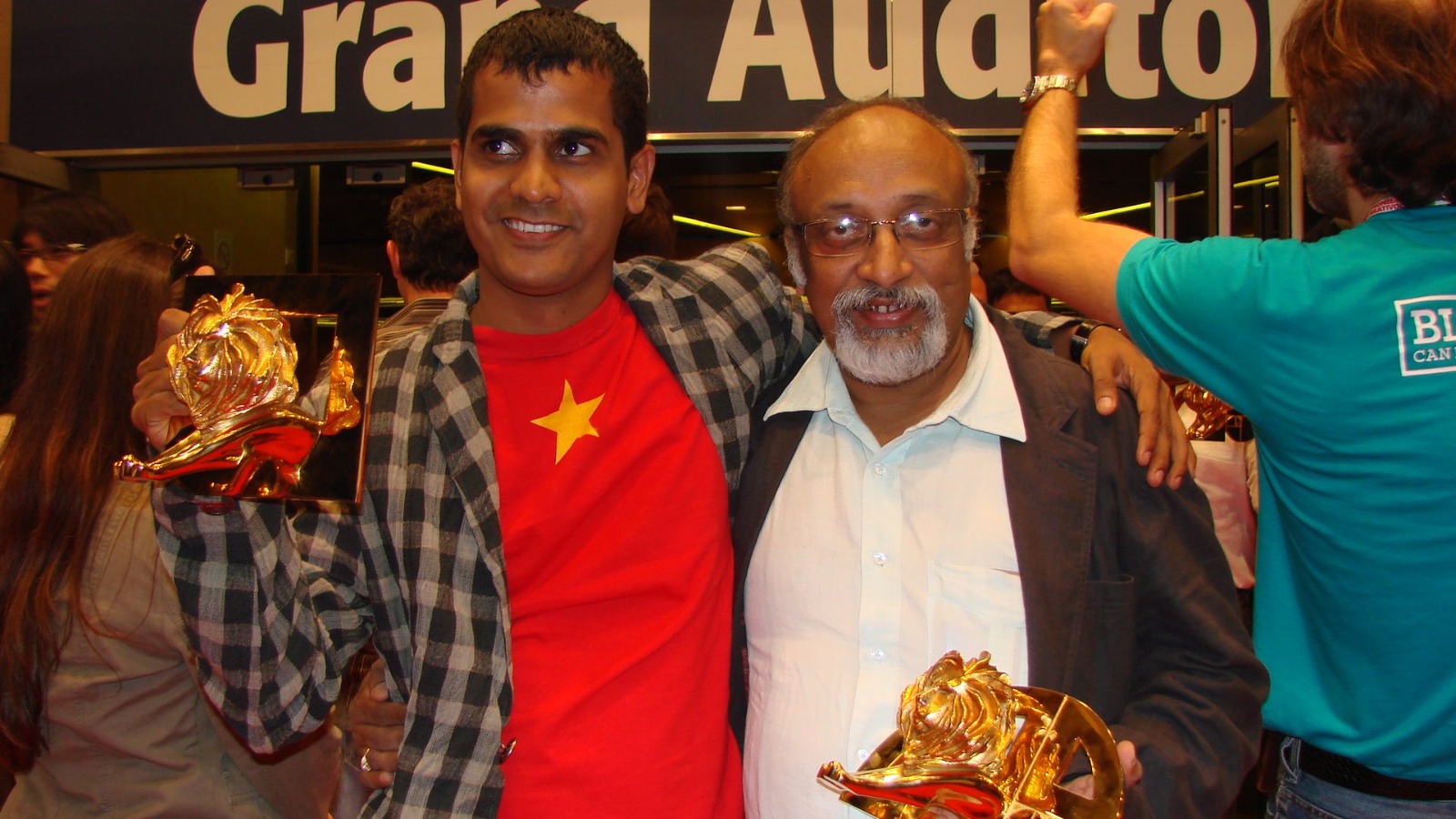
He left the agency with one final, monumental landmark behind him: the Luxor Highlighter campaign, which he created alongside writer Russell Barrett and a tight, six-person team. The concept was born almost entirely by accident while they were working on a standard identity redesign, where a small observation organically grew into a full-scale campaign. This resulted in three distinct print executions where highlighted text told complete, parallel stories, alongside India’s very first ‘Cannes Cyber Lion’—an innovative digital ad featuring a cursor-activated highlighter that revealed crucial parts of real news articles. Ultimately, this tiny team from the Mumbai office managed to beat out Leo Burnett’s massive Chicago and New York offices at the global network awards, walking away with two golds, a silver, and two bronzes, providing the perfect high note for Paddy to officially walk out the door.
Taproot: Born in a Mill, Tested by Fire
In January 2009, Paddy co-founded Taproot India with Agnello Dias—affectionately known across the industry as Aggy—one of India’s most respected creative veterans. Their partnership was advertising’s version of a supergroup, bringing together two formidably talented, fiercely independent minds who had each grown exhausted by the rigid machinery of large network agencies. Together, they set out to prove a singular, ambitious point: that a small agency could not only compete with the industry giants but actively beat them.
The agency’s first home was the Great Eastern Mill in Byculla, a cotton spinning mill caught in a long-running legal dispute. It was a half-demolished, half-preserved space where workers still arrived in shifts simply to prove the business remained legally operational. Despite its rugged state, it was an eccentric and beautiful environment that Paddy deeply loved. He recalled that it didn’t even feel like being in Bombay, noting that it became truly magical whenever it rained. The unique space was discovered thanks to his photographer friend, Amol Jadhav, who recognized it as the ideal creative sanctuary and had initially reserved it for them.
However, that initial magic did not last long. On the night of November 28, 2009—barely ten months after opening—a devastating fire broke out in the mill. Fuelled by a neighbouring warehouse packed with plastic toys, the blaze raged continuously for eighteen hours. Paddy had left the office just after midnight, and by 2:00 AM, the entire workspace was gone. Lost inside that office were close to five hundred books Paddy had meticulously collected since his college days, including first editions of CAG annuals, rare design volumes, and a copy of the Best 100 Coke Print Ads signed by industry luminaries—treasures he had spent fifteen years tracking down. He quietly reflected that Leo Burnett had been his home for ten years, and as his book collection grew there, his wife noted they could no longer fit in their 400-square-foot flat, prompting him to move them to the Taproot office right before the disaster occurred, leaving him with a deep sense of pain whenever he thinks of them no longer being around.
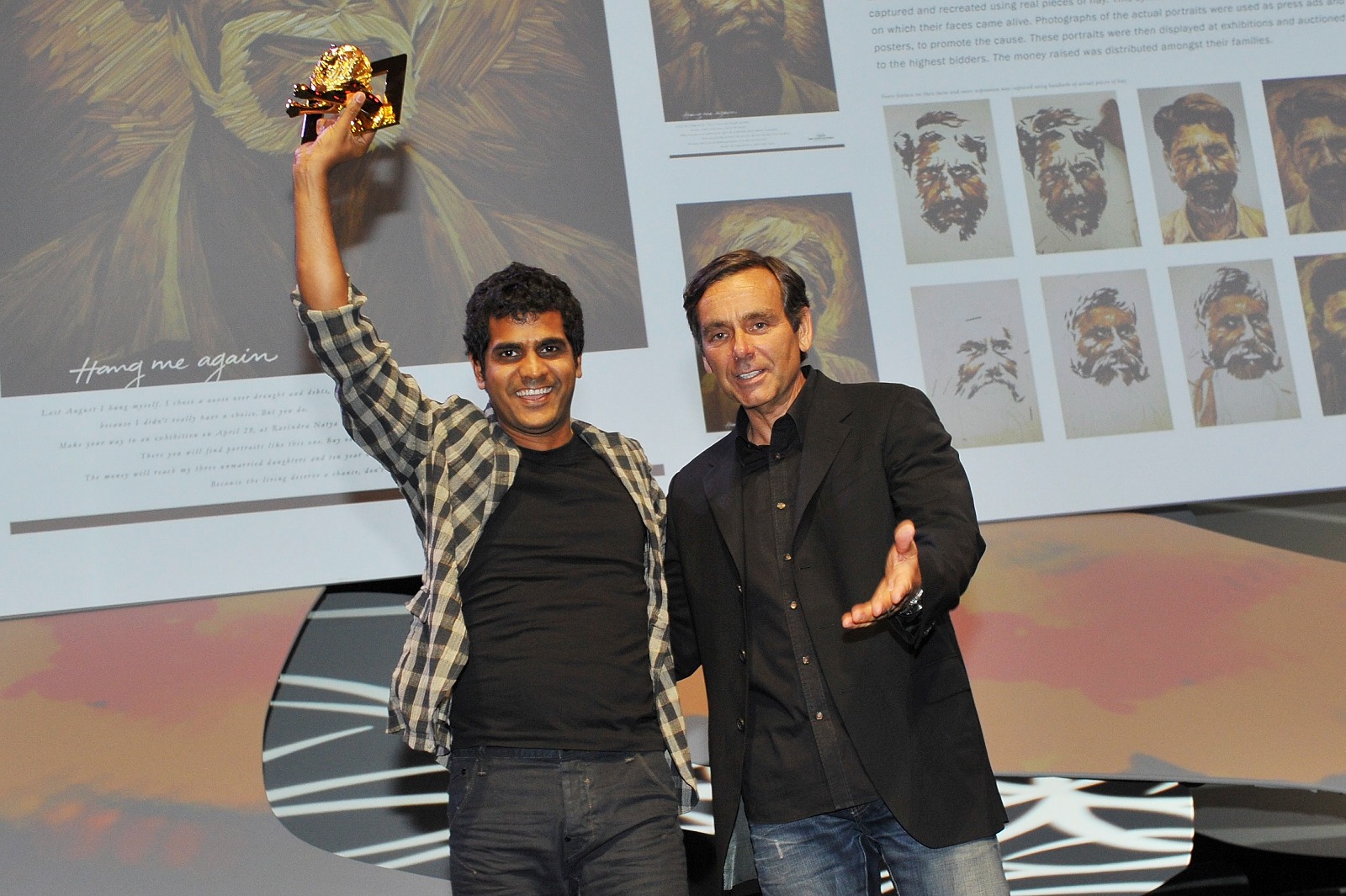
When the fire brigade finally allowed them to enter the ruined premises hours later safely, Paddy immediately searched for an installation campaign stored in the office. He located the rolls of Conqueror paper, which consisted of intricate portraits crafted from hundreds of paper rolls that an illustrator had spent an entire month creating. Though they miraculously appeared to still be standing, they had been reduced entirely to fragile ash, and the moment he touched them, they collapsed.
Undeterred by the tragedy, Paddy and Dias set out to rebuild. A friend, Kartik Vijay—now a renowned Director of Photography—generously offered up his Matunga flat, allowing the small team of eleven to move in and get back to work. They painstakingly recreated the Conqueror portraits from scratch with the same illustrator, Ananth Nanvare, and released the campaign. The resurrected project went on to achieve massive international acclaim, winning both a Gold and a Silver at Cannes, earning recognition as the 11th most awarded print campaign in the world, and propelling Taproot into the global top 20 independent agencies at Cannes that year. Reflecting on the triumph over adversity, Paddy simply noted that work is a good healer and that he ultimately wanted to heal himself by bringing that campaign to life.
Even Creative knows the numbers game.
By 2012, the Taproot story had entered its second act. At Goafest, the agency—which then consisted of just thirty-two people—took home an incredible thirty-four medals. By comparison, Ogilvy, the agency that claimed first place, employed over two thousand people. Paddy’s statement to the press was sharp and precise, pointing out that Taproot had managed to win more awards than it had employees, securing 34 medals with a 32-person team. He emphasized that success is never about headcount, but rather about the quality of the people and the caliber of the work they produce.
Dentsu acquired Taproot around September 2012, and by 2013, the agency’s success went continental. Taproot made history by becoming the first Indian creative advertising agency to be named Creative Agency of the Year at Adfest in Pattaya, which is widely regarded as Asia’s most prestigious advertising award show. Paddy happened to be the sole representative from Taproot attending Adfest that year. When the Advertising Agency of the Year award was announced, the entire Dentsu network was sitting in the audience, having won the title two years in a row and standing on the verge of a historic hat-trick. However, their newly acquired creative hot shop, Taproot, ultimately took the top prize and blocked them from achieving that milestone. Reflecting on the moment with a smile, Paddy noted that despite missing out on their hat-trick, Dentsu’s support for Taproot’s win was incredibly loud and proud.
For several years, the partnership between Dentsu and Taproot thrived. Eventually, however, the network announced a global decision to dissolve the individual identities of all its acquired agencies—including Taproot—in order to consolidate them under a single new corporate brand. Paddy found this strategic move entirely incomprehensible. He argued that forcing an American brand like McGarryBowen into the region made little sense because no one in India had any familiarity with it, making the erasure of highly established local brands like Webchutney and Taproot a senseless exercise. To formalize his departure from the agency, he intentionally chose the festival of Raksha Bandhan—a traditional day of ties and untying—ensuring that the symbolism of his exit was entirely deliberate.
The Campaigns That Defined the Era
The Pepsi cricket world cup campaign, 2011:
Represents a pivotal moment that Paddy feels fundamentally altered the dynamics between massive global brands and boutique agencies in India. The Cricket World Cup was being hosted in India, and Pepsi was the tournament’s title sponsor. Multiple global offices of JWT had tried and failed to deliver a campaign strategy that resonated with the client. Taproot—which had a team of just seventeen people at the time—was given a tight three-week window and charged a formal pitch fee to take a shot at it. Their winning campaign was built around a sharp, modern cricket insight: celebrating the game’s unorthodox style of play. The final project featured legendary Indian cricketers like M.S. Dhoni, Harbhajan Singh, and Virender Sehwag, alongside actor Ranbir Kapoor, and seamlessly integrated Sri Lankan and Bangladeshi cricket stars as well.
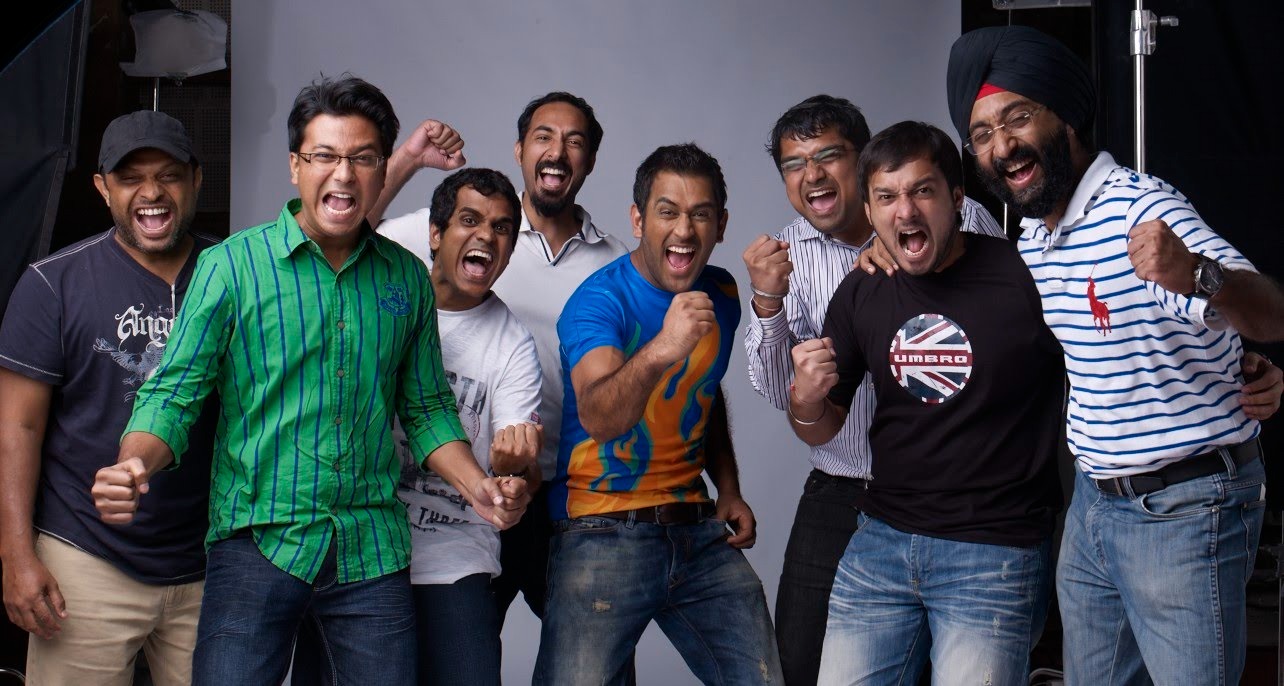
Airtel campaign, “Har ek friend jaroori hota hai,” in 2012:
This streak of game-changing work continued with the iconic Airtel campaign. At the time, Vodafone was dominating the telecom category with highly engaging brand work, while Airtel had firmly positioned itself as a traditional family brand. When Taproot was invited to pitch for the account, they proposed a counterintuitive pivot: repositioning Airtel around the concept of youth friendship rather than family, while strategically keeping the brand’s data-centric developments and consumer offerings at the forefront. Alongside the primary anthem film, Taproot produced an array of smaller television commercials and digital films exploring various types of friendships. The sheer depth of the concept allowed them to execute deeply resonant work that ran for three to four years, fundamentally shifting the trajectory of one of India’s largest telecom brands—an achievement driven entirely by a tiny core creative team and a client who fiercely trusted their conviction.
Adidas Odds paralympic campaign, 2016:
This unconventional philosophy culminated in the landmark Adidas Odds campaign, which began when a junior team member noticed a profound oversight in the industry: athletic brands do not sell single shoes for para-athletes who have lost a limb, meaning every purchase forces them to spend double the money only to discard half the product. The resulting campaign centred on Major D.P. Singh—India’s first blade runner and a Kargil War veteran who was once tragically declared dead on the battlefield before being revived—and proposed that Adidas sell mismatched shoe pairs, such as two lefts or two rights. Launched during the 2016 Paralympics, the initiative was an instant phenomenon, amassing five million views, 1.5 million likes, and nearly ten million dollars in earned PR within its very first week. The resounding success prompted Adidas to announce plans to expand the Odds initiative globally, proving that while the physical packaging changes cost the company almost nothing, the core idea itself was the invaluable byproduct of thirty years of looking at the world differently.
The 101 COVID print ads campaign, 2020:
Serves as another striking example of small-scale efficiency. When the pandemic shuttered India, the Free Press Journal newspaper initially requested just a few public service advertisements. However, that small request rapidly expanded into sixty-nine consecutive daily executions, eventually reaching a total of 101 distinct ads. Because public health issues were changing on a daily basis during that tumultuous period, the campaign maintained a highly positive, nimble approach. It continually educated readers through a minimalist single visual—thoughtfully designed to read like a logo—paired with a powerful, complementary headline that brought the daily message to life. Incredibly, just three people created the entire series: Paddy, his copywriter, and an illustrator. This staggering creative output earned the campaign official placement in both the India Book of Records and the Asia Book of Records for the most consecutive advertisements published.
The Times Of India v/s The Hindu:
For several years, Taproot also managed the Times of India account, fostering one of the advertising industry’s most consistent and successful client-agency relationships. This partnership was fuelled by a reliably simple, provocative brief from client Rahul Kansal, who summed up the objective in a single line: “The Hindu is boring.” From that sharp constraint, a brilliantly witty, hard-hitting campaign was born, sparking a highly entertaining public banter between the two rival newspapers. Reflecting on this success, Paddy noted that while the final creative piece is usually the thing that gets celebrated, tremendous credit belongs to creative-friendly clients like Kansal. These clients expertly distil their complex business challenges into simple briefs, giving agencies the immense creative freedom required to bring authentic brand stories to life—even if the clients themselves do not always get the public credit they deserve.
Into Creative: The Choice to Stay Small
Following a two-and-a-half-year tenure leading Wieden+Kennedy India—during which he launched their ninth global office in Mumbai, transformed a heavily loss-making operation into one generating highest ever revenue in the history of W+K India and a massive margin of eighteen percent, Paddy fought hard for employee severance pay when the network ultimately decided to shut down its India operations, and personally ensured his team landed safely in new roles—Paddy walked away from large agency networks entirely.
On March 30, 2024, he launched INTO Creative
With a deliberate mandate that is highly unusual for someone of his industry standing: remaining intentionally small. Since its inception, he has turned down multiple inquiries from large brands, comparing those corporate relationships to clients who call upon a Picasso just to ask him to whitewash their walls. He has expressed that he is simply not interested in managing corporate processes anymore, choosing instead to enjoy the pure creation process, which he believes is desperately needed in today’s world.
INTO’s recent portfolio includes impactful work for Chupps Footwear. Last October, they launched India’s first biodegradable shoe, and because the budget was tight, Paddy decided to co-direct four brave promotional films alongside his close friend and photographer, Amol Jadhav. The campaign also featured India’s first biodegradable billboard—a giant 10×20-foot outdoor slider made entirely from natural materials that intentionally collapsed when it rained in Mumbai, providing a real-time demonstration of what happens when Chupps footwear eventually lands in a landfill.
More recently, Into Creative executed another boutique initiative for one of their retainer brands, My Organic Earth, a small organic food company. For them, the agency created Vighnaharta, a Ganesha-shaped rat repellent infused with natural ingredients including chili, clove, neem, citronella, garlic, and clay, which was distributed for free to over two hundred local farmers. Built on the premise of no traps and no poison, the campaign beautifully repurposed traditional mythology for a modern, sustainable purpose.
The Larger Argument
Near the end of his session, Paddy turned his attention to the bigger picture, asserting that there is truly no such thing as a inherently massive agency. Instead, he argued that large networks are simply collections of smaller agencies and units working hard to make the overarching brand appear larger and more popular, emphasizing that something only becomes big when many small components come together. He lamented that respect for small teams, both inside and outside large organizations, is actively diminishing in the modern industry. Pointing to legendary agencies that once defined major holding groups—such as BBDO, FCB, DDB, TBWA, and Lowe—he noted that across multiple global markets, these legacy brands are being collapsed into merged entities. Their unique identities are being erased for short-term cost efficiency, driven by decisions made far away from the actual cultures they built. He explained that global CEOs and CFOs sitting in distant offices often have zero understanding of local markets, leading them to make corporate decisions that destroy decades of culture built on immense hard work. Because advertising is fundamentally a people’s business, he firmly believes that an organization cannot be un-people-friendly and survive for long, especially in a deeply creative industry.
His ultimate prescription for this corporate landscape is not a grand revolution, but a steady resistance. For those working inside large network agencies, his advice is to build a distinct culture within their own immediate walls, protect the people around them, and focus on creating small pockets of excellence within the larger corporate machine. For those currently considering independence, his advice is simple: just go. He emphasized that given how much India’s market is booming, this is the perfect time to leap, as there is more than enough business for everyone, urging anyone who feels they have something unique to say to go out and say it.
Thirty years into his career, with a catastrophic mill fire long behind him and a biodegradable billboard slowly composting in Mumbai, Paddy shows absolutely no signs of wanting to be anywhere else. He remains small by choice, fierce by nature, and is still, quite clearly, doing the best work of his life.