Digital advertising has long run on two promises, massive scale and surgical precision. Programmatic reach came first. Then came sophisticated targeting, first-party data, and audience segmentation.
Today, the industry faces its third and most decisive challenge: operational efficiency. The low-hanging fruits have been plucked. What remains is the harder, often invisible task of plugging leaks that quietly destroy returns.
The problem is no longer whether platforms can find the right audiences. They can. The real challenge is how slowly the entire ecosystem responds when performance starts declining. This delay creates what I call the “Latency Tax”, the hidden, compounding cost brands pay in the gap between a campaign losing effectiveness and decisive corrective action being taken.
Auctions happen in milliseconds. Real-world decisions, unfortunately, still take hours or days.
A campaign can begin underperforming on a Friday evening, due to creative fatigue, audience exhaustion, or a sudden market shift. Yet meaningful optimisations often wait until Monday morning after reports are reviewed, stakeholders aligned, and approvals secured. In that window, crores worth of impressions continue serving while waste compounds silently.
The Financial Cost — Global and Indian Reality
Globally, programmatic inefficiencies, delayed optimisation, and related waste contribute to tens of billions of dollars in lost spend every year. Invalid traffic alone costs advertisers over $63 billion annually.
In India, the numbers are even more pressing. The digital advertising market has grown rapidly and is expected to maintain strong momentum in 2026, with digital now accounting for nearly half of total ad expenditure. Brands are spending hundreds to thousands of crores on performance marketing, especially during festive seasons.
For an Indian advertiser spending ₹50–200 crore annually, even an 8–12% loss due to delayed optimisation translates into several crores of wasted media every quarter. Lower average CPMs encourage high-volume campaigns, but they also conceal inefficiencies. When scaled aggressively across Meta, YouTube, CTV, and regional platforms, small latency gaps become extremely expensive.
Frequency Fatigue Across the Consumer Journey
The problem compounds with frequency management. Most brands still apply frequency caps within individual platforms rather than across the full consumer journey. A user in India may see the same creative multiple times on Instagram, twice on YouTube, and several more times on connected TV and vernacular publisher apps. Each platform’s dashboard may look acceptable. Collectively, the audience has already moved into irritation and fatigue.
Beyond 5–6 exposures, purchase intent drops noticeably while annoyance rises sharply. In India’s price-sensitive yet impulse-driven market, this drives higher CPA’s, especially during peak festive windows like Diwali, when budgets are heaviest. Brands end up paying for repetition instead of influence.
When a brand shows you the same ad ten times to sell you one product, the math has already failed. At that point, you are not running a campaign — you are running a subsidy for the platforms.
Zombie Impressions and Broken Suppression Loops
Another critical leak lies in exclusion systems. In theory, the moment a user converts, often instantly via UPI, they should be immediately suppressed from all acquisition campaigns. In practice, delays in CRM-DSP syncing, fragmented data environments, and manual workflows create “zombie impressions” served to people who have already bought.
These wasted impressions not only burn budget but risk annoying recent customers in a market where trust and word-of-mouth are powerful. With the Digital Personal Data Protection Act moving forward, clean, timely, and responsible data handling will become even more important, making inefficient, non-compliant spend increasingly risky.
The Efficiency Frontier and the New Media Leader
As privacy regulations tighten, third-party signals weaken, and media costs rise, growth can no longer come from simply spending more. Sustainable ROAS and margins now depend on how fast systems detect waste and eliminate it.
This shift is fundamentally changing the media buyer’s role. The future operator will be less of a dashboard manager and more of a systems architect, building rules engines, thresholds, and autonomous frameworks that enable continuous optimisation instead of periodic interventions.
Autonomous and semi-autonomous media systems are already emerging. These solutions use real-time signals to reallocate budgets, suppress converted or fatigued audiences, rotate creatives dynamically, and adjust bids or frequency within minutes rather than days. Early adopters are seeing faster recovery from performance dips, lower blended CPA’s, and improved overall returns.
A mid-sized Indian D2C brand spending ₹10–15 crore monthly during festive season demonstrably loses ₹80 lakh to ₹1.5 crore over a single weekend from undetected creative fatigue or delayed suppression. Continuous real-time optimisation catches those signals early rotating assets, tightening cross-platform frequency, suppressing recent converters, recovering 10–20% of spend while protecting brand equity.
A Leadership Imperative
For CMOs, CFOs, and marketing leaders in India and globally, the Latency Tax is no longer a tactical operations issue. It is a serious business efficiency and competitive advantage question. In India’s fast-growing yet increasingly regulated digital ecosystem, the brands and agencies that compress the insight-to-action loop most effectively will gain clear structural advantages in ROAS, scalability, and profitability.
In modern media buying, success is no longer only about targeting the right audience at the right time.
Operational speed has become the new precision.
About the Author
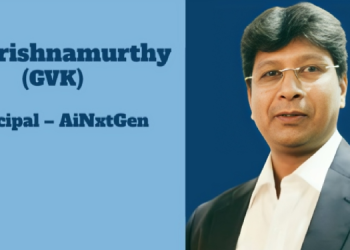
GV Krishnamurthy (GVK) is Partner at AdNexa.ai and a veteran media strategist with over three decades of experience spanning broadcast, print, digital, and advertising strategy across India. A committee member of the Advertising Club Bangalore, GVK writes regularly on media accountability, measurement gaps, and structural shifts in India’s advertising ecosystem. Views expressed are personal.
(Views are personal)