Wednesday, April 1, 2026
MediaNews4U
  • Exclusive
  • Advertising
  • Media
    • Radio
    • Cable & DTH
    • Print
    • Digital Frontier
    • Gaming Nexus
  • Television
  • OTT
  • Ad-Tech
  • Marketing
  • Campaigns
  • Analysis
  • Opinion
    • Opinion
    • Think Through
    • Prescience 2023
    • Prescience 2024
  • People
  • Events
    • Leader Speak
    • STRAIGHT TALK
    • Gamechangers
    • Print & TV Summit
MediaNews4U
  • Exclusive
  • Advertising
  • Media
    • Radio
    • Cable & DTH
    • Print
    • Digital Frontier
    • Gaming Nexus
  • Television
  • OTT
  • Ad-Tech
  • Marketing
  • Campaigns
  • Analysis
  • Opinion
    • Opinion
    • Think Through
    • Prescience 2023
    • Prescience 2024
  • People
  • Events
    • Leader Speak
    • STRAIGHT TALK
    • Gamechangers
    • Print & TV Summit
MediaNews4U.com
Home Authors Corner

Why Ignoring ‘Smaller’ Celebrations Could Be a Billion-Dollar Blind Spot for Brands

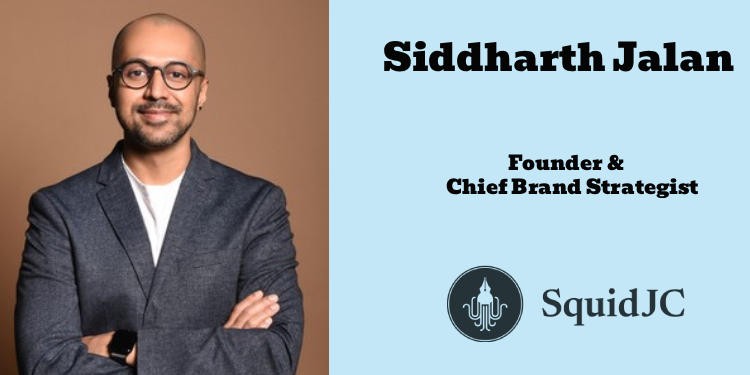
In this article, Siddharth Jalan, Founder & Chief Brand Strategist, SquidJC, explains that ignoring smaller regional celebrations is a billion-dollar blind spot, as they drive consumer loyalty, cultural relevance, insights, and growth beyond marquee festivals.

by Guest Column
October 3, 2025
in Authors Corner
Reading Time: 4 mins read
A A
Why Ignoring ‘Smaller’ Celebrations Could Be a Billion-Dollar Blind Spot for Brands
Share Share ShareShare

Every year, India’s advertising calendar lights up around Diwali, Holi, Eid, and Christmas. These marquee festivals dominate campaign planning, media spends, and brand visibility. Look at any advertising agency around the season time, and you’ll see a flurry of activity and empty coffee mugs.

Yet, I believe that beneath this glittering surface lies an overlooked reality. India is a mosaic of regional and cultural celebrations that rarely feature in mainstream marketing strategies. Ignoring these so-called ‘smaller’ festivals, like Bihu in Assam, Chhath in Bihar and UP, Onam in Kerala, or Lohri in Punjab, is a missed opportunity for cultural relevance. And it could well be a billion-dollar blind spot.

The Power of Localised Festivities

Smaller celebrations are anything but ‘small’ in the markets they belong to. Chhath Puja, celebrated across Bihar, Jharkhand, and eastern UP, draws millions to riverbanks and carries its own unique rituals, food, and gifting practices. Bihu, the Assamese New Year, is marked by community feasts, new clothing, and agricultural rituals with strong ties to youth culture and music. Onam in Kerala, while geographically specific, has seen global resonance with the Sadya meal and Vallam Kali boat race becoming cultural icons. Each of these festivals shapes consumer behaviour, from purchasing clothes and jewellery to upgrading household goods and embracing digital services, often at a scale that rivals national festivals within their regions.

The reason most brands concentrate on Diwali, Holi, or Eid is simple – these festivals deliver pan-India recall. But the result is predictable, with an overcrowded marketplace where campaigns often blur into one another.

For years, marketers argued that smaller festivals lacked the reach to justify large budgets. Today, that argument does not hold. With micro-targeting, local-language media, and programmatic advertising, the cost of entry into regional storytelling has dropped dramatically. And more importantly, smaller festivals provide the perfect opportunity for brands to extend and sustain their larger narrative. Instead of appearing only during headline festivals, marketers can maintain continuity across the cultural calendar, ensuring their voice is present in meaningful, localised contexts throughout the year.

Untapped Consumer Markets

The consumer base powering India’s next wave of growth sits largely in tier 2 and tier 3 cities. They also form the heartlands of festivals like Chhath, Bihu, and Lohri. To overlook these occasions is to overlook the very consumers who are shaping India’s economic future. One of our clients, a tea company, has about 70% of their revenue emerging out of these cities and towns.

What makes this even more compelling is the data opportunity. Smaller festivals naturally lend themselves to focused, insight-driven campaigns. A brand experimenting with Bhojpuri-language ads during Chhath or Assamese music-led activations during Bihu is generating rich consumer intelligence while building cultural relevance.

Patterns of response across formats, platforms, and messaging can feed back into national campaigns, making them sharper and more efficient. Each regional festival, in effect, becomes a live laboratory for consumer insight while simultaneously carrying forward the master brand narrative.

When Smaller Festivals Deliver Big Results

There are already strong examples of how this approach works in practice. Tanishq has consistently used Onam to reinforce its national message of ‘celebrations made special’, weaving Kerala’s traditional attire and jewellery into its storytelling and in the process boosting sales in the region.

Coca-Cola, by introducing limited-edition packaging in Assamese motifs and tying up with local musicians, created strong emotional resonance during Bihu and registered apparent double-digit growth in Assam during the festival period. Even FMCG players operating in staples like oil and detergent report 20–30 percent spikes in sales when they align promotions with such festivals.

Building Loyalty Through Authenticity

The emotional equity of smaller festivals often outweighs the fleeting recall of big-ticket campaigns. When a brand invests in authentic, concentrated storytelling, whether through language, rituals, or collaborations with local communities, it signals respect and inclusivity.

Consumers notice when their traditions are acknowledged, and this translates into long-term loyalty. An Ugadi-themed campaign in Telugu, for instance, resonates more deeply with families in Andhra Pradesh and Telangana than a generic Holi ad ever could, because it makes them feel seen. Over time, these efforts compound, embedding the brand into the rhythm of a consumer’s cultural life.

From PR Blind Spot to Strategic Edge

Smaller festivals also hold untapped potential from a communications standpoint. Local newspapers, regional influencers, and cultural commentators are far more likely to amplify authentic brand participation in their traditions than generic campaigns during Diwali. For marketers under pressure to maximise efficiency, this presents a dual benefit of earned media coverage combined with cultural legitimacy. In essence, every localised campaign during a smaller festival becomes about data-backed continuity.

The opportunity is vast, but it must be approached carefully. Cultural sensitivity is non-negotiable, as reducing a festival to clichés risks backlash. What we recommend is collaborating with local artisans, musicians, and NGOs, which can ensure authenticity but also build goodwill within the community. And storytelling should not be treated as a translation exercise but as a creative canvas in itself. When executed with care, the payoff can be disproportionate to the spend.

And let’s not forget about how easy technology has made it to scale regional insights. Vernacular OTT platforms and geo-targeted ads allow brands to activate smaller celebrations with precision, without committing massive pan-India budgets. Social commerce further amplifies this effect, turning regional spikes in sentiment into measurable sales. For brands looking to blend cultural resonance with commercial results, the digital ecosystem provides the multiplier they need.

Brands that will win in India over the next decade will be those that embrace the full spectrum of its cultural life, not just the headline festivals. By ignoring smaller celebrations, marketers risk not only missing authentic connections but also leaving billions in consumer spend untapped. Because the big festivals may get brand attention, but it’s the local ones that win lasting loyalty.

(Views are personal)
Tags: Siddharth JalanSquidJC

RECENT POSTS

Micro-Dramas at $300 Million: Structural Shift or Context-Driven Spike?
Authors Corner

Micro-Dramas at $300 Million: Structural Shift or Context-Driven Spike?

March 31, 2026
0

India's micro-drama segment has crossed $300 million in revenue within its first year, clocking 100 million monthly active users and...

Read moreDetails
Why Creator Fatigue Is the Next Big Crisis Brands Are Ignoring
Authors Corner

Why Creator Fatigue Is the Next Big Crisis Brands Are Ignoring

March 30, 2026
0

Be honest. When was the last time you actually watched a sponsored post till the end? Not scrolled past. Not...

Read moreDetails
AI Ethics in Advertising: Where Should Brands Draw the Line?
Authors Corner

AI Ethics in Advertising: Where Should Brands Draw the Line?

March 28, 2026
0

Let me say something that most people in the marketing and communications industry are thinking but not saying out loud....

Read moreDetails
The Rise of Agentic AI: From Answering Questions to Achieving Outcomes
Authors Corner

The Rise of Agentic AI: From Answering Questions to Achieving Outcomes

March 27, 2026
0

Artificial Intelligence in customer engagement has progressed through clear stages of maturity. What began as simple scripted chat flows has...

Read moreDetails
Control Uday, Control… But Who’s Actually Controlling?
Authors Corner

Control Uday, Control… But Who’s Actually Controlling?

March 26, 2026
0

A few months ago, I had written about agencies becoming “AIgencies.” At that time, it felt like we were just...

Read moreDetails
How new-age agencies are engineering luxury for brands, not only inheriting it
Authors Corner

How new-age agencies are engineering luxury for brands, not only inheriting it

March 25, 2026
0

There was a time when luxury didn’t need explaining. It arrived with history, European ateliers, generational craftsmanship, heritage buildings, and...

Read moreDetails

LATEST NEWS

Dainik Bhaskar Journalists Honoured with Ramnath Goenka Awards for Excellence in Journalism – 2026

Dainik Bhaskar Journalists Honoured with Ramnath Goenka Awards for Excellence in Journalism – 2026

April 1, 2026
Kazam launches ‘Vrooom’ April Fool’s campaign to highlight EV charging resilience in peak summer

Kazam launches ‘Vrooom’ April Fool’s campaign to highlight EV charging resilience in peak summer

April 1, 2026

ANALYSIS

IPL Advertising Evolves: Why Creativity and Measurement Now Matter More Than Spend
Analysis

IPL Advertising Evolves: Why Creativity and Measurement Now Matter More Than Spend

March 30, 2026
0

IPL 2026 is reinforcing the league’s status as one of the most powerful advertising ecosystems in global sport. With projected...

PEOPLE

Citykart appoints Rohit Goyal as Chief Financial Officer
People

Citykart appoints Rohit Goyal as Chief Financial Officer

March 31, 2026
0

Mumbai: Citykart has announced the appointment of Rohit Goyal as its Chief Financial Officer (CFO), as the company accelerates its...

MARKETING

Shashank Jain exits PwC India Deals Practice; Mohit Chopra to Lead
Marketing

Shashank Jain exits PwC India Deals Practice; Mohit Chopra to Lead

March 31, 2026
0

Mumbai: PwC India has announced a leadership transition in its Deals practice, with Shashank Jain stepping down from his role...

Subscribe to Newsletters

ADVERTISING

Dentsu Lab, D.A.V. Public School & Classteacher launch ‘Bullying Decoder’ to address verbal bullying in classrooms
Advertising

Dentsu Lab, D.A.V. Public School & Classteacher launch ‘Bullying Decoder’ to address verbal bullying in classrooms

March 31, 2026
0

Mumbai: Dentsu Lab, D.A.V. Public School and Classteacher Learning Systems have unveiled ‘Bullying Decoder’, an AI-led innovation designed to identify...

PRINT

Mathrubhumi Journalists set a benchmark in Journalism with Ramnath Goenka Awards wins
Print

Mathrubhumi Journalists set a benchmark in Journalism with Ramnath Goenka Awards wins

March 28, 2026
0

Kochi: Kerala’s leading media conglomerate, Mathrubhumi Group, proudly announces that its journalists Muhammed Sabith UM and Akhil Sivanand have been...

AUTHOR'S CORNER

Micro-Dramas at $300 Million: Structural Shift or Context-Driven Spike?
Authors Corner

Micro-Dramas at $300 Million: Structural Shift or Context-Driven Spike?

March 31, 2026
0

India's micro-drama segment has crossed $300 million in revenue within its first year, clocking 100 million monthly active users and...

UPLIFT MEDIANEWS4U DIGITAL PVT LTD
No. 194B , Aram Nagar 2, JP Road,
Versova, Andheri West
Mumbai - 400061

For editorial queries:
[email protected]
[email protected]

For business queries:
Smitha Sapaliga - +91-98337-15455
[email protected]

Recent News

Team Wolfbird wins top honours at ‘On the Spot’ competition, secures LIA Creative LIAisons slots in Las Vegas

Team Wolfbird wins top honours at ‘On the Spot’ competition, secures LIA Creative LIAisons slots in Las Vegas

April 1, 2026
Dainik Bhaskar Journalists Honoured with Ramnath Goenka Awards for Excellence in Journalism – 2026

Dainik Bhaskar Journalists Honoured with Ramnath Goenka Awards for Excellence in Journalism – 2026

April 1, 2026
Kazam launches ‘Vrooom’ April Fool’s campaign to highlight EV charging resilience in peak summer

Kazam launches ‘Vrooom’ April Fool’s campaign to highlight EV charging resilience in peak summer

April 1, 2026

Newsletter

Subscribe to Newsletters

Medianews4u.com © 2019 - 2025 All rights reserved.

  • The South Side Story 2023 Download Report
  • Goafest 2023: Day 3
  • Goafest 2023: Day 2
  • Goafest 2023: Day 1
  • Straight Talk Gallery 2022
  • The South Side Story 2022 Download Report
  • Focus 2022
  • Futurescope Conclave Gallery 2022
  • The South Side Story 2021 Download Report
  • FOCUS 2021
  • Exclusive
  • Exclusive
  • Advertising
  • Media
    • Radio
    • Cable & DTH
    • Print
    • Digital Frontier
    • Gaming Nexus
  • Television
  • OTT
  • Ad-Tech
  • Marketing
  • Campaigns
  • Analysis
  • Opinion
    • Opinion
    • Think Through
    • Prescience 2023
    • Prescience 2024
  • People
  • Events
    • Leader Speak
    • STRAIGHT TALK
    • Gamechangers
    • Print & TV Summit

Medianews4u.com © 2019 - 2025 All rights reserved.