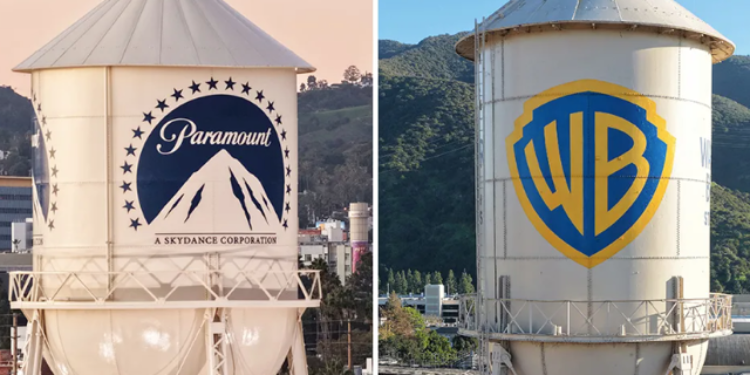
Mumbai: In a dramatic end to one of the biggest media M&A battles in recent years, David Ellison’s Paramount Skydance has secured a deal to acquire Warner Bros. Discovery (WBD), after Netflix declined to match a sweetened rival offer that the WBD board deemed superior.
WBD confirmed Thursday that Paramount Skydance’s revised cash proposal of $31 per share, valuing the media conglomerate at roughly $111 billion including debt, had overtaken Netflix’s earlier agreement. Under the original merger terms with Netflix, WBD must now pay a $2.8 billion termination fee, which Paramount has agreed to cover as part of its takeover package.
Netflix, which had announced plans in December to buy WBD’s studios and streaming assets for about $82.7 billion in cash, said the economics of a higher bid no longer made sense.
“We’ve always been disciplined, and at the price required to match Paramount Skydance’s latest offer, the deal is no longer financially attractive,” Netflix co-CEOs Ted Sarandos and Greg Peters said in a joint statement.
Paramount’s biggest expansion yet
The transaction will fold the entirety of Warner Bros. Discovery into Paramount’s portfolio, spanning film and TV studios, HBO and its streaming platform, gaming operations, and linear networks including CNN, Discovery, HGTV, TBS and TNT.
Paramount itself was acquired in 2025 by Skydance Media with substantial backing from Oracle co-founder Larry Ellison, David Ellison’s father. The latest WBD bid is similarly underpinned by Ellison family capital, with Larry Ellison—worth about $201 billion—providing additional equity.
The deal also includes assumption of roughly $33 billion in WBD debt and is supported by a $57.5 billion debt financing package from Bank of America, Citi and Apollo Global Management. Paramount’s own market capitalisation is about $12 billion, underscoring the scale of external financing required.
Strategic calculus and market reaction
Warner Bros. Discovery said the Paramount transaction “will create tremendous value for shareholders,” reversing its earlier stance that Netflix’s proposal was superior. Paramount’s final bid topped its previous $108 billion all-company offer by raising the cash price by $1 per share.
Investors appeared to favour Netflix’s discipline: the streaming giant’s shares rose more than 10% in after-hours trading, while Paramount gained about 4–5%. WBD stock dipped modestly in late trading.
Netflix emphasised that it will instead continue investing heavily in content—about $20 billion this year—and resume share buybacks under its capital allocation plan.
Political and operational scrutiny ahead
The combined Paramount–WBD group will unite two of Hollywood’s largest legacy studios and extensive news and entertainment holdings under David Ellison’s control. However, Ellison has already signalled potential job reductions as the businesses integrate.
The takeover also intensifies scrutiny of Ellison’s growing influence over US media. Paramount’s ownership of CBS News has drawn criticism from journalists and commentators who argue coverage of the Trump administration has faced internal pressure. Larry Ellison is a prominent supporter and donor to former President Donald Trump.
Regulatory review now looms over what would be one of the most consequential consolidations in global media, reshaping competition across film, television, streaming and news.