A few years ago, when my primary forte was digital, I was having a heated discussion with a colleague who had spent her entire life in offline advertising. In the middle of the debate she asked me a very simple question:
“What’s the role of advertising?”
I dug into my small little well of digital experience and started listing everything that came to my mind — performance metrics, attribution models, targeting capabilities and the like.
She listened patiently. Then after a brief pause she said something incredibly simple:
“The only job of an ad is to make the brand popular.”
Simple words, yes. But the deeper meaning stayed with me.
If an ad has to make a brand popular, two things need to happen:
It has to be catchy, and it has to be seen enough times by the right people.
Even the best creative asset is meaningless if it doesn’t reach the intended audience at sufficient frequency. In fact, if your ad isn’t being seen enough times by the right people, it might as well be moved from the brand investment column to the expense column.
And if the objective is to achieve frequency, the creative must also do justice to the media plan that’s being developed. In other words, a creative team must understand media reasonably well if they want their work to drive business impact.
The first time I saw this principle play out clearly was during the 2014 Indian election campaign.
Two very different strategies were deployed by the ruling dispensation and the opposition.
There was already some inherent negativity towards the ruling party at the time. The opposition amplified this effectively through short 15-second ads that ran at extremely high frequency during the IPL.
I must have seen those ads 10 times during a single match.
On the other hand, the ruling party went to the opposite end of the spectrum. They produced a beautifully emotional two-minute film that tried to build an emotional connection with the party.
The problem?
I saw it two or three times during the entire campaign.
Assuming parity in media investment, one 2-minute spot equals roughly eight 15-second spots.
And there lies the lesson:
Good creative + good media thinking = real impact.
Fast forward to 2025–26.
Over the years, I’ve moved from being a digital-only expert, to a digital-first believer, to now being a reasonably medium-agnostic thinker.
Depending on the category, the brand’s life stage and the objective, the strategy may be digital-first with offline support, or offline-first with digital reinforcement.
But one thing is constant.
Media costs have been escalating steadily.
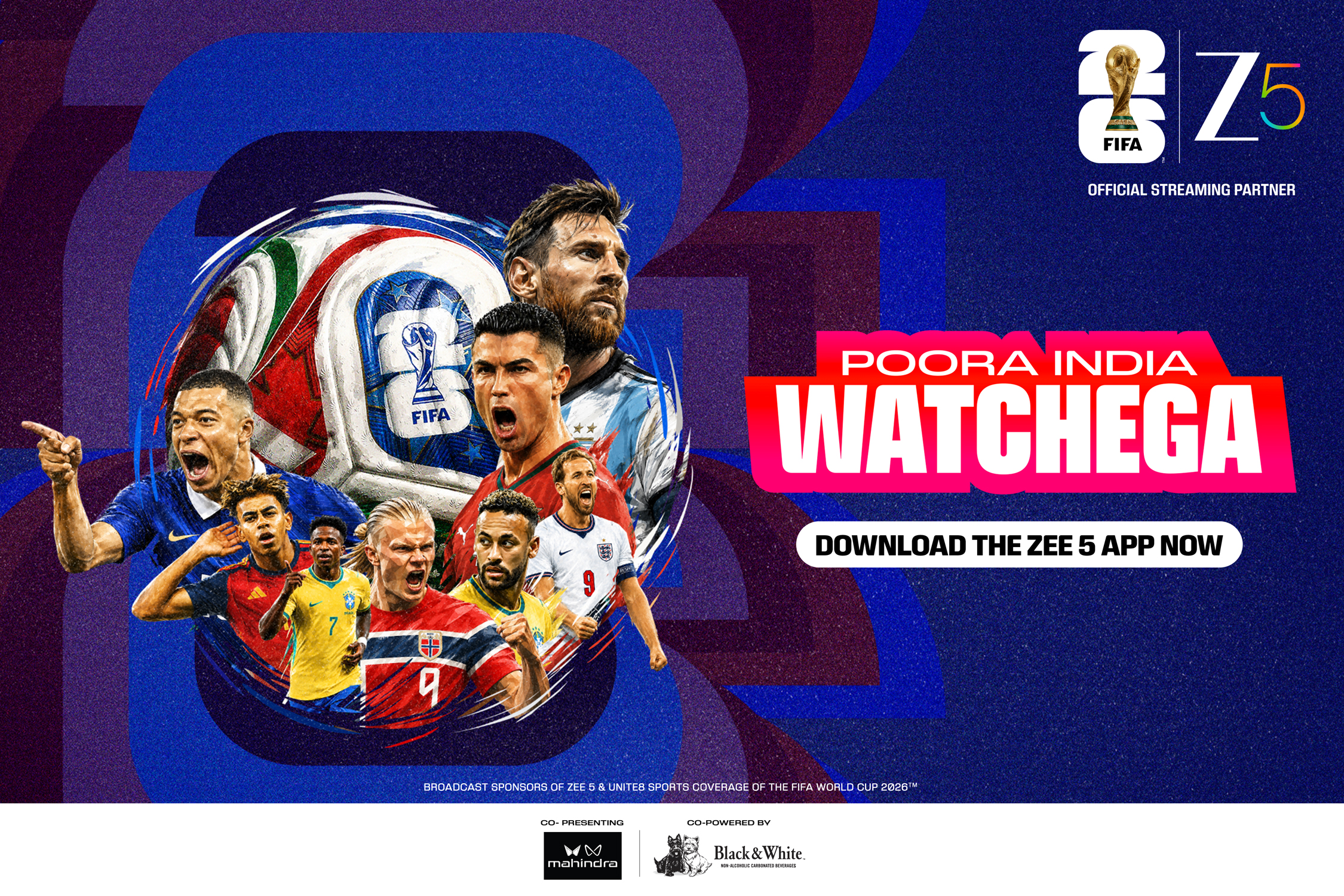
Recently we bought inventory around the World Cup finals, and it was significantly more expensive than Meta, YouTube or regular OTT buys.
Which brings us to a simple reality:
If you want impact, you need frequency.
If you want frequency, you either need an Akshayapatra-like budget…
or you need shorter edits — 20 seconds, 10 seconds, sometimes even 6 seconds.
In a parallel universe called LinkedIn, however, I often see my fellow travellers — agencies, commentators and influencers — proudly sharing their latest work.
Many of these are genuinely outstanding pieces of creativity.
But the lingering question in my mind is always the same:
What are they going to do with this asset?
Most of these films are 45 seconds, 60 seconds, sometimes even 90 seconds long.
These simply aren’t media-friendly assets.
Not a single one of these ads can realistically run in its true form with meaningful frequency on paid media. We’ve also been guilty of doing this ourselves in the past — no denying that.
But over time we have started asking a simple question at the beginning of every brief:
“Where and how will this run?”
Almost every time, the client eventually says something like:
“The media edit will be 20 or 30 seconds at best.”
That realisation has changed how we think about creative.
Today we design films modularly, wherever possible.
We don’t start with a long film and then cut it down.
We start with a 20-second idea, and then see how that can expand into longer edits if needed.
Whenever possible, we strongly encourage clients to stick to 20 seconds or shorter.
After all, what’s the point of putting serious money behind a duration that might only be watched by a handful of people on owned channels?
The other day, I saw a wonderful 60-second launch film on LinkedIn. It was for a new service from an established holding company.
I genuinely loved the film and messaged a senior leader there.
I told him the ad was excellent. Then I asked:
“Sirji, isko aap chalayenge kidhar? Itna lamba edit media pe justice nahi karega.”
His response was immediate:
“You’re right. There is a concern there.”
Interestingly, this same gentleman had once told me something that stuck:
“Sirji, mujhe toh sirf 20 sec, 15 sec, 10 sec aur 6 sec samajh mein aata hai. Baaki ka mujhe lena dena nahi hai.”
As a bootstrapped founder, every investment I make has to deliver returns.
I tell my clients the same thing.
While longer edits may look more glamorous, especially on LinkedIn or award show reels, creativity must also survive the realities of media economics.
So here’s my small request to the growing tribe of independent agencies and creators:
By all means, chase the glamour.
But before celebrating the film, take a step back and ask one simple question:
Will this creative actually work when it meets the media plan?
Because at the end of the day, advertising isn’t just about making beautiful films.
It’s about making brands popular.
(Views are personal)