As generative AI becomes increasingly embedded across the advertising ecosystem, it is beginning to reshape how premium video campaigns are created, executed and scaled. In CTV particularly, AI is helping simplify creative production, automate workflows, and expand access to TV advertising for a much broader set of advertisers.
In this context, Magnite has been investing in AI-led innovation across streaming and programmatic advertising. Recently, Magnite announced the acquisition of streamr.ai, a generative AI platform designed to automate and accelerate CTV advertising. streamr.ai enables advertisers to generate broadcast-ready video ads from basic inputs such as a business name, website or brand assets, and launch campaigns within minutes. The platform applies AI to key steps such as creative production, voiceovers, formatting across ad lengths, and campaign setup, helping reduce the traditional cost and complexity barriers associated with TV advertising.
This development reflects a broader shift in the industry, where AI is redefining creative workflows, unlocking new advertiser segments such as small and mid-sized businesses, and driving greater efficiency for publishers and agencies operating in premium video environments.
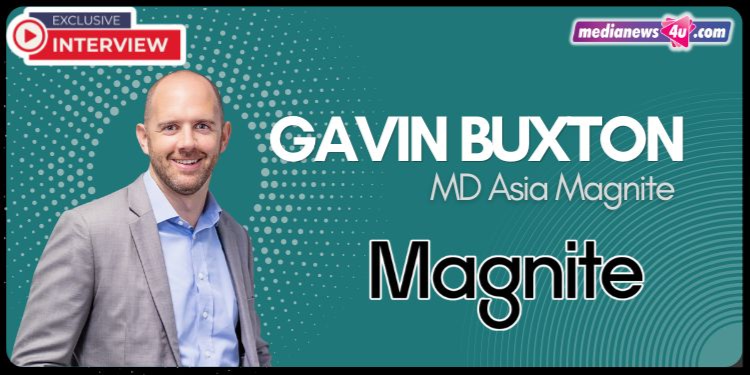
In light of this transformation, Medianews4u.com caught up with Gavin Buxton MD Asia Magnite. He leads Magnite’s growth and strategic partnerships across the region and can share timely perspectives on how AI is influencing the future of streaming advertising in markets like India and Southeast Asia.
Q. What goals does Magnite have for India in 2026 and how will you go about achieving them?
India is one of the most dynamic and fast-growing digital advertising markets in the world, and it continues to be a strategic priority for Magnite. Since opening our Mumbai office several years ago, we’ve focused on deepening our partnerships with publishers and buyers while helping them navigate an increasingly complex and diverse media landscape.
As India’s programmatic advertising market continues to expand, we see significant opportunity to support the market’s next phase of growth through innovation, education, and closer collaboration with our partners.
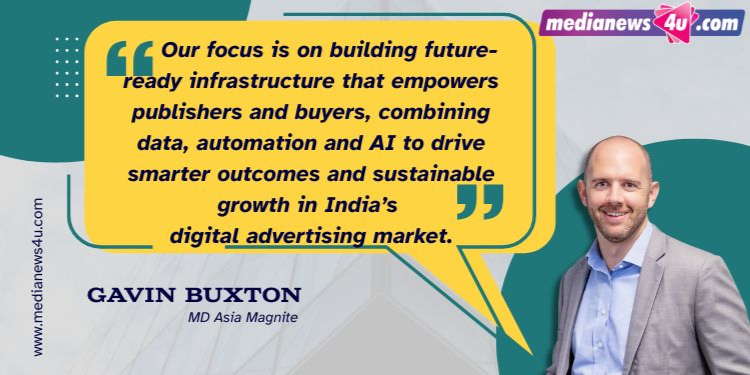
To do this, we’re investing in and building technology that reflects where the industry is headed. With AI already transforming many facets of programmatic, we’re applying AI in practical, problem-solving ways that create value for both buyers and sellers. Our recent acquisition of streamr.ai and initial tests of our seller agent are two examples of how we’re embedding intelligence into the marketplace to enhance efficiency, strengthen transparency, and deliver measurable outcomes.
Q. How is AI transforming Connected TV (CTV) advertising? What trends do you expect to see in this regard in 2026 in India and globally?
AI is reshaping CTV from a largely passive viewing channel into a more transparent, performance-driven environment. We’re already seeing the rise of assistant-driven workflows that simplify how campaigns are planned, executed, and optimized and this year, AI agents will likely be more deeply woven into the fabric of digital advertising, helping to make CTV buying more outcome-driven and efficient across markets.
In India where streaming adoption is accelerating rapidly, AI will likely have a critical role in helping manage scale and complexity, ensuring media owners can more easily optimize yield across diverse content environments while enabling buyers to activate smarter, data-driven campaigns.
While human oversight will remain essential to guide it in the right direction, provide it with the right data, and apply it to the right tasks, AI will drive faster, smarter decision-making, resulting in better outcomes for buyers and greater yield for sellers.
Q. Why did Magnite acquire streamr.ai and what does the acquisition signal about the future of AI-led advertising workflows? How does streamr.ai change the game for SMBs by helping them reduce the traditional cost and complexity barriers associated with TV advertising?
Magnite acquired streamr.ai to unlock SMB advertising spend for CTV publishers. It helps simplify creative generation for advertisers, particularly SMBs, by using generative AI to produce broadcast-quality video assets from basic information like a website URL, eliminating the high production costs and complexities that traditionally kept them off TV.
This is reflective of a broader industry shift toward AI-led workflows that reduce operational friction, allowing for the rapid generation and optimisation of assets to match specific screens and audiences.
Q. Could you shed light on the evolving role of sell-side platforms as automation becomes more deeply embedded across CTV operations?
The role of the sell-side is evolving as signal loss reshapes the advertising ecosystem and media decisioning increasingly moves closer to supply. Because SSPs integrate directly with publishers’ ad servers and monetisation infrastructure, they have access to the first-party data, content metadata, and deterministic signals that are increasingly critical in a privacy-first environment. This proximity enables them to power addressability and sell-side curation at the source.
Automation is accelerating this shift, particularly as CTV scales and SPO continues to be a priority. AI and automated workflows help SSPs more easily standardise signals, package inventory more intelligently, and streamline deal execution. As the industry adapts, those closest to premium supply are best positioned to drive efficiency and deliver measurable value for both publishers and buyers.
Q. Are measurable outcomes an issue for CTV advertising? What would you like to see happen in this area in 2026?
Measurable outcomes are still a moving target in CTV as there’s no common currency and most streaming services have their own proprietary methods of measurement. This can make it difficult for advertisers to gain a clear and comprehensive picture of ad performance or to track metrics such as attribution.
In 2026, I’d like to see greater standardisation and interoperability across measurement frameworks which could include clearer definitions of outcomes, more seamless cross-platform attribution, and stronger integration of first-party and retail data signals in privacy-conscious ways.
Advances in sell-side signal activation and AI-driven optimisation should help make it easier to tie premium streaming inventory directly to business results.
Q. How do products like Magnite’s Live Scheduler help media owners make the most of live events?
Live Scheduler is an industry-first offering that helps media owners easily plan, activate, and measure ads around live events, like major sports matches, through a standardised framework that turns real-time moments into scalable opportunities.
Media owners can use Live Scheduler within Magnite’s SpringServe platform to create upcoming live event ad opportunities and share key details like event name, timing, sport, league, broadcaster, and concurrency estimates.
This structure reduces fragmentation in live streaming and helps media owners maximise outcomes across live environments. Buyers and DSPs gain clearer visibility into upcoming live inventory, allowing them to plan and pace campaigns more precisely to reach engaged audiences when attention is highest.
Q. How do you see clients leveraging digital advertising and CTV to create immersive experiences, particularly during live moments like IPL matches?
Live moments represent a fundamental shift in how brands can connect with audiences and CTV is at the heart of that opportunity. When tens of millions of people are watching the same moment in real time, there’s huge potential for advertising to feel genuinely immersive.
What we’re seeing from clients is a growing sophistication in how they activate around that and owning the entire viewing experience, from home screen tiles that capture attention before a match begins, to pause ads that maintain brand presence throughout, to in-stream delivery that’s executed at peak moments. This combination and the clear results it can deliver is what makes live CTV such a compelling proposition, and it’s where we see clients leaning in.
Q. Several Digital News Publishers Association (DNPA) members have adopted Magnite Access. How is this helping them streamline access to premium inventory by creating cross-publisher audience packages?
We announced last year that DNPA members had adopted Magnite Access, which is Magnite’s self-service tool for discovering and activating first- and third-party audience segments to streamline access to premium inventory and audience data.
With Magnite Access, DNPA’s member publishers are empowered to implement a shared data infrastructure that allows them to create and deploy high-value audience segments across their premium inventory.
They are also able to create cross-publisher audience packages, such as curated segments of travel enthusiasts, delivering added value for buyers to achieve their campaign goals across key demographics.