Friday, May 8, 2026
MediaNews4U
  • Exclusive
  • Advertising
  • Media
    • Radio
    • Cable & DTH
    • Print
    • Digital Frontier
    • Gaming Nexus
  • Television
  • OTT
  • Ad-Tech
  • Marketing
  • Campaigns
  • Analysis
  • Opinion
    • Opinion
    • Think Through
    • Prescience 2023
    • Prescience 2024
  • People
  • Events
    • Leader Speak
    • STRAIGHT TALK
    • Gamechangers
    • Print & TV Summit
MediaNews4U
  • Exclusive
  • Advertising
  • Media
    • Radio
    • Cable & DTH
    • Print
    • Digital Frontier
    • Gaming Nexus
  • Television
  • OTT
  • Ad-Tech
  • Marketing
  • Campaigns
  • Analysis
  • Opinion
    • Opinion
    • Think Through
    • Prescience 2023
    • Prescience 2024
  • People
  • Events
    • Leader Speak
    • STRAIGHT TALK
    • Gamechangers
    • Print & TV Summit
MediaNews4U.com
Home Authors Corner

Can Real-Time Brand Equity Reports Shift Marketing Spend Allocations for Good?

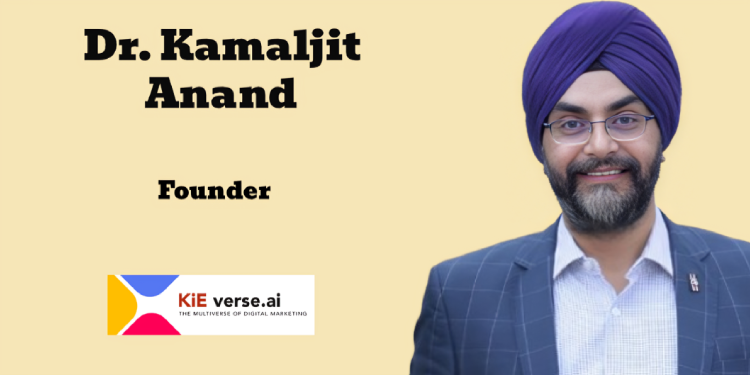
In this article, Dr. Kamaljit Anand, Founder, Kieverse.ai, argues that quarterly brand tracking is too slow for today's market and calls for real-time brand equity measurement to align brand and performance marketing decisions.

by Guest Column
May 8, 2026
in Authors Corner
Reading Time: 4 mins read
A A
Can Real-Time Brand Equity Reports Shift Marketing Spend Allocations for Good?
Share Share ShareShare

Here is a question every brand leader should ask themselves: when was the last time a quarterly brand tracker significantly changed a decision you were about to make?

In most organisations, the honest answer is never. Brand trackers arrive long after budgets have been committed and campaigns have been locked in. They confirm what happened few weeks ago and mostly act as a lagging validation of the Top funnel marketing activities. They rarely change what happens next. Meanwhile, performance marketing operates in a parallel universe where budgets adjust daily, creatives swapped in hours, attribution visible in near real time. One side of the marketing house runs on live data; the other runs on historical footprint.

Marketing effectiveness data across nearly a thousand campaigns confirms that long-term brand building combined with short-term activation outperforms either alone. However, due to quick measurement and trackable Business KPIs like ROAS and CAC. Brand Equity on the other hand has a weak measurement frequency and gets tracked mainly as Recall & Awareness whereas it shall capture the disposition and loyalty which have a big overlay on the Market share translation and the impact is via a delta ROAS and delta CAC through its traffic quantum.

The Structural Problem with Quarterly Measurement

Traditional brand equity measurement was designed for an era of predictable media cycles. Television campaigns ran for weeks. Print had monthly cadences. Consumer sentiment shifted slowly enough that annual or quarterly snapshots captured the picture with reasonable fidelity.

Today build up strategy has changed drastically, a single viral moment can reshape brand perception overnight. A quick-commerce listing can erode years of premium positioning in a price war that lasts 48 hours. A competitor’s influencer campaign can shift sentiment across an entire consumer cohort before the brand even notices. In India specifically, with 22 major languages, platform-fragmented consumer journeys, and seasonal surges from Diwali to harvest cycles, brand perception is not a stable construct- it is a living, shifting, multi-dimensional signal.

Yet the dominant measurement frameworks were architected for a different world. Traditional models treat awareness, associations, perceived quality, and loyalty as periodic survey-based dimensions, often assuming linear consumer journeys and stable sentiment. They were not built for a market where a consumer trusts the same brand differently on YouTube versus a quick-commerce app versus WhatsApp and where that trust can shift between Monday and Friday.

The result is a dangerous disconnect. Performance teams make daily decisions backed by real-time data. Brand teams make annual plans backed by lagging indicators. Leadership is asked to choose between the two which is like choosing between a compass and a speedometer when you need both to navigate.

What “Real-Time” Brand Equity Actually Requires

Making brand equity real-time is not simply about refreshing the same metrics faster. It requires a fundamentally different architecture one that separates what moves quickly from what moves slowly, and measures each at the appropriate cadence.

Performance signals campaign ROI, customer acquisition cost, distribution velocity, click-through rates move daily or weekly. These are the fast-twitch muscles of brand health. Foundational perception signals awareness, sentiment, trust, value-for-money perception, advocacy they move monthly or quarterly. In a nutshell the Brand’s loyal disposition at a given point in time. These are the structural tendons that hold the brand together under stress.

A real-time brand equity dashboard needs to capture both simultaneously, in a single unified view, with explicit causal links between what the brand spends (inputs) and what consumers believe and do (outputs).

From Awareness to Market Share in One Framework

A robust framework like AVATAM maps the complete consumer journey through defined, measurable stages:

Awareness leading to Positive Disposition

Trial or First Use (gated by Value perception and Authenticity signals)

Advocacy (gated by product experience and accessibility)

Market Share (activated by Growth and Adaptability Index). Each transition has explicit gate conditions with input and output metrics making the causal chain from brand activity to commercial outcome auditable.

  • A Brand Growth Index (BGI) that captures real-time performance signals across dimensions like pricing dynamics, reach and availability, indirect influence (social and influencer ecosystems), and direct campaign performance. These update daily or weekly.
  •  A Brand Equity Index (BEI) that captures foundational perception signals across dimensions like sentiment, trust, accessibility, perceived value, and advocacy. These update monthly or quarterly.

Both feed into an Adaptability Index, a composite metric that indicates whether brand equity is compounding or eroding in real time.

Critically, this approach recognises what traditional models miss: loyal customers do not automatically translate to market share. In today’s hyper-competitive landscape, loyalty erodes steadily under pressure from niche competitors and category fragmentation. Product quality perception must be continuously reinforced; not just through direct experience, but through competitive benchmarking and social validation.

What This Changes for Brand Leaders

When brand equity becomes visible in real time, three things change immediately.

First, budget allocation becomes evidence-based, not faith-based. When leadership can see that a specific brand-building activity moved sentiment by measurable points, which in turn reduced acquisition costs over time, the old question- “why invest in brand when ROI isn’t visible?”- dissolves.

Second, brand and performance teams stop working in silos. A unified dashboard means both teams operate from the same reality. Performance teams understand how brand investments lower acquisition costs. Brand teams see how performance campaigns impact sentiment and trust. The adversarial dynamic gives way to a shared operating model.

Third, early warning becomes possible. Quarterly trackers are post-mortems. A real-time system is diagnostic. When sentiment drops on a specific platform, or product experience scores diverge from competitors, brands can intervene before damage compounds. Mind-set metrics have been shown to explain a significant share of sales variance and act as leading indicators for future performance.

The Infrastructure Shift

Brand equity has never lacked importance. What it has lacked is infrastructure are the systems, speed, and the causal architecture to operate in sync with performance marketing.

The shift toward real-time brand equity measurement is fundamentally an infrastructure evolution. Because the question for brand leaders in 2026 is no longer whether to measure brand equity, it is whether they can afford to measure it only four times a year.

(Views are personal)

Tags: Dr. Kamaljit AnandKieverse.ai

RECENT POSTS

How AI Agents Are Replacing Search Bars in E-commerce Discovery
Authors Corner

How AI Agents Are Replacing Search Bars in E-commerce Discovery

May 7, 2026
0

The traditional search bar is no longer the main way to make a sale in 2026. Instead, it is slowly...

Read moreDetails
The Rise of Homegrown Beauty Brands in India
Authors Corner

The Rise of Homegrown Beauty Brands in India

May 6, 2026
0

The Indian beauty industry is undergoing a substantial transformation. What was once controlled by international brands is now confronting a...

Read moreDetails
Beyond Compliance: How the DPDP Act Is Driving Smarter, More Contextual Customer Conversations
Authors Corner

Beyond Compliance: How the DPDP Act Is Driving Smarter, More Contextual Customer Conversations

May 6, 2026
0

There is a conversation I keep having with brand and marketing leaders across India. It usually starts with anxiety —...

Read moreDetails
From Spectators to Participants: The Rise of Interactive Marketing in Sports and Gaming
Authors Corner

From Spectators to Participants: The Rise of Interactive Marketing in Sports and Gaming

May 5, 2026
0

Sports and gaming have always been built on engagement, bringing together communities, emotion, and sustained attention. However, the nature of...

Read moreDetails
From Impressions to Impact: Here’s how the Publisher’s Playbook is Changing
Authors Corner

From Impressions to Impact: Here’s how the Publisher’s Playbook is Changing

May 4, 2026
0

For years, publishers operated within a well-defined role. Create content, build audiences, and monetise that attention through advertising. It was...

Read moreDetails
Cross-Screen Impact: CTV and DOOH
Authors Corner

Cross-Screen Impact: CTV and DOOH

May 2, 2026
0

For years, Connected TV (CTV) and Digital Out-of-Home (DOOH) have largely been viewed as premium branding channels. Their strengths like...

Read moreDetails

LATEST NEWS

Raj Karan Marhas steps down as Zomato South Cluster CEO

Raj Karan Marhas steps down as Zomato South Cluster CEO

May 8, 2026
Gaming is now influencing behaviour, not just entertainment: Lokesh Jain, 8BitCreatives

Gaming is now influencing behaviour, not just entertainment: Lokesh Jain, 8BitCreatives

May 8, 2026

ANALYSIS

DV Fraud Lab Report
Analysis

AI-fueled CTV fraud schemes surge 140% globally: DoubleVerify Report

May 8, 2026
0

New York: DoubleVerify, the software platform for media quality verification and ad performance optimization, has released its 2026 Global Insights...

PEOPLE

Raj Karan Marhas steps down as Zomato South Cluster CEO
People

Raj Karan Marhas steps down as Zomato South Cluster CEO

May 8, 2026
0

Mumbai: Raj Karan Marhas, Cluster CEO – South at Zomato, has announced his departure from the company after a 7.5-year...

MARKETING

Mother’s Recipe
Marketing

Mother’s Recipe refreshes visual identity of its iconic pickle range

May 7, 2026
0

New Delhi: Mother’s Recipe is set to refresh the visual identity of its iconic pickle range, marking the first major...

Subscribe to Newsletters

ADVERTISING

PROHED bags SEO mandate for Behno
Advertising

PROHED bags SEO mandate for Behno

May 7, 2026
0

Mumbai: Gurugram-based digital marketing agency PROHED has secured the SEO mandate for Behno, a New York-designed luxury handbag brand focused...

PRINT

Hindu Tamil Thisai Highlights Editorial Balance with Dual Leadership Interviews
Print

Hindu Tamil Thisai Highlights Editorial Balance with Dual Leadership Interviews

April 21, 2026
0

Chennai: As Tamil Nadu heads toward the 2026 Legislative Assembly elections, Hindu Tamil Thisai is sharpening its positioning as a...

AUTHOR'S CORNER

Can Real-Time Brand Equity Reports Shift Marketing Spend Allocations for Good?
Authors Corner

Can Real-Time Brand Equity Reports Shift Marketing Spend Allocations for Good?

May 8, 2026
0

Here is a question every brand leader should ask themselves: when was the last time a quarterly brand tracker significantly...

UPLIFT MEDIANEWS4U DIGITAL PVT LTD
No. 194B , Aram Nagar 2, JP Road,
Versova, Andheri West
Mumbai - 400061

For editorial queries:
[email protected]
[email protected]

For business queries:
Smitha Sapaliga - +91-98337-15455
[email protected]

Recent News

Malaysia Airlines and Mumbai Indians launch ‘Cricket at 30,000 Feet’ campaign starring Rohit Sharma, Hardik Pandya, and Trent Boult

Malaysia Airlines and Mumbai Indians launch ‘Cricket at 30,000 Feet’ campaign starring Rohit Sharma, Hardik Pandya, and Trent Boult

May 8, 2026
Raj Karan Marhas steps down as Zomato South Cluster CEO

Raj Karan Marhas steps down as Zomato South Cluster CEO

May 8, 2026
Gaming is now influencing behaviour, not just entertainment: Lokesh Jain, 8BitCreatives

Gaming is now influencing behaviour, not just entertainment: Lokesh Jain, 8BitCreatives

May 8, 2026

Newsletter

Subscribe to Newsletters

Medianews4u.com © 2019 - 2025 All rights reserved.

  • The South Side Story 2023 Download Report
  • Goafest 2023: Day 3
  • Goafest 2023: Day 2
  • Goafest 2023: Day 1
  • Straight Talk Gallery 2022
  • The South Side Story 2022 Download Report
  • Focus 2022
  • Futurescope Conclave Gallery 2022
  • The South Side Story 2021 Download Report
  • FOCUS 2021
  • Exclusive
  • Exclusive
  • Advertising
  • Media
    • Radio
    • Cable & DTH
    • Print
    • Digital Frontier
    • Gaming Nexus
  • Television
  • OTT
  • Ad-Tech
  • Marketing
  • Campaigns
  • Analysis
  • Opinion
    • Opinion
    • Think Through
    • Prescience 2023
    • Prescience 2024
  • People
  • Events
    • Leader Speak
    • STRAIGHT TALK
    • Gamechangers
    • Print & TV Summit

Medianews4u.com © 2019 - 2025 All rights reserved.