Earlier this year gaming talent management agency, 8Bit Creatives announced its strategic expansion into the lifestyle creator economy with the onboarding of popular content creator Nishu Tiwari. This move marks a significant milestone for the agency as it evolves from a category leader in gaming to building a more holistic creator ecosystem, in line with the rapid growth of lifestyle content in India.
Over the years, 8Bit Creatives has built a formidable roster of India’s top gaming creators, including Naman Mathur (Mortal), Payal Dhare (Payal Gaming), Raj Varma (Snax), Parv Singh (Regaltos), Krutika Ojha (Krutika Plays), and Gulrez Khan (Joker Ki Haveli), among others. With a proven track record of executing campaigns for over 100 brands across more than 20 industries, including apparel, FMCG, personal care, HORECA, and entertainment, the agency has consistently set new benchmarks in influencer marketing by crafting customized, high-impact campaign experiences.
With Nishu’s addition, 8Bit Creatives takes a step toward diversifying into mainstream lifestyle content, further strengthening its ability to deliver integrated, cross-category campaigns powered by some of the country’s most influential digital creators.
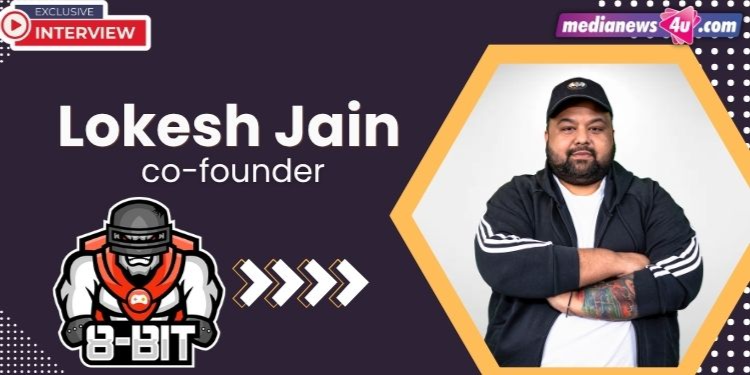
Medianews4u.com caught up with Lokesh Jain, co-founder 8BitCreatives
Q. The agency aims to evolve from only focusing on gaming to building a more holistic creator ecosystem. What are the various legs of the strategy going to be?
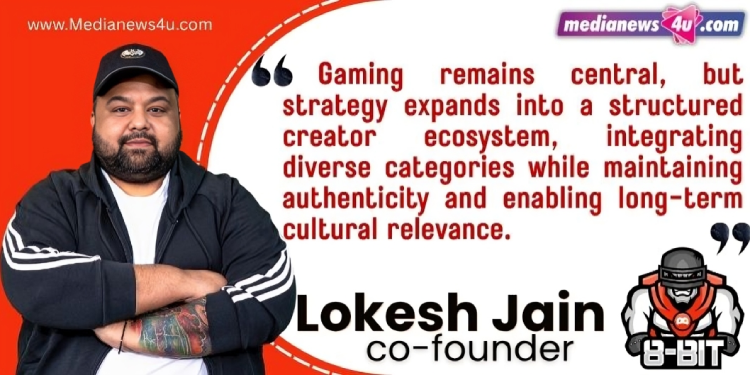
The approach is not about moving away from gaming, but about recognising how far its influence now extends. Gaming today sits at the centre of youth entertainment, and our creators already reflect that through content across fitness, fashion, lifestyle, and sports.
Our focus is to build on this in a more structured way by expanding into a broader creator ecosystem. This includes onboarding creators like Nishu, who come from a lifestyle-first background, while ensuring that any move into new categories remains authentic to the creator’s voice and audience.
We are also strengthening our work with non-endemic brands across automobiles, FMCG, finance, and other industries by helping them integrate meaningfully into gaming culture, rather than treating it purely as an engagement channel. The long-term objective is to move from transactional influencer marketing towards building sustained cultural relevance.
Q. For 2026 what goals have been set and what is the gameplan to get there?
For 2026, the focus is less on volume and more on value per creator and structured growth. We aim to strengthen and deepen partnerships with both domestic and global brands, while also developing IPs that creators and brands can scale together. The broader objective is to build a more stable and sustainable ecosystem for creators.
Q. What is the impact that 8Bit Creatives is looking to make in the lifestyle creator economy?
We want to expand in this segment in a way that complements our existing strengths in gaming, while staying true to each creator’s identity and audience. A key focus is on unlocking new monetisation avenues for gaming creators.
At a broader level, this allows creators to explore a wider range of content and brand opportunities, while enabling brands to engage with audiences in a more contextual and relatable way. Over time, the goal is to contribute to an ecosystem where creators are not restricted by a single niche, and collaborations across categories feel more natural and scalable.
Q. What is the expectation in terms of brands looking to work with gaming creators? Which are the key categories showing interest?
Brands have moved past experimentation and are now looking for measurable business outcomes. They expect creators to drive not just awareness, but consideration and conversion.
The categories showing the strongest intent today are FMCG, personal care, fintech, QSR, and fashion, because they benefit from high-frequency engagement and relatability. Automotive and consumer tech are also investing, but with more storytelling-led campaigns.
Q. What trends are being seen in terms of how gaming deeply connects with the broader youth culture, including lifestyle, fashion, food and travel?
Gaming is now influencing behaviour, not just entertainment. For example, our creators have collaborated with Star Sports around the World Cup and the ongoing IPL season, as well as with automobile brands like MG Hector, skincare brands like Mamaearth, and OTT platforms such as Netflix.
These campaigns performing strongly reflect how gaming, along with its audience, is increasingly intersecting with multiple sectors through creator-led content. For brands, the opportunity lies in tapping into these intersections rather than treating gaming as a standalone vertical.
Q. The agency has onboarded creator Nishu Tiwari. What things does the agency look for before partnering with with a premium creator? Is predictive analytics making the task of choosing the right creator for a brand easier?
When we look at a creator like Nishu Tiwari, the key filter is crossover potential. We assess whether the creator can move across categories without losing authenticity. We also look at audience behaviour, not just size. This includes how the audience responds to non-core content and how consistent the engagement is over time.
Predictive analytics helps validate these signals through data such as audience overlap and past campaign performance. However, the final decision still depends on cultural fit and creator instinct, which data alone cannot capture.
Q. The company has executed campaigns for over 100 brands across more than 20 industries, including apparel, FMCG, personal care, HORECA, and entertainment. Could you talk about some of the work that stands out?
Payal’s recent collaboration with Universal Pictures India for The Super Mario Galaxy Movie was a strong example of gaming culture aligning seamlessly with entertainment. Similarly, Naman being part of Royal Challenge Packaged Drinking Water’s campaign alongside national icons reflected how gaming creators are now being positioned within mainstream narratives.
We have also worked on culture-led integrations like Gulrez and Raj’s association with Red Bull Moto Jam, which brought together gaming, motorsports, and youth culture, as well as Parv’s collaboration with Samsung Galaxy Z Fold7, where the focus was on showcasing the product through a creator-first lens.
Across these campaigns, what stands out is the shift from simple promotions to more contextual storytelling, where the brand becomes a natural part of the content experience.
Q. What are the tools coming out that are helping better measure the impact of influencer marketing?
Beyond engagement rates, we now look at view-through behaviour, repeat audience interaction, and conversion mapping. We are also seeing better sentiment analysis and community-level insights, which help understand long-term brand impact.
Q. What role is AI playing in crafting customised, high-impact campaign experiences?
AI is playing an important role in improving efficiency across the campaign lifecycle, especially in areas like editing, content optimisation, and analysing audience behaviour.
It helps streamline processes, and refine content in a more data-backed way. However, the most effective campaigns still come from creator intuition and originality, with AI acting as a decision-support layer rather than the primary driver.
Q. For creators to succeed in terms of getting brand partnerships do they have to work on their personality and storytelling ability across formats?
Yes, because brand partnerships today are built on trust and relatability, not just skill. Creators who can translate their personality across formats, whether it is short-form, long-form, or live, are more effective in integrating brands naturally.
The shift is from being a content creator to being a content personality, and that requires consistent storytelling and a clear point of view.
Q. How much planning goes into gamifying the experience for brands like Mamaearth that partner with a gamer?
A significant amount of planning goes into it because gamification needs to feel intuitive to the audience. We look at game mechanics, creator behaviour, and audience expectations before designing the integration.
The idea is to create participation-driven formats such as challenges or milestones that align with both the game and the brand message. Gamification increases not just engagement, but also recall and shareability.
Q. Is industry growth in the coming three years going to even across mobile gaming, PC gaming and console gaming? Or will one category breakout?
Mobile gaming will continue to dominate in India due to accessibility and scale. However, PC gaming is likely to see disproportionate growth in terms of monetisation and esports viewership. Console gaming will grow steadily, driven more by premium audiences.
So the growth will not be even. Mobile will lead in volume, while PC and console will contribute more to high-value engagement and revenue opportunities.