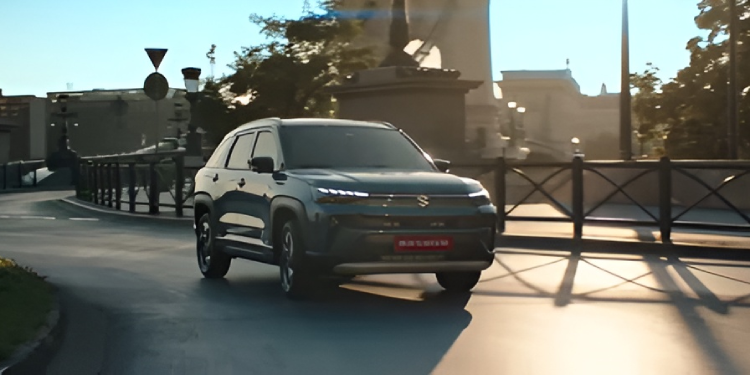
The Indian mid-size SUV segment has evolved into the most fiercely contested space in the country’s automotive market. Dominated by established players such as the Hyundai Creta, Kia Seltos, Honda Elevate, Volkswagen Taigun, Skoda Kushaq and Toyota Hyryder, the segment has become the benchmark for manufacturers looking to establish themselves in the premium mass-market space. Buyers today expect everything from sophisticated styling and advanced technology to efficient powertrains and low ownership costs.
For Maruti Suzuki, the launch of the Grand Vitara marked a significant breakthrough. It gave India’s largest carmaker a credible presence in a segment where it had traditionally struggled to challenge established rivals. Yet rather than relying solely on the Grand Vitara to carry its ambitions forward, Maruti has chosen to expand its footprint further with the Victoris.
At first glance, the strategy may appear unusual. Why introduce another SUV in a segment where the Grand Vitara already exists?
The answer lies in Maruti Suzuki’s understanding of the Indian market.
The Victoris is not intended to replace the Grand Vitara. Instead, it is designed to complement it by targeting a broader audience and leveraging the strengths of the Arena retail network, which reaches far deeper into India’s Tier-2, Tier-3 and rural markets than any premium retail channel can.
Expanding the Grand Vitara Formula
The Grand Vitara was launched through Maruti Suzuki’s Nexa network and positioned as a premium SUV with a strong emphasis on hybrid technology, sophisticated styling and an upscale ownership experience. It successfully attracted urban buyers looking for a modern SUV backed by Maruti’s reputation for reliability and efficiency.
However, Maruti recognised that a substantial section of the SUV market remained underserved.
Many customers admired the Grand Vitara but prioritised affordability, lower acquisition costs and practical ownership benefits over premium positioning. The Victoris addresses this gap.
By introducing the SUV through the Arena network, Maruti gains access to a much larger customer base across smaller cities, semi-urban regions and rural India. These markets have long been the foundation of Maruti Suzuki’s success, and their buying priorities differ significantly from those of metropolitan customers.
Understanding the Real SUV Buyer
Much of the automotive industry today is focused on performance figures, feature lists and technology showcases. Maruti Suzuki has taken a different approach.
The Victoris is aimed at mature buyers, families and practical consumers who view a vehicle as a long-term investment rather than a lifestyle accessory. These customers place greater importance on reliability, fuel efficiency, resale value and ownership costs than outright performance.
For them, the ownership experience matters more than acceleration figures.
This philosophy is reflected throughout the Victoris, beginning with its powertrain strategy.
Why Maruti Continues to Back the Naturally Aspirated Engine
One of the most notable aspects of the Victoris is Maruti Suzuki’s commitment to its tried-and-tested 1.5-litre naturally aspirated petrol engine.
While many competitors have embraced smaller turbocharged petrol engines, Maruti has remained focused on a powertrain that has built a reputation for reliability, refinement and long-term dependability.
Turbocharged engines undoubtedly offer stronger torque delivery and more impressive performance figures. However, Maruti understands that a large section of Indian buyers prioritises smoothness, predictability and ease of ownership over outright acceleration.
The naturally aspirated 1.5-litre engine delivers exactly that. It offers linear power delivery, refined operation and proven reliability, making it exceptionally well suited to everyday driving conditions. Whether navigating congested urban traffic or undertaking long-distance highway journeys, the emphasis is on comfort and drivability rather than performance statistics.
In many ways, this decision reflects Maruti’s confidence in a formula that has earned customer trust over decades.
A Powertrain Strategy Built Around Proven Technologies
The Victoris’ biggest strength lies in the breadth of its powertrain options.
Rather than relying on a single solution, Maruti has developed a portfolio designed to address the diverse needs of Indian buyers. The lineup includes Smart Hybrid, Strong Hybrid, ALLGRIP all-wheel-drive and factory-fitted CNG variants.
The strong-hybrid model serves as Maruti Suzuki’s alternative to diesel. As diesel powertrains become increasingly expensive and less relevant in the passenger vehicle market, hybrid technology offers an attractive balance of efficiency and refinement. The strong-hybrid Victoris delivers fuel economy levels traditionally associated with diesel vehicles while retaining the smooth and quiet characteristics of a petrol engine.
However, Maruti also understands that hybrid technology comes with a higher purchase price.
This is where the Victoris introduces a significant advantage over many rivals.
By utilising the Arena network, Maruti can offer lower-priced variants equipped with factory-fitted CNG technology. These variants provide an affordable alternative for buyers seeking lower running costs without stepping up to a hybrid model.
There are performance compromises, naturally. CNG-powered vehicles typically deliver lower power output and less enthusiastic acceleration. Yet for the Victoris’ target audience, this is rarely a deal-breaker. Customers focused on fuel savings, affordability and long-term ownership costs are often willing to accept these compromises in exchange for substantially lower running expenses.
Effectively, Maruti has created two distinct alternatives to diesel: strong-hybrid technology for customers seeking maximum efficiency and refinement, and CNG for buyers prioritising affordability and operating costs.
Value Over Feature Wars
Another area where the Victoris reflects Maruti Suzuki’s understanding of its customers is variant planning.
The modern SUV market is increasingly driven by feature competition. Panoramic sunroofs, advanced driver assistance systems, ambient lighting packages and ever-larger displays have become central to marketing campaigns across the segment.
While these features undoubtedly have their appeal, Maruti recognises that not every customer views them as essential.
Instead of structuring the range around expensive top-spec variants, the Victoris focuses on delivering strong value-for-money propositions across the lineup. Buyers can access practical comfort, convenience and safety features without being forced into higher trims solely to obtain essential equipment.
This approach is particularly relevant in smaller cities and rural markets, where practicality often outweighs novelty. For many customers, spending additional money on lower running costs or a more suitable powertrain makes more sense than paying for features they may rarely use.
The Rural and Semi-Urban Advantage
Perhaps Maruti Suzuki’s greatest strength is one that competitors find difficult to replicate: its unmatched reach across India.
Decades of investment in sales and service infrastructure have given the company a presence that extends deep into rural and semi-urban markets. This network provides Maruti with access to customers who often have very different priorities from urban buyers.
In these markets, reliability, service accessibility, fuel efficiency and resale value frequently influence purchasing decisions more than performance figures or premium branding. Vehicles are often viewed as long-term family assets expected to deliver years of dependable service.
The Victoris aligns perfectly with this mindset.
Its tried-and-tested powertrains, lower running-cost options, strong resale potential and extensive service support make it a compelling proposition for customers seeking ownership confidence rather than simply showroom appeal.
More Than Just Another SUV
Viewed purely on specifications, the Victoris may appear to overlap with the Grand Vitara. In reality, it serves a distinctly different purpose within Maruti Suzuki’s portfolio.
The Grand Vitara continues to cater to customers seeking a premium Nexa experience, while the Victoris expands the company’s reach through Arena by addressing the needs of a broader and more value-conscious audience.
Together, the two SUVs allow Maruti Suzuki to cover a wider spectrum of buyers than either product could individually.
The Victoris is not about winning a horsepower battle or leading a feature-count comparison. It is about leveraging Maruti Suzuki’s traditional strengths—tried-and-tested powertrains, proven reliability, low ownership costs and an unmatched service ecosystem—to attract customers who prioritise practical value over marketing trends.
In a segment increasingly defined by turbocharged engines, premium features and specification-sheet comparisons, the Victoris takes a more measured approach. It focuses on the fundamentals that have made Maruti Suzuki India’s largest carmaker for decades.
And that may ultimately prove to be its greatest advantage.