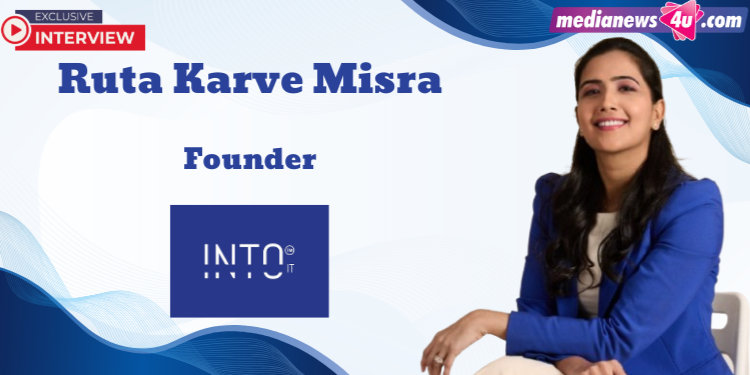
Medianews4u.com caught up with Ruta Karve Misra, Founder INTO IT. This is a men’s skincare brand created to address a long-overlooked gap in the Indian grooming landscape.
At a time when skincare conversations are becoming increasingly mainstream, men remain one of the most underserved consumer groups in the category. Recognizing this white space, Ruta built INTO IT with a clear vision: to simplify skincare for men through science-backed, high-performance products designed specifically for their needs.
As a female founder building a brand exclusively for men, Ruta brings a unique perspective to the evolving grooming industry and the changing expectations of today’s male consumers.I
Q. Why would an Indian man spend Rs. 1,200 on an under-eye serum when he usually just borrows whatever cream is in the family bathroom?
The cream that he borrows is not strategically formulated for his Under eyes and does not boast of Ceramides, Vitamin K, Caffeine, Panthenol and ferments to minimise puffiness, dark circles and reinforce the delicate lipid barrier.
Q. What is the biggest gap you see in how Indian men take care of their skin today?
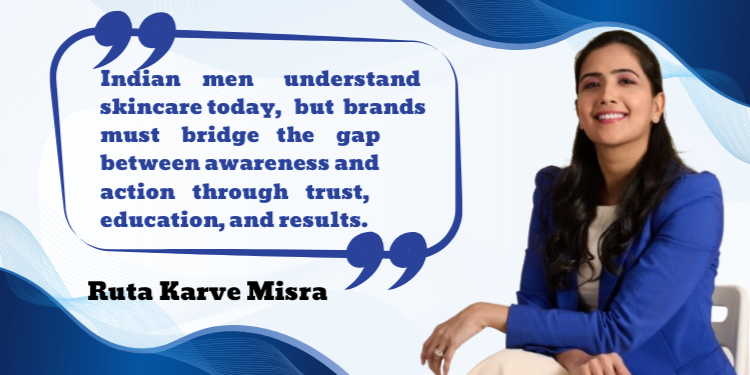
The biggest gap isn’t awareness, it’s understanding. Indian men today know they should be using skincare, but most are still overwhelmed by complicated routines, conflicting advice, and products that don’t feel relevant to their needs.
Many end up either doing nothing or following trends without understanding what their skin actually requires.We believe men’s skincare doesn’t need to be complicated. The opportunity lies in making effective, science-backed skincare simple, approachable, and easy to adopt as a daily habit rather than a beauty ritual.
Q. How are you using AI tools right now to figure out what male shoppers are searching for online?
To understand what male shoppers in India are searching for online, we use Google Trends to identify rising search queries and emerging consumer interests. Our team then use generative AI to analyse Amazon reviews, Reddit discussions, Quora threads and customer feedback at scale helping us uncover common pain points, buying motivations, and search intent.
We also use Meta Audience Insights and our campaign data to identify which interests, products, and messaging are driving engagement among male audiences. Finally, we validate these findings through competitor research on the Meta Ad Library.
Q. Your complete skincare routine costs Rs. 5,400. Since men are notoriously hard to convince when it comes to multi-step beauty steps, what exact marketing campaigns or ads are you planning to prove to them that this premium price tag is actually worth it?
To justify a Rs. 5,400 skincare routine, we’ll shift the focus from price to value through targetted campaigns. We’ll test angles like confidence, career impact, affordability (less than Rs. 150/day), avoiding trial-and-error, visible transformation, and prevention.
Hooks such as “Most men don’t have bad skin—they have no routine” and “You spend Rs. 5,000 on sneakers, why not your face?” will be tested across Meta Ads to identify which messages best position skincare as a worthwhile investment rather than an expense.
Q. Your new sunscreens are already listed as sold out and “coming soon” on your website. Did you actually run out of stock, or is this a marketing trick to build up hype?
The sunscreen shows as “Coming soon” which it actually is. We haven’t launched it yet on our website! By the time this gets published, I am sure shoppers can buy it from our website.
Q. How does a female founder convince traditional Indian men that she understands their skin needs?
I have never believed that you need to be a man to understand men’s skincare. You need to be curious enough to listen.
Most of our insights came from real conversations with men about what frustrates them, what they avoid, and what they actually want. My role was simply to turn those insights into products that work.”
Q. What is your biggest marketing innovation to get men to actually talk about skincare openly and honestly with their friends?
Our biggest marketing innovation is positioning skincare as self-improvement rather than beauty. Instead of selling products, we focus on outcomes men care about,confidence, first impressions, dating, and career growth.
We test messages like “Good skin is a confidence advantage” and “You’re investing in the gym. Why not your skin?” alongside hooks such as “Nobody notices your skincare routine. They notice the results.” to make skincare feel like an essential self-improvement habit.
Q. When did you realise that standard men’s face washes on the market weren’t doing the job?
I realised it during conversations with men around me. Almost everyone was using a face wash, but many still complained about oily skin by midday, dryness after washing, recurring breakouts, or a tight, uncomfortable feeling. It became clear that the product was being used, but the problem wasn’t really being solved.
That was the turning point for me. Many face washes were focused on making the skin feel instantly clean, but not necessarily on supporting the skin barrier or addressing long-term skin health. We saw an opportunity to create products that were effective without being harsh, and that fit into a simple routine men would actually stick to.
Q. Why do most grooming ads for men still only focus on shaving or fairness?
For a long time, that’s how brands defined men’s grooming. Shaving was a daily habit and fairness was sold as a shortcut to confidence, so those narratives became deeply entrenched in the category. But men have evolved much faster than the advertising.
Today’s consumers are more informed, more conscious of their appearance, and more interested in skin health than skin colour. They’re asking questions about acne, sun protection, sensitivity, aging, and overall skin quality,not fairness.I think the industry is still catching up. The conversation is gradually shifting from changing how you look to taking care of the skin you’re in. That’s a much more authentic and sustainable approach, and it’s where the future of men’s skincare lies.
Q. How do you plan to market your products to guys living outside of big cities like Mumbai and Bangalore?
Our approach is to keep the conversation simple and relatable. Instead of talking about complicated ingredients or 10-step routines, we’ll focus on solving everyday skin concerns and educating consumers in a language they understand.
Digital has made access far more democratic than it was a decade ago. Today, a consumer in a Tier 2 or Tier 3 city discovers brands the same way someone in Mumbai does,through content, recommendations, and communities they trust. We want to meet them where they are and make skincare feel practical, not aspirational.
Q. Most Indian men hate the feeling of sticky creams on their face and usually stop a routine after just three days. When you look at your internal sales numbers, how many guys are actually coming back to buy a second round, and what shifts are you making in your advertising strategy to turn a one-time buyer into a daily user?
Repeat purchases are one of our most important metrics because skincare only works with consistency.
We’ve found that customers who complete the routine for 30–60 days have significantly higher retention. To improve repeat rates, we’ve focused on lightweight, non-sticky formulations, simplified routines, educational content on habit-building, and post-purchase communication that reinforces daily usage.
Our advertising has also shifted from selling products to selling outcomes, healthy skin, confidence, and visible results, so customers stay committed long enough to experience the benefits.
Q. What is the next product you want to launch and what role is AI playing in product innovation?
We’re building the brand around solving the most common skin concerns men face, so every new launch has to earn its place in the routine. The next products we’ll introduce will continue to focus on simple, high-efficacy essentials rather than creating products for the sake of expanding the portfolio.
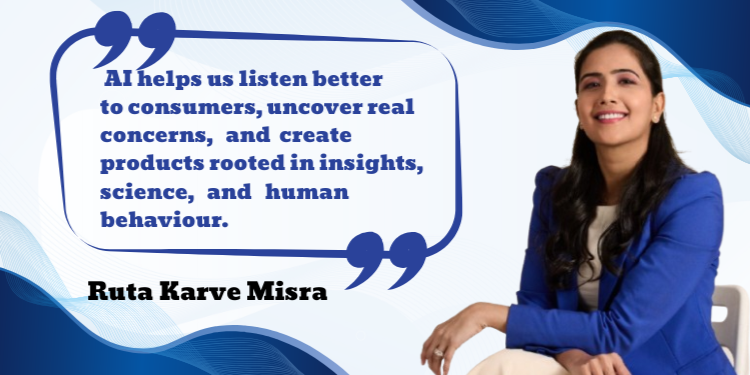
As for AI, I don’t see it replacing product innovation, I see it making us better at listening. AI helps us analyse consumer feedback at scale, identify emerging concerns, spot patterns in reviews and conversations, and make more informed decisions about what consumers actually need. But the final decisions still come from a combination of consumer insight, dermatological science, and real-world testing.
At the end of the day, skincare is deeply human. AI can help us process information faster, but creating products that people love still comes down to understanding behaviour, solving real problems, and delivering results.
Q. How do you plan to beat beauty companies that are now launching cheap men’s products?
Most big companies treat men’s skincare as a category extension. For us, it’s the entire business. That means we spend more time understanding the consumer, obsessing over formulations, textures, routines, and the barriers that stop men from adopting skincare in the first place.
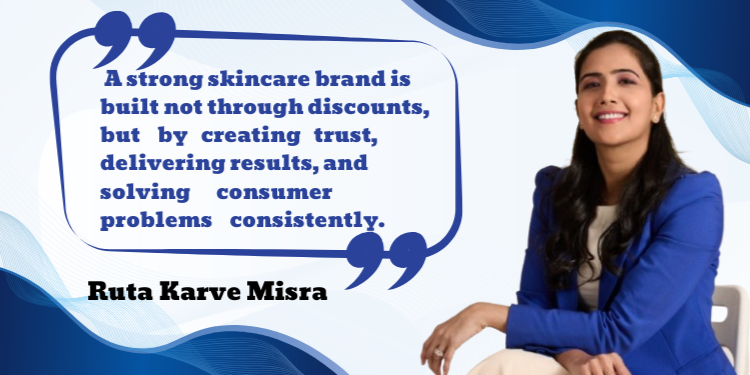
Price can get someone to try a product once, but it doesn’t build loyalty. If we can create products that genuinely work, feel great to use, and fit seamlessly into a man’s daily life, we’ll build a much stronger relationship than one based purely on discounts.
Ultimately, consumers don’t stay with a brand because it’s the cheapest option. They stay because they trust it to consistently solve their problems. That’s the moat we’re building.