In a category not traditionally associated with culture or comedy, Hindware is making a deliberately unexpected move, and it is paying attention to where Indian consumers are actually looking.
Hindware recently announced a dual-brand influencer partnership that pairs Hindware with stand-up comedian Gaurav Kapoor and its premium brand Queo with finance and aspiration creator Sarthak Ahuja. The campaign is rooted in Hindware’s brand philosophy of ‘Designed for Sukoon’ — the idea that the bathroom is not just functional, but one of the most personal and restorative spaces in an Indian home.
What makes this partnership strategically compelling is the thinking behind it: the brand did not start with follower counts. It started by asking who its consumer already trusts and why. Gaurav Kapoor’s observational humour is built entirely around middle-class India’s everyday anxieties, home conversations, and aspirations, the same world Hindware has been part of for over six decades.
Sarthak Ahuja, on the other hand, speaks to a younger urban professional who thinks carefully about design, value, and long-term decisions – precisely the mindset a Queo buyer brings to creating a premium bathroom space.
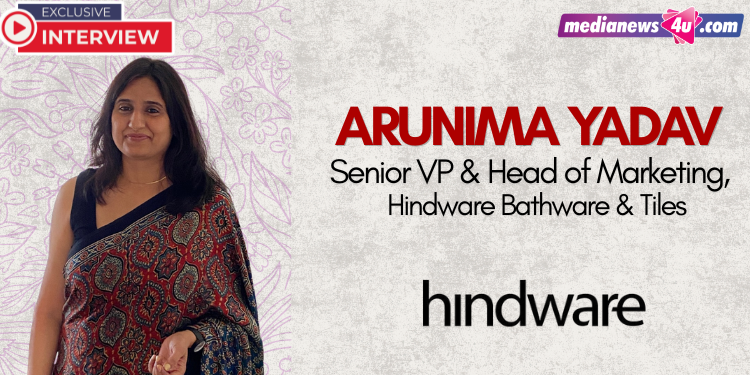
Medianews4u.com caught up with Arunima Yadav, Senior VP & Head of Marketing, Hindware Bathware & Tiles
Q. How did the dual-brand influencer partnership that pairs Hindware with stand-up comedian Gaurav Kapoor and its premium brand Queo with finance creator Sarthak Ahuja come about?
The idea behind the partnership came from recognising that today’s consumers connect more deeply with creators who naturally reflect their lifestyle, aspirations, and everyday realities. Since Hindware and Queo cater to two distinct consumer mindsets, we wanted to build a creator strategy that mirrored those nuances authentically.
Gaurav Kapoor was a natural fit for Hindware because his humour draws from relatable home conversations and everyday family moments, spaces where Hindware has built a trusted presence across Indian homes for decades. His crowd-work style and observational comedy made the integration feel organic and culturally familiar.
For Queo, we wanted a voice that represented aspiration, thoughtful lifestyle upgrades, and evolving urban consumer behaviour. Sarthak Ahuja’s content around ambition, and premium living aligned strongly with the mindset of the modern Queo consumer who sees home spaces, including bathrooms, as an extension of lifestyle and self-expression.
Together, the campaign allowed us to tell two very different but equally authentic stories for two distinct bathware brands.
 Q. How will the campaign reflect Hindware’s brand philosophy of ‘Designed for Sukoon’?
At Hindware, our endeavour is to move beyond functionality and create solutions that enrich everyday living. With Hindware ‘Designed for Sukoon’, we are showcasing how design and innovation come together to transform a house into a home that nurtures peace, comfort, and care.
We wanted the campaign to reflect that idea not through traditional product communication, but through real-life conversations and relatable storytelling.
With Gaurav, the idea of “Sukoon” came alive through humour rooted in everyday home experiences- the little moments, habits, and family interactions that people instantly connect with.
Q. The brand did not start with follower counts. It started by asking who its consumer already trusts and why. Why was this important?
For us, this partnership was never about choosing the creator with the biggest following. It was about identifying voices our consumers already relate to and trust in their everyday lives. We believed that authenticity and cultural relevance would create far stronger resonance than reach alone. The larger idea was simple: influencer marketing works best when there is a genuine alignment between the creator’s identity and the brand’s promise.
Q. Hindware has been in existence for over six decades. To what extent will the goal of marketing be to appeal better to Gen Z and Gen Alpha?
Gen Z and Gen Alpha are the buying decision influencers at home today and first-time buyers of tomorrow, and they are already forming opinions about brands today. The way they discover, research, and decide has fundamentally shifted, it happens on screens, through creators, and in moments long before they walk into a store.
For us, the goal of marketing is not just to communicate products, but to stay relevant in their everyday ecosystems whether that is digital content, influencer-led discovery, or experiential touchpoints. It also means being more authentic, more conversational, and more responsive in how the brand engages, because this audience values transparency.
At the same time, while we adapt our communication and engagement style, the fundamentals of trust, quality, and reliability that Hindware has built over six decades remain unchanged. The focus is on bridging that legacy with new-age expectations in a way that feels natural and consistent.
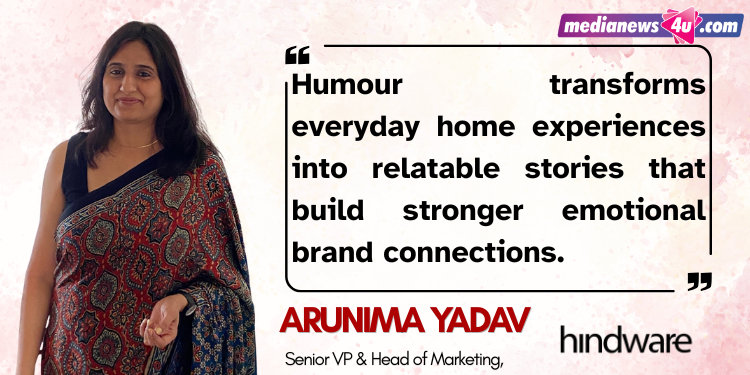
Q. Could you talk about the use of humour as a brand-building tool in an unexpected category? How does comedy open up conversations around a deeply personal space in an Indian home?
Bathrooms have traditionally been seen as either highly functional category or design led, and conversations around them have often been limited to utility, product specifications or bathroom designs. But in reality, bathrooms are among the most personal and frequently used spaces in any home. They are closely linked to comfort, daily routines, habits, and lived experiences.
Humour helps break that natural hesitation and makes the category more approachable and culturally relatable. Through comedy, especially observational humour like that of Gaurav Kapoor, we were able to reflect everyday home behaviours and familiar couple situations in a way that feels natural and non-intrusive.
This allows the brand to move beyond product communication and instead create a more human connection with audiences, opening up conversations in a category that has traditionally been difficult to talk about in an engaging way.
 Q. Why does that approach feel human rather than transactional?
Consumers today connect more deeply with emotions, lived experiences, and relatability than with purely functional messaging. That is why this approach feels more human rather than transactional.
Creators communicate in their own natural voice, drawing from everyday situations and conversations that audiences already identify with. This allows the brand to become part of a larger cultural or emotional context, rather than standing apart as a traditional advertiser.
As a result, the content feels less like advertising and more like a shared experience. That shift is what makes it more credible, engaging, and trustworthy for consumers.
Q. Platforms like Instagram constantly introduce new features. Does the key to success lie in understanding the nuances of each platform?
It is an area we are increasingly paying attention to. Each platform has its own language and rhythm, and the brands that win are those that understand those nuances. What works as a reel may not work as a carousel, and what resonates on Instagram may need to be rethought entirely for YouTube or OTT.
At the same time, while formats differ, the core idea must remain consistent. It is less about replicating content across platforms and more about reinterpreting the same message in a way that feels native to each environment.
Q. The 60+ year-old brand is looking to earn relevance with a new generation through creator-led storytelling, without abandoning its heritage. What is the biggest challenge in doing this?
The biggest opportunity and challenge is ensuring that while we evolve, we continue to build on the trust that over six decades of presence in Indian homes has created. Hindware has always stood for making quality accessible, and as we move into creator-led storytelling and digital-first spaces, we are excited about the opportunity to connect with a new set of audiences in more contemporary and culturally relevant ways.
At the same time, the brand has a very wide consumer base, so the communication has to resonate across different cohorts without losing its core essence. The idea is not to change what Hindware stands for, but to express it in ways that feel fresh and relatable to younger audiences.
 Q. What are the distinct roles Hindware and Queo play in the portfolio, and how does each partnership reflect a different but equally deliberate consumer insight?
Hindware Italian Collection, at its core, is the aspirational brand in our portfolio and addresses the mass-premium segment. It caters to those moving to modern comfort, where the expectation is to create design led meaningful upgrades. The brand is focussed on making everyday living more comfortable, dependable, and effortless, without losing practicality.
Within this ecosystem, Hindware Italian Collection plays a more aspirational role. It speaks to consumers who are looking for elevated design sensibilities and more refined aesthetics, offering a step-up in style while staying rooted in the trust and equity of the parent brand.
Queo, on the other hand, is positioned as a premium lifestyle brand. It is designed for consumers who view bathrooms as a space of personal expression and elevated living, where aesthetics, detail, experience and personalisation take precedence.
Together, the portfolio allows us to address distinct consumer mindsets, each with a tailored value proposition built on a clear and deliberate insight.
Q. How does the company measure the impact of influencer-led campaigns by focussing on authenticity, engagement, and long-term brand affinity beyond conventional metrics like follower count?
For us, the real measure is whether the content drives a genuine conversation around the brand. whether people are saving it, sharing it, or whether it translates into intent that eventually shows up in-store.
Follower count is only one input among many. What we look at more closely is brand resonance: whether the content is reaching a relevant audience for the category, whether it is sparking meaningful engagement, and whether the association is helping build long-term affinity rather than just short-term visibility.
Ultimately, the focus is on whether the campaign creates recall and relevance that lasts beyond the immediate moment of consumption.
Q. The government has recently introduced guidelines for influencers, including declarations for sponsored posts. What are your views on this?
Transparency in influencer marketing is a positive step for the industry. It builds credibility for creators, for brands, and ultimately for the consumer. We see it as a natural evolution of a maturing ecosystem.
Ultimately, these guidelines encourage the industry to move beyond transactional endorsements toward more thoughtful, value-led collaborations that consumers can engage with more confidently.
Q. Besides these partnerships, what else can we expect from Hindware in terms of marketing campaigns and innovations in the coming months?
We will continue to build on the brand positioning of Hindware Designed for Sukoon in the social media to connect with digital native audience. We will be collaborating with more content creators to amplify the emotional storytelling as well as some unique collaborations.
Q. In the past, Hindware has partnered with IPL teams. Will IPL and cricket continue to remain a key part of the media mix over the next three years?
Hindware’s association with IPL was a valuable phase in the brand’s journey. Cricket gave us significant scale, visibility, and helped strengthen brand awareness during that period.
Over time, however, our media approach has evolved in line with changing consumer behaviour. We are now moving towards a more diversified and intent-led media mix, one that is more targeted, contextually relevant, and aligned to where our consumers are discovering and engaging with content today.
 Q. How will Hindware leverage another mass medium like Bollywood to amplify its messaging?
While Bollywood remains a powerful mass medium with strong cultural influence, our current focus is on identifying platforms and partnerships that are more directly aligned with our audience’s evolving media consumption habits.
We are prioritising environments where engagement is more contextual, measurable, and integrated into everyday content discovery, whether that is digital platforms, creators, or culturally relevant storytelling formats.