Saatchi & Saatchi India, part of the Publicis Groupe India, is a full-service communications agency specialising in traditional and digital advertising, branding, design, UI/UX, content and brand consultancy. Saatchi & Saatchi offers its suite of services across clients like Hero MotoCorp, Renault, NIVEA, Standard Chartered Bank, ITC, Dabur, Akasa Air, Jockey, P&G, Zee, Zepto, ITC, Relaxo and many more. Core to the agency’s DNA is a culture of ownership and the belief that ‘Our Clients Business is Our Business’ which keeps clients’ business goals at the heart of everything.
The agency has over 350 employees across its offices in Mumbai, Delhi, Kolkata, and Bengaluru.
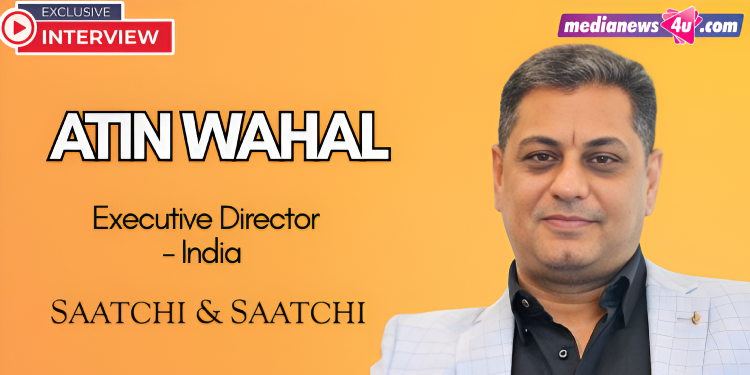
Medianews4u.com caught up with Atin Wahal, Executive Director, Saatchi & Saatchi India
Q. What are the key strategic challenges and opportunities for agencies today?
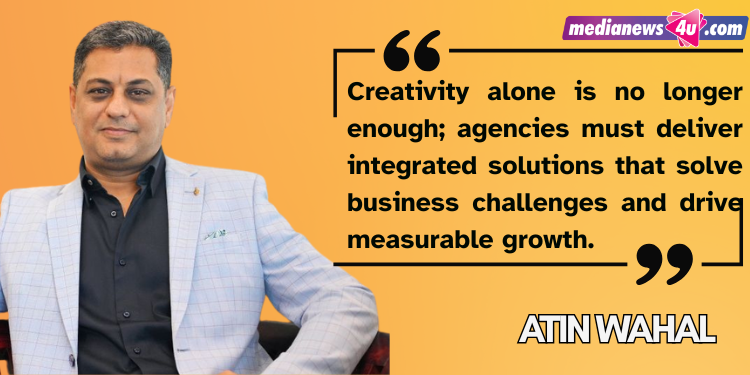
One of the biggest challenges agencies face today is the tendency to define themselves simply as ‘creative agencies’. The real imperative, however, is not just to produce creative output, but to deliver creative solutions to business problems.
The opportunity thus lies in combining creativity, strategy, data, and technology, and play a larger role as orchestrators of full-funnel growth, not just campaign creators. Having said that, at Saatchi & Saatchi India, we have already put this into practice by leveraging Publicis Groupe’s unique ‘Power of One’ capabilities to fuel growth for our client’s business. This approach has, in fact, helped us win some whale clients and given us the edge in the space we operate in.
 Q. What trends are being seen in terms of the evolving role of creative agencies as strategic partners to brands?
CMOs today are grappling with complex business challenges and are looking beyond traditional brand metrics to focus on tangible business outcomes. As a result, they want a partner who understands the business problem and can give them a unified experience. Clients want integration without complexity. They care less about agency silos and more about whether the solution is effective and accountable.
In this context, the role of agencies has evolved beyond communications to becoming long-term growth partners. Agencies thus are being evaluated not just on the work they create, but on the business outcomes they drive.
Q. Has a data-led approach become non-negotiable today for a successful ad campaign?
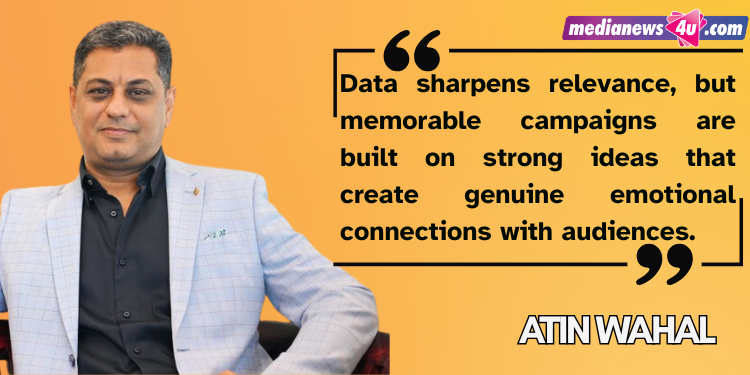
Data is one of the essential ingredients in a strong campaign, but it is not the only one. Advertising is about far more than data alone. Data can reveal trends, uncover audience nuances, and help scale an idea effectively, but its real value lies in how it strengthens the underlying idea.
If the work does not create a genuine connection with the audience, then the data has not truly been optimised. The most effective campaigns are those where data sharpens relevance, but the idea itself is what creates resonance, memory, and impact. The best campaigns are a blend of evidence and instinct.
This is where Publicis Groupe APAC’s Cultural Intelligence Engine plays a huge role. It helps decode consumer behaviour, cultural shifts and emerging trends in real time, enabling a deeper understanding of audiences and the context in which brands operate. This allows teams to make sharper strategic decisions and create communication that is more relevant and effective.
 Q. Could you talk about a recent work done that stands out and what were the key learnings?
House of McDowell’s Soda’s ‘Yaaron Wali Baat 2.0’ and Renault Kiger’s ‘Rethink Performance, Rethink Kiger’ are among the two campaigns that solved different business challenges through strong creative thinking. Yaaron Wali Baat 2.0 refreshes an enduring truth like ‘yaari’ in a way that feels fresh, contemporary, and culturally alive. It took a timeless idea of friendship and made it relevant for a new generation. Rethink Performance, Rethink Kiger transformed a functional performance proposition into a more engaging and immersive brand experience.
Together, they show that the strongest work sits at the intersection of human truth, cultural relevance, and business clarity.
Q. In building integrated, full-funnel strategies across platforms and touchpoints that resonate, what are the key things to be kept in mind?
Full-funnel integration works best when it is anchored in a single clear strategic idea, supported by a deep understanding of the role each touchpoint plays in the consumer journey, and aligned with clearly defined business objectives and KPIs.
While consumers engage with brands across multiple platforms, the experience should feel seamless and cohesive. The strategic thinking must remain unified, even as each channel plays a distinct role in driving awareness, consideration, conversion, or loyalty.
It is also important to understand how consumers move between awareness, consideration and conversion. Different channels contribute in different ways, and the most effective strategies are those that align every touchpoint to a common objective rather than treating them as standalone activities.
 Q. Have Gen Z and Gen Alpha disrupted the traditional funnel since they often make spontaneous decisions?
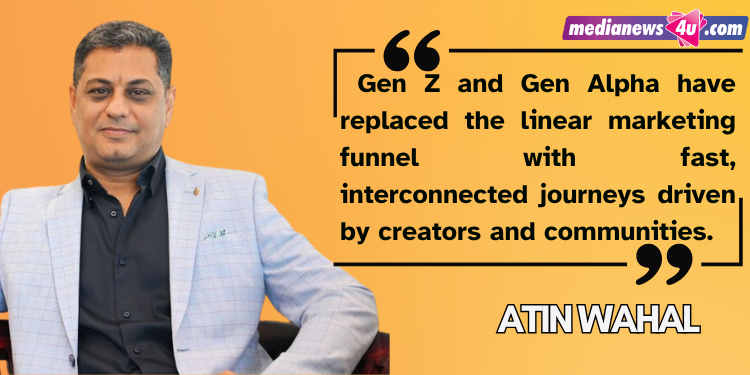
Gen Z and Gen Alpha have made consumer journeys far less linear. We are now in a world where needs can be met in minutes. Discovery, validation and purchase can often happen simultaneously, influenced by creators, communities, and content across multiple platforms. This consumer cohort doesn’t move through a traditional, sequential funnel. Increasingly, everything happens within the moment.
The traditional AIDA (Attention, Interest, Desire, Action) model has been disrupted. Those stages still exist, but consumers now move between them much faster and in less predictable ways. For brands, this means showing up with relevance consistently across touchpoints. The objective is not to manage a linear funnel, but to create connected experiences that influence decisions throughout the journey.
Q. Is there too much of a focus by brands on a performance-driven ecosystem as opposed to brand building?
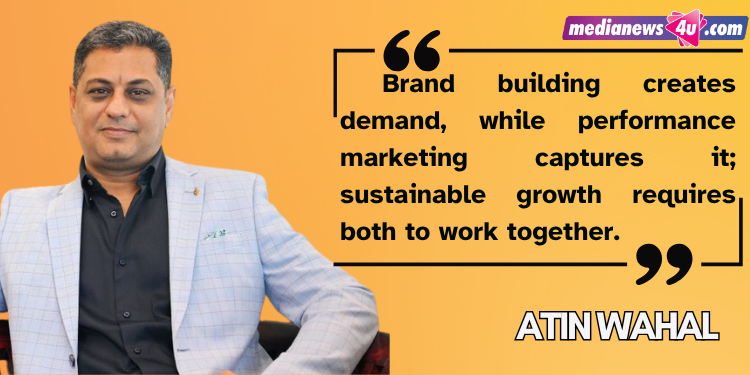
This is often where brands face a real tension – how much to invest in ‘push’, which is performance, versus ‘pull’, which is brand. Ideally, the role of brand-building is to create enough desire, trust, and distinctiveness that performance marketing becomes far more effective.
The strongest businesses do not see this as a trade-off; they see it as an ecosystem. Brand builds demand, and performance harvests it.
 Q. What goals has Saatchi & Saatchi India set for itself in 2026? What is the gameplan to get there?
To accelerate growth for both our clients and our business while continuing to strengthen Saatchi & Saatchi India’s position as a full-funnel growth partner.
Over the last few years, under the leadership of our CEO, Paritosh Srivastava, we have evolved beyond a traditional creative agency, integrating creativity with media, digital, technology, data, and commerce through Publicis Groupe’s unique ‘Power of One’ model.
This approach has enabled us to deliver innovative, business-driving solutions, deepen client partnerships, and unlock new growth opportunities across sectors.
Our gameplan thus is centred on three priorities: driving measurable business outcomes for clients, investing in future-ready talent, and leveraging emerging technologies to create greater impact.
Together, the strength of our talent, technology investments, and the Power of One ecosystem will help us create sustained momentum and deliver stronger year-on-year growth in 2026.