Decathlon Sports India recently demonstrated the scale of its community-first approach with Sports Utsav 2026, a nationwide sporting celebration that engaged over 200,000 participants across 125 stores in just two days. The initiative reflects the brand’s growing focus on making sport more accessible while strengthening engagement beyond traditional retail.
In this interaction with MediaNews4U, Gaudham Ganesh, CMO, Decathlon Sports India, discusses the strategic thinking behind Sports Utsav, the growing appetite for sports across India, the role of physical retail in an omnichannel world, evolving consumer behaviour, inclusivity, community building, and the balance between short-term business objectives and long-term brand growth.
Q) Sports Utsav 2026 engaged over 200,000 participants across 125 stores in just two days. What was the strategic vision behind designing an event at this scale, and how did you ensure consistency of experience across such diverse geographies?
Gaudham Ganesh: Decathlon has always believed in making sport accessible to everyone. This initiative was also aligned with our evolving purpose of bringing people together and engaging with users beyond being merely a platform for selling sports products.
We have consistently organised community and sporting initiatives across our stores, often at a local or city level. However, we wanted to create something that could connect all these efforts, bring the joy of sport to people across the country over a two-day period, and reinforce the message that sport should be accessible to all.
Since Decathlon is present in more than 55 cities, it was important for us to create an event that could encourage India to play together at the same time. While there were certainly aspects of experimentation involved, ensuring consistency in standards, quality, event execution, and customer experience across locations was equally important.
Thanks to our teams and partners, meticulous planning, standardisation, safety protocols, communication, and coordination ensured a seamless experience nationwide. At its core, the initiative was about bringing the country together, making well-being more accessible, and spreading the joy of sport.
Q) The event extended beyond metros into cities like Rajkot, Shivamogga, and Trichy. How different was the community appetite for sports in these emerging markets compared to the larger urban hubs?
Gaudham Ganesh: Over the past few years, Decathlon has expanded significantly into Tier II and Tier III cities. We have seen that the passion for sport and the desire to stay active and fit are very much present in these markets and continue to grow.
At the same time, there remains considerable scope for improvement in terms of organised sporting spaces and infrastructure. Decathlon aims to bridge that gap by providing opportunities for people to engage in sports, regardless of the discipline they choose.
For example, Palakkad, a city I come from, has a Decathlon store that opened around a year and a half ago. It has been encouraging to see thriving running and cycling communities there. During Sports Utsav, we also witnessed participation in sports that may not traditionally be considered mainstream in India.
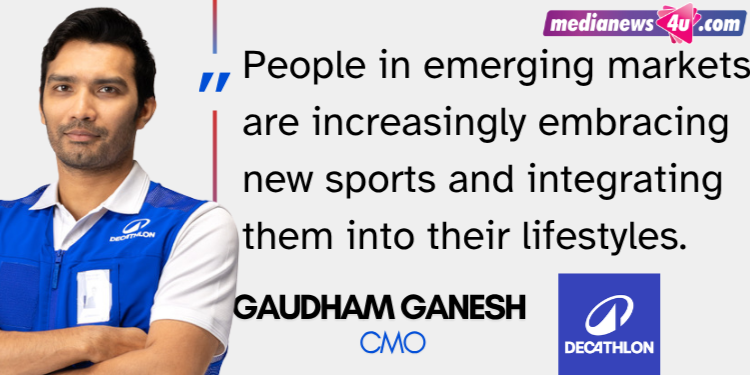
What was particularly interesting was observing how people in these cities are embracing new sports and incorporating them into their lifestyles. The appetite is clearly there. We simply need to create more opportunities and platforms. With India’s growing youth population, this is only the beginning of a larger movement towards greater sporting participation.
Q) Global sporting goods retail is under pressure from e-commerce. How central is the physical store experience—and events like this—to Decathlon India’s long-term retail strategy?
Gaudham Ganesh: At Decathlon, we recognise that customers do not distinguish sharply between physical and digital experiences. They simply expect a seamless experience.
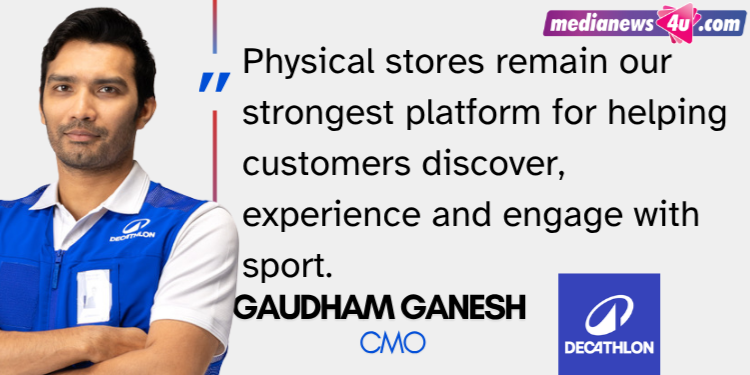
That said, we strongly believe our physical stores are uniquely positioned to showcase what Decathlon stands for. Customers can discover a vast range of products, try them firsthand, use our play areas, and experience sports in a way that cannot be fully replicated online.
At the same time, there is strong coexistence between our stores and our e-commerce platforms. Events such as Sports Utsav are primarily designed to create meaningful experiences, and physical stores provide the ideal environment for that.
Looking ahead, there is also an opportunity to involve customers who live in locations where we do not yet have stores, or those who may prefer virtual engagement. Our objective is to create a truly omnichannel sporting experience. While events bring people into stores, they also help them understand the broader Decathlon ecosystem, both physical and digital.
Q) Decathlon’s stated goal is to make sport accessible to every Indian. What are the structural barriers—economic, infrastructural, and cultural—that still stand in the way of that, and how is Decathlon actively working against them?
Gaudham Ganesh: Our primary focus is to inspire and motivate people to adopt sport in any form for their overall well-being. This is why we consistently communicate the importance of sport and its role in leading a healthier life.
In recent years, we have observed a stronger inclination among people to embrace healthier lifestyles and prioritise their well-being. To support this shift, we work hard to keep our products affordable and accessible to as many Indians as possible.
We also strive to create opportunities for people to practise sports through our stores and partnerships. Encouragingly, we are witnessing support from multiple stakeholders—including government bodies, private organisations, and communities—as sport increasingly becomes part of everyday life.
In fact, our data indicates that sport participation in the country has nearly doubled over the past decade. This gives us confidence that India is moving in the right direction, both from a societal and sporting perspective.
Q) Decathlon is deliberately shifting from a retail brand to an “experience-led, community-first” brand. How do you measure success in that transition—is it footfalls, participation data, brand perception, or something else entirely?
Gaudham Ganesh: I would not describe it as a shift because community engagement has always been part of Decathlon’s DNA. Even if not at this scale, we have consistently organised sporting events and community-building initiatives around activities such as running, cycling, and swimming.
I still remember working at our Sarjapur store in 2011, where we regularly organised weekend sporting activities across residential communities near the store. The foundations of Decathlon were built on helping people experience sport, our products, and our stores firsthand.
Sports Utsav was really about connecting all these efforts and bringing them together at scale.
In terms of measuring success, I look at it in two ways. The first is the emotional response from customers. We received tremendous affection, along with countless images and videos from across the country showing people enjoying sport. For me, customer happiness and engagement remain the most important indicators of success.
The second aspect involves metrics such as brand searches, footfall growth, Net Promoter Score (NPS), event reviews, and participation numbers. However, our primary objective was always to ensure that people had fun, enjoyed themselves, and actively participated in sport.
Q) The multi-specialist sports brand category in India is still relatively nascent. Who do you see as your primary competition—is it other sports retailers, direct-to-consumer sports brands, or the informal market?
Gaudham Ganesh: We prefer to first look inward and focus on how we can continuously improve. This includes expanding our multi-sport offering, strengthening product accessibility, increasing physical touchpoints, and delivering better experiences to customers.
While there are certainly other players contributing to the sports ecosystem, I believe our biggest competition comes from behavioural factors such as increasing screen time, inactive lifestyles, and general lifestyle inertia.
This is precisely why initiatives like Sports Utsav are important. They encourage people to spend their weekends outdoors, playing sport, whether as families, couples, or groups of friends.
Although sport participation is already moving in a positive direction in India, our focus is on accelerating that behavioural shift and encouraging more people to adopt active lifestyles.
Q) The event featured activities for all age groups and skill levels. Is inclusivity a genuine brand differentiator in the Indian market, or is it still primarily a communication positioning?
Gaudham Ganesh: Inclusivity is deeply embedded in Decathlon’s values. It is not merely a communication strategy or a marketing positioning.
This was reflected in the diversity of activities offered during Sports Utsav. We designed experiences across multiple sports and skill levels, ensuring that beginners, intermediates, and advanced participants all had opportunities to engage.
We saw participation from children, young adults, and even individuals above 40 and 50 years of age. That reinforces our belief that sport should be accessible to everyone.
Inclusivity influences everything we do—from pricing and accessibility to event design and customer experience. It is important for us that people across age groups, backgrounds, and demographics are able to experience and enjoy sport.
Q) Beyond events, what does Decathlon’s community-building roadmap look like for the next 12–18 months? Are there digital or tech-led layers being considered to sustain engagement between physical activations?
Gaudham Ganesh: Community engagement and sporting events are ongoing priorities for us at both city and store levels.
For example, International Yoga Day in June is an important occasion, and last year we saw significant participation across the country. Similarly, we continue to organise engagements around various sports throughout the year based on seasonality and local interest.
Alongside physical activations, we are investing in partnerships and initiatives that help bridge the gap between offline and digital engagement. This includes creating relevant content for customers, enabling access to coaching platforms, and facilitating ongoing interaction with Decathlon beyond a single event.
We also offer programmes such as Buyback and Second Life, which allow customers to upgrade their sporting equipment and remain engaged with us over time.
Sports Utsav may create a moment of heightened engagement, but community building remains a year-round priority across every Decathlon touchpoint.
Q) As CMO, what is the one consumer behaviour shift in India’s sports and wellness space that excites you most—and that Decathlon is strategically positioned to capitalise on?
Gaudham Ganesh: If you had asked me this question five or ten years ago, I would have highlighted the growing awareness around sport as a proactive lifestyle choice. The pandemic certainly accelerated that trend.
Today, however, what excites me most is the shift among children and young people. Parents are increasingly encouraging their children to explore multiple sports rather than focusing exclusively on one discipline.
We are seeing greater openness towards experimentation, participation in emerging sports, and the adoption of sport as a lifestyle rather than solely as a competitive pursuit.
This trend mirrors what we observe in highly sport-oriented countries, particularly in Europe, where sport is a way of life and multi-sport participation is common. People are increasingly embracing multiple sporting activities rather than limiting themselves to a single discipline, and that is an encouraging development.
Q) Could you provide an overview of the media choices that form a part of your marketing strategy and how you expect them to evolve over the coming year?
Gaudham Ganesh: Over the past few years, and indeed across the industry, there has been a significant shift towards digital marketing channels. Consequently, a large share of our investments is directed towards digital platforms.
However, we also recognise the importance of maintaining a balanced, 360-degree media presence. This includes print, outdoor advertising, events and experiential marketing, social media, and influencer partnerships.
Our media mix is ultimately driven by business objectives and customer engagement patterns. Broadly speaking, it aligns with industry trends, although we tend to place relatively greater emphasis on local initiatives and community-led activities.
Looking ahead, I expect a stronger focus on measurability and accountability, particularly as marketers face increasing scrutiny around performance marketing effectiveness. We are also closely monitoring the evolution of retail media and exploring how it can contribute to both customer engagement and business growth.
Q) There is a growing perception that CMOs are increasingly focused on delivering short-term business outcomes, often at the expense of long-term brand building. What is your perspective on this view?
Gaudham Ganesh: I believe the key lies in maintaining balance. Every business has short-term, medium-term, and long-term objectives, and marketing must support all three.
For me, it is essential that marketing teams deeply understand both the business objectives and customer needs. Pure marketing metrics should never take precedence over broader business goals.
This requires clear planning, transparency, and alignment across the organisation regarding what needs to be achieved in the short, medium, and long term.
We are also very conscious that brand building takes time and sustained investment. Therefore, the focus cannot be exclusively on short-term outcomes. The challenge—and the responsibility—is to strike the right balance between immediate business needs and long-term brand growth. That is something I think about every day as a marketing leader.