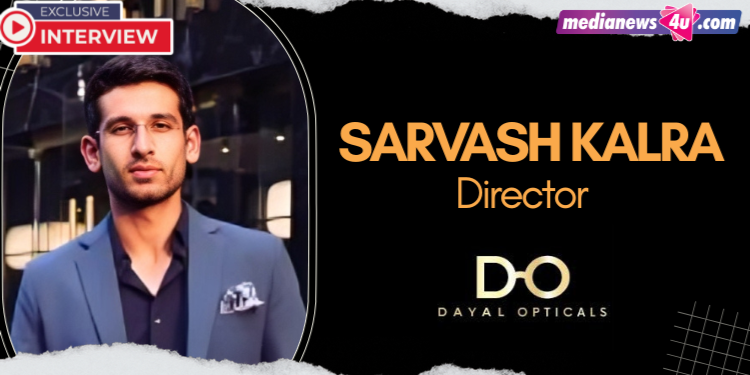
Sarvash Kalra has been serving as Director at Dayal Opticals, a luxury eyewear brand. A third‑generation leader, he joined the family business in 2020 and has since played a key role in redefining Dayal Opticals, from a trusted legacy retailer into a curated luxury lifestyle brand. Under his stewardship, the 60+‑year‑old brand has strengthened its boutique‑led retail presence, accelerated digital growth, and positioned itself as a curator of global eyewear rather than a conventional seller.
Medianews4u.com caught up with Sarvash Kalra, director, Dayal Opticals, on building and future‑proofing a luxury eyewear brand.
Q. What does the road ahead look like for luxury eyewear in India and what is Dayal Opticals’ growth vision?
The luxury eyewear segment in India is becoming more informed and selective. Consumers today are looking beyond logos and focusing on design, fit, and lens quality.
At Dayal Opticals, the focus is on strengthening our position as a trusted destination for curated eyewear and expert consultation, not just expanding retail presence. A key part of this is building a collection that stands apart — bringing together global and independent eyewear that is not widely available in India.
Our growth will remain measured, with a strong emphasis on consistency in experience, sharper curation, and backend systems that ensure the same standard across every store.
Q. What goals have been set for 2026 and what is the gameplan going to be to get there?
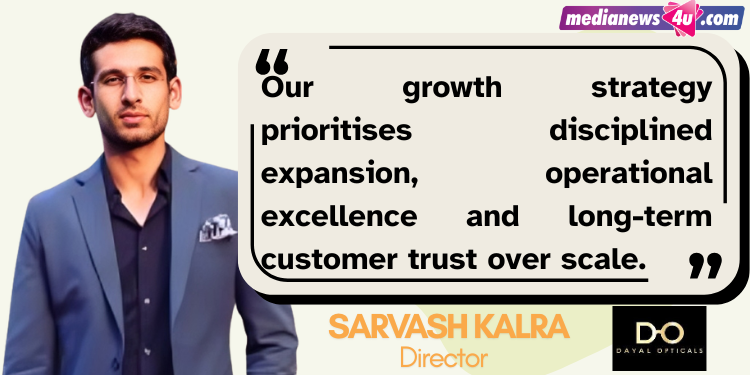
Our approach to 2026 is centred on disciplined growth rather than aggressive expansion. The focus is on improving the overall customer journey across retail and digital, while strengthening backend operations.
We are planning to expand in the right areas and broaden our reach in a considered manner. At the same time, we strongly believe that luxury boutiques are not about quantity, but about quality and consistency of experience.
A significant part of the work is also in building systems and supply chain efficiencies that allow us to scale without compromising on service or product standards. In our category, long-term trust comes from getting the fundamentals right every day.
Q. In reimagining luxury eyewear in modern India, what are the key things that Dayal Opticals is keeping in mind?
Luxury eyewear today is as much about precision and suitability as it is about design. At Dayal Opticals, the focus is on curation and consultation, ensuring that what a customer chooses is right for their face, usage, and lifestyle.
We are also constantly curating eyewear from across the world to cater to clients who expect newness, whether it’s in design, craftsmanship or silhouettes. The aim is to create a space where customers can explore, experiment, and discover styles they may not have considered before.
At the same time, we are mindful of changing expectations around digital convenience and omnichannel accessibility, ensuring a seamless experience across platforms.
Q. In carrying forward a family legacy while modernising brand thinking and operations, what is going to be the big challenge?
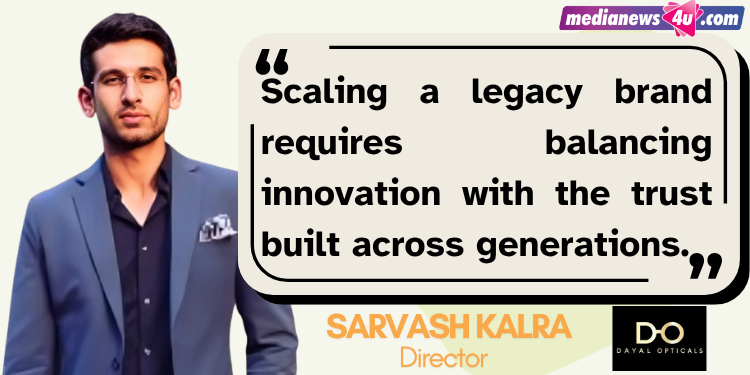
One of the biggest challenges is modernizing the business without losing the trust and values that built the brand over decades. Legacy brands carry emotional credibility and preserving that while adapting to rapidly changing consumer expectations requires careful balance.
The eyewear consumer today is far more digitally aware, design-conscious, and experience-driven. This means operations, communication, and retail environments must continuously evolve.
Our strength has been operational discipline — strong supply chain systems, technology that helps identify and resolve gaps, and processes that ensure uniformity across stores. This allows us to evolve while maintaining the same experience across locations.
Q. What tactics are being adopted to reposition Dayal Opticals from a retailer to a curator of global and independent eyewear houses?
The focus has shifted from transactional retail to thoughtful curation, with consumers increasingly seeking exclusivity, craftsmanship, and distinct design narratives.
At Dayal Opticals, we are building a more curated portfolio that prioritises differentiated collections over high-volume products. This is reflected in our retail approach as well, with greater emphasis on personalised consultations, product storytelling, and guided discovery.
The aim is to make eyewear a considered choice by understanding each customer’s lifestyle and visual needs, while also introducing them to brands and designs they may not have explored otherwise.
Q. What changes are being seen in the changing eyewear consumer—where fashion, function and personal identity intersect?
The eyewear consumer today is far more aware and involved in the decision-making process. The shift is clearly from need-based buying to informed selection, where customers are evaluating design, fit, and lens quality together.
There is also a noticeable openness to experimentation, with clients willing to try different shapes, styles, and brands. Importantly, they are placing greater trust in expert guidance to help them make the right choice.
While the discovery journey is increasingly digital, the final decision still relies heavily on in-store experience and consultation, especially in a category where precision and fit matter.
Q. What marketing campaigns and innovations can we expect in the coming months?
Our marketing approach is focused on building relevance and recall rather than just visibility.
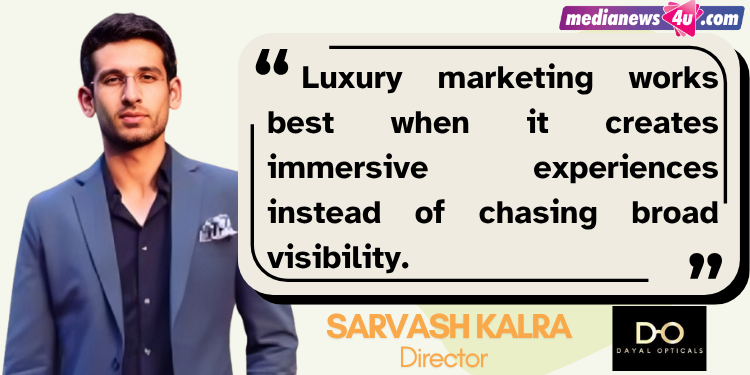
For us, luxury marketing is as much about experience as it is about communication. We are increasingly focusing on curated, invite-led events designed for a specific audience, where customers can engage with the product in a more personal and immersive setting.
Alongside this, we will continue with seasonal campaigns and select collaborations, ensuring that all communication remains sharp, visual, and product-led. The idea is to create meaningful brand interactions rather than just scale visibility.
Q. Are Gen Z and Gen Alpha forcing players in this category to re-look at the marketing playbook?
Yes, younger consumers are definitely influencing how the category communicates, but more importantly, they are changing how brands are evaluated.
They are far more digitally aware and visually driven, and tend to respond better to content that feels real and contextual rather than traditional advertising. This has pushed brands to be more consistent in how they show up across platforms, not just in campaigns.
At the same time, this audience is driving a clear shift towards individuality and experimentation, which is impacting both product selection and how it is presented. While the formats have evolved, the expectation from the product itself — in terms of design and quality — has only become sharper.
Q. Do satisfied consumers become influencers?
Yes, especially in a category like ours where the purchase is experience-led.
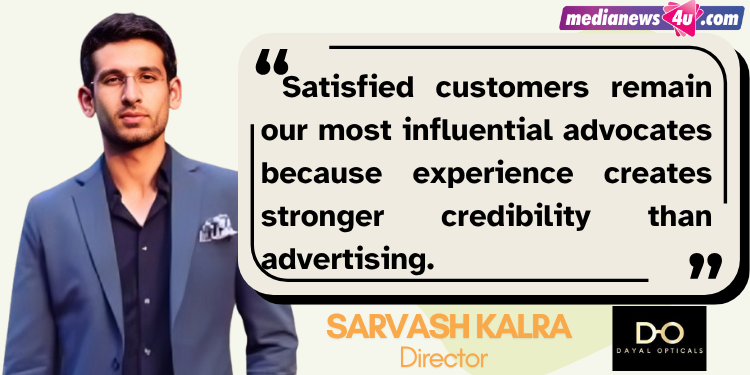
In fact, this is something we have always believed in, for us, our clients are our biggest influencers. Their trust, recommendations, and repeat engagement carry far more credibility than any paid communication.
This reinforces the importance of consistently delivering on experience, service, and product guidance, because that is what ultimately drives organic advocacy.
Q. How is AI reshaping the marketing function at Dayal Opticals?
AI is helping us make marketing more data-informed and efficient, especially in understanding customer behaviour, refining communication, and improving planning.
At Dayal Opticals, it plays a key role in analysing preferences, optimising digital engagement, and improving visibility across inventory and customer touchpoints. This allows us to be more relevant without increasing noise.
That said, eyewear remains a high-involvement, precision-led category, where the final decision depends on human expertise. Technology supports the process, but consultation and personal interaction continue to define the experience.
Q. What role is predictive analytics playing in helping create immersive, experience-led luxury boutiques backed by clinical excellence?
Predictive analytics is helping us become more precise in how we plan and operate, particularly in understanding customer preferences and purchase behaviour.
At Dayal Opticals, it supports better inventory decisions, sharper product recommendations, and more relevant in-store experiences. This ensures that what we present to the customer is both curated and contextually aligned.
In a category that combines clinical accuracy with personal style, these tools help improve efficiency, but the experience itself remains human-led, with consultation and expertise at the centre.
Q. Is pincode marketing growing in importance?
Yes, it’s becoming more relevant, especially in premium retail where demand varies significantly by micro-market.
Pincode-level data helps us align product assortment, pricing sensitivity, and communication more accurately for each location. It also improves media efficiency by focusing on high-potential catchments rather than broad targeting.
In our category, store proximity and neighbourhood familiarity play a direct role in footfall and repeat business, making localised planning more effective than mass outreach.
Q. How will Dayal Opticals leverage data, digital platforms and omnichannel insights to scale without diluting brand equity?
The focus is on using data and digital platforms to improve convenience and relevance, without changing the nature of the experience.
At Dayal Opticals, omnichannel insights help us better understand customer journeys, align inventory, and ensure a more seamless interaction across online and offline touchpoints. This allows us to scale in a more controlled and informed way.
At the same time, maintaining brand equity comes down to consistency in service, curation, and experience. Technology supports the process, but the brand is built through how consistently that experience is delivered across every touchpoint.
Q. What have been the leadership learnings from steering a legacy brand through rapid industry and consumer transformation?
One of the biggest learnings has been that growth comes from strengthening systems and consistency, not just expanding presence. As the business scales, ensuring the same standard of product, service, and experience across every store becomes critical.
At the same time, it is important to stay adaptable. Consumer behaviour, technology, and retail formats are constantly evolving, and the business needs to keep pace without losing its core identity.
The balance lies in modernising how we operate and communicate, while staying anchored in what has always defined the brand, i.e., trust, expertise, and reliability.