Not Rocket Science, founded in 2023, is a functional nutrition company focused on delivering high quality protein through ready to drink formats. Operating in a category often characterised by complex formulations and inconsistent claims, the company is built around a clear objective of simplifying protein consumption while maintaining scientific rigour, ingredient transparency, and product efficacy.
The company’s portfolio is centred on ready to drink protein shakes developed to provide consistent and reliable protein intake without the need for preparation. The brand focuses on clean, well-understood ingredients. Product formulations often include natural elements like ashwagandha, di and tri potassium hydrogen phosphates, sunflower oil, cordyceps, lion’s mane. These products are formulated to support muscle recovery, sustained energy, and daily strength requirements, with a strong emphasis on digestibility, taste optimisation, and clean labelling standards.
The manufacturing at Not Rocket Science follows a purpose led approach, with each category designed to address specific consumption occasions including post workout recovery, workday nutrition, travel, and meal replacement needs.
Not Rocket Science offers a focused range of protein drink formats engineered to meet diverse nutritional needs. The brand segments its offerings by protein concentration and functional benefit, including options tailored for muscle support, sustained energy, and lean nutrition. Each variant is developed with transparent ingredient profiles and science backed formulations to ensure performance, digestibility, and taste quality across the portfolio.
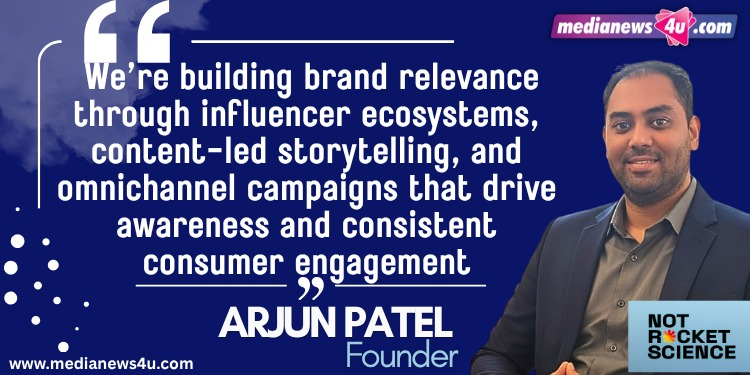
Medianews4u.com caught up with Not Rocket Science Founder Arjun Patel
Q. Not Rocket Science’s products are already available across 1,400+ retail outlets and 20+ distribution points across India, with expansion underway. Could you talk about the expansion goals for 2026 and the game plan to get there?
Our focus for 2026 is to significantly deepen and widen our distribution footprint, both in terms of geography and retail formats. While we are already present across 1,400+ outlets, the next phase of growth will be driven by expanding into new Tier 1 and Tier 2 cities, while also strengthening our presence in existing markets through better visibility and retail partnerships.
A key part of our game plan is to build a strong omnichannel presence scaling offline sales and e-commerce in parallel so that the brand is easily accessible across consumer touchpoints. We are also working closely with our distribution partners to improve supply chain efficiencies and ensure consistent availability.
Additionally, product innovation will play a critical role in driving expansion. As we introduce new SKUs and formats, it allows us to tap into newer consumption occasions and consumer segments. Overall, our approach is to combine distribution scale with category creation ensuring that as we grow, we are not just increasing reach, but also expanding the functional nutrition market in India.
 Q. From a P&L perspective, what is the biggest challenge going to be?
From a P&L perspective, the biggest challenge is balancing premium product quality with accessible pricing while scaling the business. Functional ingredients like Ashwagandha and other adaptogens, along with high-quality protein, come at a higher sourcing and formulation cost, and maintaining consistency at scale requires continued investment in quality control and supply chain.
At the same time, as a category that is still evolving, there is a need to invest significantly in consumer education, brand building, and distribution, which impacts margins in the short term.
The focus for us is to build a sustainable model where we optimise costs through scale and operational efficiencies, without compromising on product integrity. Over time, as the category matures and volumes grow, we expect better cost efficiencies to come into play.
Q. In addressing India’s protein deficiency problem, is the barrier awareness, accessibility, or cultural habits?
India’s protein deficiency challenge today is less about accessibility and more about awareness and deeply ingrained dietary habits. With the rise of quick commerce and improved retail availability, access to protein-rich foods and supplements has significantly improved.
However, a large segment of consumers still does not view protein as an everyday nutritional essential, often associating it only with athletes or gym-goers. Additionally, traditional Indian diets, particularly vegetarian ones, tend to be carbohydrate-heavy and relatively low in protein, and there is limited awareness around how to balance this effectively.
There is also a degree of hesitation around supplements, with many consumers perceiving them as unnecessary or overly artificial. Addressing this gap requires not just better access, but consistent education and a shift in how protein is positioned in daily nutrition.
Q. Could you talk about trends being seen in terms of the shift from muscle-centric protein to holistic wellness? Why does combining protein with adaptogens address a larger gap in everyday health?
India’s protein market, led by a mix of homegrown and global brands, is witnessing a clear shift from muscle-centric consumption to holistic wellness. Traditionally, protein was positioned around fitness, strength, and bodybuilding, but today consumers increasingly view it as a daily nutritional essential that supports overall health and well-being.
This is where the integration of adaptogens becomes relevant. While protein addresses fundamental nutritional needs like muscle repair and recovery, adaptogens help support stress management, immunity, and cognitive balance which are becoming increasingly important in modern lifestyles.
Additionally, culturally familiar ingredients like Ashwagandha play a key role in bridging this shift. Since consumers already recognise and trust such ingredients, combining them with protein makes newer formats more accessible and acceptable, effectively addressing a broader, everyday health need beyond just fitness.
Q. From a marketing perspective, will the goal be to communicate that protein products are not just for bodybuilders?
One of our key marketing objectives is to shift the perception of protein from being a niche, gym-centric product to something that fits seamlessly into everyday lifestyles. For a long time, protein has been associated primarily with bodybuilders or fitness enthusiasts, but the reality is that it is a fundamental nutritional need for everyone.
Our approach is to position protein as an everyday essential, much like your morning coffee or daily vitamin, while also highlighting the added benefits of functional ingredients like Ashwagandha that support stress, focus, and overall well-being.
So, rather than just focusing on performance or muscle-building, our communication is centred around convenience, holistic health, and relevance to modern, busy consumers.
 Q. What marketing campaigns and activities can we expect in the coming months? What will the media mix look like between traditional and digital media?
Over the coming months, our marketing efforts will be focused on building both category awareness and brand salience. Since we are operating in a relatively new space, consumer education will continue to be a key pillar of our communication strategy.
You can expect a mix of digital-first campaigns, influencer collaborations, and content-led storytelling that simplify the role of protein and functional ingredients like Ashwagandha in everyday life. Digital platforms allow us to target consumers more precisely and, importantly, play a critical role in educating audiences about a relatively new category like functional protein. We are also looking at on-ground activations and retail visibility initiatives to drive trials and reinforce recall at the point of purchase.
Additionally, as we expand our product portfolio, we will be launching integrated campaigns around new SKUs and unique flavours, aimed at sparking curiosity and encouraging first-time consumption. Overall, the idea is to create consistent, relatable touchpoints that make the category more accessible and relevant to a wider audience.
Q. Is the aim of marketing also to help products evolve from ‘gym protein’ to ‘lifestyle nutrition’?
Yes, that is very much a core objective of our marketing. The intent is to move protein from being perceived as a functional, gym-focused product to becoming a part of everyday lifestyle nutrition.
We believe protein shouldn’t be restricted to specific use cases like workouts, it’s a fundamental nutritional requirement which fits into daily routines, whether it’s at work, on-the-go, or as part of a balanced diet.
Our communication reflects this shift by focusing on convenience, accessibility, and holistic benefits, especially when combined with functional ingredients like Ashwagandha that support stress, focus, and overall well-being. The larger goal is to make protein more relevant to a much wider audience beyond just fitness enthusiasts.
Q. How is the company repositioning protein products from being perceived as “gym-only” supplements for bodybuilders to becoming a part of everyday lifestyle nutrition for daily consumption?
Repositioning protein starts with the product itself, not just marketing. If the formulation is clean, functional, and built around familiar ingredients like Ashwagandha, it naturally helps shift the perception that protein is artificial or only meant for bodybuilders. When consumers recognise and trust what goes into the product, they are far more open to incorporating it into their daily nutrition.
Format also plays a critical role. Moving to ready-to-drink formats removes the friction traditionally associated with protein consumption, there’s no need for large jars, scoops, or preparation which adds convenience, portability, and easy integration into everyday routines.
Together, thoughtful formulation and accessible formats enable protein to transition from a niche “gym product” to a practical, lifestyle-friendly nutrition choice.
Q. What role does packaging play in this process? How important is packaging in building brand loyalty?
Packaging plays a critical role across consumer perception, brand identity, and long-term loyalty. At the first level, it helps build an emotional connection, moving away from intimidating, gym-style aesthetics to more approachable, lifestyle-oriented designs makes the product feel relevant to everyday use.
From a branding standpoint, packaging is often the most visible and consistent touchpoint, helping create a distinctive identity in a crowded category.
Equally important is the role it plays in building trust. Clear communication around ingredients, functionality, and clean-label cues allows consumers to easily understand what they are consuming. This transparency not only enhances credibility but also drives confidence, repeat usage, and ultimately, brand loyalty.
 Q. How do Gen Alpha and Gen Z view the protein beverage category compared to their parents?
Gen Z and Gen Alpha approach the protein beverage category very differently from their parents. Younger consumers are far more open to experimentation, especially with formats like ready-to-drink beverages, and expect products to deliver multiple benefits ranging from from energy and mental well-being to immunity and convenience. They are also more inclined towards brands that feel modern, transparent, and aligned with their lifestyle.
In contrast, older generations tend to view protein in a more functional and traditional lens, relying on home-cooked meals or associating supplements primarily with fitness and recovery. There is often greater skepticism towards packaged protein products, particularly around perceptions of them being artificial or unnecessary.
Q. Is the company working with fitness influencers and celebrities to amplify the message?
Yes, influencers are an important part of our marketing ecosystem, but our approach is quite deliberate. While we do collaborate with fitness influencers, our focus is not limited to that segment alone. Since we are positioning protein as everyday nutrition, we are also working with lifestyle creators, nutritionists, and wellness-focused voices who can help contextualise the product in daily routines.
The idea is to move beyond just aspirational fitness messaging and create more relatable, real-life use cases. As we scale, we will continue to explore partnerships, including selective celebrity associations, but always with a focus on authenticity and relevance to the category we are building.
Q. How is the company tuning its B2B marketing strategy to strengthen relationships with distributors and manufacturers?
Our B2B strategy is centred on building long-term, value-driven partnerships rather than purely transactional relationships. With distributors, the focus is on ensuring strong alignment through consistent demand generation, better retail visibility, and streamlined supply chain processes, so that product movement remains efficient and predictable.
We also work closely with our partners on market insights, training, and category education, especially since we operate in a relatively new space. Helping them understand the functional nutrition category enables them to sell the product more effectively.
On the manufacturing side, our approach is highly collaborative, with a strong emphasis on quality control, compliance, and scalability. As we grow, we are continuously working with partners to optimise processes, improve efficiencies, and ensure that we can scale without compromising on product integrity.
 Q. Five years from now, will RTD protein become as habitual as caffeine? What is the long-term outlook for India’s functional beverage market?
RTD protein is set to become a natural part of daily life in India, with consumers gradually building habits around consuming it alongside their regular tea or coffee. Unlike caffeine, which is associated with dependency and side effects when overconsumed, protein based beverages offer sustained nutrition, satiety and functional benefits without disrupting daily well-being.
Looking ahead, India’s functional beverage market is poised for strong, long-term growth, driven by rising health awareness, increasing protein deficiency concerns and demand for convenient nutrition.
The category will evolve beyond single benefits into multi-functional offerings combining protein with ingredients like adaptogens, vitamins and gut-health enhancers, positioning functional drinks as an essential part of modern Indian lifestyles rather than a niche wellness trend.