Sunday, May 24, 2026
MediaNews4U
  • Exclusive
  • Advertising
  • Media
    • Radio
    • Cable & DTH
    • Print
    • Digital Frontier
    • Gaming Nexus
  • Television
  • OTT
  • Ad-Tech
  • Marketing
  • Campaigns
  • Analysis
  • Opinion
    • Opinion
    • Think Through
    • Prescience 2023
    • Prescience 2024
  • People
  • Events
    • Leader Speak
    • STRAIGHT TALK
    • Gamechangers
    • Print & TV Summit
MediaNews4U
  • Exclusive
  • Advertising
  • Media
    • Radio
    • Cable & DTH
    • Print
    • Digital Frontier
    • Gaming Nexus
  • Television
  • OTT
  • Ad-Tech
  • Marketing
  • Campaigns
  • Analysis
  • Opinion
    • Opinion
    • Think Through
    • Prescience 2023
    • Prescience 2024
  • People
  • Events
    • Leader Speak
    • STRAIGHT TALK
    • Gamechangers
    • Print & TV Summit
MediaNews4U.com
Home Authors Corner

The Operational and Enforcement Challenges of Implementing AI Disclosures at Scale

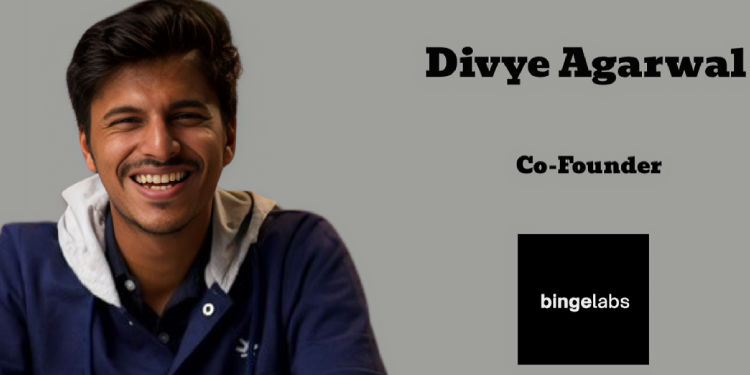
In this article, Divye Agarwal, Co-Founder, Binge Labs, argues that AI disclosures are operationally complex at scale, as AI is embedded across systems. He emphasizes contextual transparency, clear accountability, and trust built through consistent product behavior—not labels alone.

by Guest Column
February 21, 2026
in Authors Corner
Reading Time: 4 mins read
A A
The Operational and Enforcement Challenges of Implementing AI Disclosures at Scale
Share Share ShareShare

On paper, AI disclosure sounds straightforward.
Tell people when AI is being used.

In reality, it is anything but simple.

As AI becomes part of everyday products, disclosures stop being a legal checkbox and turn into a deeply operational problem. They affect product design, engineering workflows, platform governance, and eventually trust. Most discussions today focus on what disclosures should say. Far fewer talk about whether they can realistically work at scale.

AI Is No Longer a Feature

One of the biggest disconnects in the AI disclosure debate is the assumption that AI is a visible feature.

In modern products, AI usually sits in the background. It ranks content, nudges decisions, rewrites drafts, flags risks, or improves speed. Often, it is only responsible for a small part of the final output.

A single user action may pass through multiple systems, some generative, some predictive, some purely analytical. From an operational standpoint, it becomes unclear what qualifies as “AI-generated” or even “AI-assisted.”

When disclosures rely on binary labels, they immediately break in these grey zones.

Defining AI Involvement Is Harder Than It Sounds

At scale, the first challenge is definition.

If a human writes something but uses AI to refine it, is that AI content?
If AI suggests ten options and a human picks one, should it be disclosed?
If AI is used only to rank or filter, does the user need to know?

If definitions are too broad, everything ends up labeled AI and the disclosure loses meaning. If they are too narrow, they are easy to bypass. Most large platforms end up somewhere in the middle, not because they want to hide anything, but because rigid definitions do not survive real-world complexity.

Disclosure Fatigue Is a Real Risk

Even when disclosures are present, users stop noticing them very quickly.
We have already seen this with cookie notices, sponsored tags, and privacy pop-ups. Over time, they fade into the background.

At scale, excessive disclosure creates visual noise and false reassurance. Users think they are informed, but they are not actually processing anything. In some cases, this can reduce trust rather than build it.

The problem is not lack of transparency. The problem is too much low-value transparency.

Enforcement Weakens Once Content Leaves the Platform

Disclosures are easiest to enforce inside tightly controlled platforms. They fall apart once content starts moving.

A label does not survive a screenshot.
Metadata does not survive a repost.
Watermarks do not survive compression and cropping.

Most AI content today travels across platforms, private groups, and messaging apps. Enforcement assumes centralized control, but the internet does not work that way. Once content spreads, the original disclosure often disappears, even if it was implemented correctly at the source.

The Open Model and API Gap

Another major challenge comes from open models and API-based ecosystems.

When developers build their own tools on top of platforms like OpenAI, responsibility for disclosure becomes fragmented. The model provider does not control the interface. The interface does not control how outputs are reused. The end user may not even know what model was involved.

In these cases, enforcement is not just difficult. It is unclear who should be held accountable in the first place.

Global Rules, Local Execution

AI products operate globally, but regulations are local.

What counts as sufficient disclosure under the EU AI Act may not align with user expectations or enforcement capacity in other regions. For global companies, this often leads to designing for the strictest regime and applying it everywhere, even when it does not fit local context.

Operationally, this creates complexity and inconsistency. From a user’s perspective, it can feel confusing and arbitrary.

Human Oversight at Scale Is Not What People Imagine

Many disclosure frameworks lean heavily on the idea of human oversight.

In practice, humans do not review every output. They review systems, samples, and edge cases. Oversight exists, but it is statistical, not personal.

Labeling something as human-reviewed can be technically accurate while still creating the wrong mental model for users. Disclosure language struggles to capture this nuance, and enforcement often ignores it entirely.

Trust Is Built Through Behavior, Not Labels

The uncomfortable truth is that disclosures alone do not create trust.

Users trust products that behave predictably, correct mistakes visibly, and take responsibility when things go wrong. They do not build trust from small labels or carefully worded disclaimers.

At scale, trust is earned through repeated interactions and consistent behavior. Disclosures can support that trust, but they cannot replace it.

A More Practical Way Forward

Instead of trying to label every instance of AI use, a more realistic approach would focus on three things.

First, contextual disclosure. Disclose AI use when it meaningfully affects outcomes, decisions, or accountability.

Second, system-level transparency. Explain clearly what AI is used for, where it is not used, and what its limitations are.

Third, accountability over attribution. Users care less about whether AI was involved and more about who is responsible when something breaks.

Closing Thought

AI disclosures are struggling not because of bad intent, but because we are trying to apply static rules to dynamic systems.

At scale, AI is not a single tool you switch on or off. It is a layer woven into how modern products work. Expecting simple labels to capture that reality is unrealistic.

The future of trust in AI will not come from better wording or stricter badges. It will come from better systems, clearer accountability, and honest product behavior. Disclosures should support that goal, not pretend to solve it on their own.

(Views are personal)

Tags: Binge LabsDivye Agarwal

RECENT POSTS

Why Improving Lead Quality Is Becoming More Important Than Increasing Lead Volume
Authors Corner

Why Improving Lead Quality Is Becoming More Important Than Increasing Lead Volume

May 22, 2026
0

As consumers become more conscious about data privacy and platforms tighten access to user-level signals, reaching the right customer through...

Read moreDetails
Less Visibility, More Power: The New Playbook for Leadership Branding
Authors Corner

Less Visibility, More Power: The New Playbook for Leadership Branding

May 20, 2026
0

There is a strange race happening in the corporate world right now, especially on LinkedIn. Every leadership profile suddenly looks...

Read moreDetails
Marketing to Families Means Speaking to Mothers First
Authors Corner

Marketing to Families Means Speaking to Mothers First

May 19, 2026
0

The Emotional Centre of Family Decision-Making In every Indian home, there is a deeply influential person who is shaping every...

Read moreDetails
How Brands Can Win IPL Through Mobile Gaming
Authors Corner

How Brands Can Win IPL Through Mobile Gaming

May 19, 2026
0

When you open a gaming platform during IPL, you enter a carefully constructed system built around participation. But "gaming platform"...

Read moreDetails
Kimmy Babbar,
Authors Corner

AI As The New Gatekeeper Of Brand Visibility And Corporate Reputation

May 18, 2026
0

For most of my career, the rules of brand visibility were fairly predictable. You built a strong message, amplified it...

Read moreDetails
The Next Big Marketing Divide: Brands That Adapt Fast vs Brands That Still Plan Slow
Authors Corner

The Next Big Marketing Divide: Brands That Adapt Fast vs Brands That Still Plan Slow

May 15, 2026
0

There was a time not too long ago when marketing was defined by long cycles, layered approvals, and meticulously crafted...

Read moreDetails

LATEST NEWS

Ipsos Gender Equality in India Survey 2026

Six in ten realists embrace AI while driving collaboration at work: Ipsos

May 23, 2026
Six Fields

Six Fields turns every cricket moment into a shared celebration with #CheersForMore Campaign featuring Anil Chaudhary

May 23, 2026

ANALYSIS

Ipsos Gender Equality in India Survey 2026
Analysis

Six in ten realists embrace AI while driving collaboration at work: Ipsos

May 23, 2026
0

New Delhi: Ipsos has released its Generations Report 2026, examining the demographic, workplace and behavioural shifts reshaping societies, economies and...

PEOPLE

Dayanidhi Maran and son Karan set to launch Digital Entertainment Venture
People

Dayanidhi Maran and son Karan set to launch Digital Entertainment Venture

May 23, 2026
0

Chennai: Former Union Minister Dayanidhi Maran and his son Karan Dayanidhi Maran are set to launch a new digital entertainment...

MARKETING

Meta Fashion
Marketing

Meta Fashion secures Lumikai-led funding to expand virtual fashion across UGC platforms

May 23, 2026
0

Delhi: Lumikai has led an approximately $400K pre-seed funding round in Meta Fashion, a new-age digital fashion platform building what...

Subscribe to Newsletters

ADVERTISING

Goafest 2026
Advertising

AI is no longer just a discussion point but an integral part of business, creativity, and everyday workflows: Rana Barua at Goafest 2026

May 22, 2026
0

Mumbai: In addition to the keynote sessions and panel discussions, Day three also featured a keynote on Micro and Macro...

PRINT

Jagran Prakashan named Publisher of the Year at ABBY Creative Awards 2026 Powered by One Show
Print

Jagran Prakashan named Publisher of the Year at ABBY Creative Awards 2026 Powered by One Show

May 21, 2026
0

Mumbai: The ABBY Creative Awards 2026 Powered by One Show has announced its Publisher of the Year results at Goafest...

AUTHOR'S CORNER

Why Improving Lead Quality Is Becoming More Important Than Increasing Lead Volume
Authors Corner

Why Improving Lead Quality Is Becoming More Important Than Increasing Lead Volume

May 22, 2026
0

As consumers become more conscious about data privacy and platforms tighten access to user-level signals, reaching the right customer through...

UPLIFT MEDIANEWS4U DIGITAL PVT LTD
No. 194B , Aram Nagar 2, JP Road,
Versova, Andheri West
Mumbai - 400061

For editorial queries:
[email protected]
[email protected]

For business queries:
Smitha Sapaliga - +91-98337-15455
[email protected]

Recent News

ZEE5 UK partners Narrative Entertainment to bring mainstream UK channels to Indian streaming platform

Zee Entertainment wins Broadcaster of the Year at ABBY Awards 2026 for fourth consecutive year

May 23, 2026
Ipsos Gender Equality in India Survey 2026

Six in ten realists embrace AI while driving collaboration at work: Ipsos

May 23, 2026
Six Fields

Six Fields turns every cricket moment into a shared celebration with #CheersForMore Campaign featuring Anil Chaudhary

May 23, 2026

Newsletter

Subscribe to Newsletters

Medianews4u.com © 2019 - 2025 All rights reserved.

  • The South Side Story 2023 Download Report
  • Goafest 2023: Day 3
  • Goafest 2023: Day 2
  • Goafest 2023: Day 1
  • Straight Talk Gallery 2022
  • The South Side Story 2022 Download Report
  • Focus 2022
  • Futurescope Conclave Gallery 2022
  • The South Side Story 2021 Download Report
  • FOCUS 2021
  • Exclusive
  • Exclusive
  • Advertising
  • Media
    • Radio
    • Cable & DTH
    • Print
    • Digital Frontier
    • Gaming Nexus
  • Television
  • OTT
  • Ad-Tech
  • Marketing
  • Campaigns
  • Analysis
  • Opinion
    • Opinion
    • Think Through
    • Prescience 2023
    • Prescience 2024
  • People
  • Events
    • Leader Speak
    • STRAIGHT TALK
    • Gamechangers
    • Print & TV Summit

Medianews4u.com © 2019 - 2025 All rights reserved.