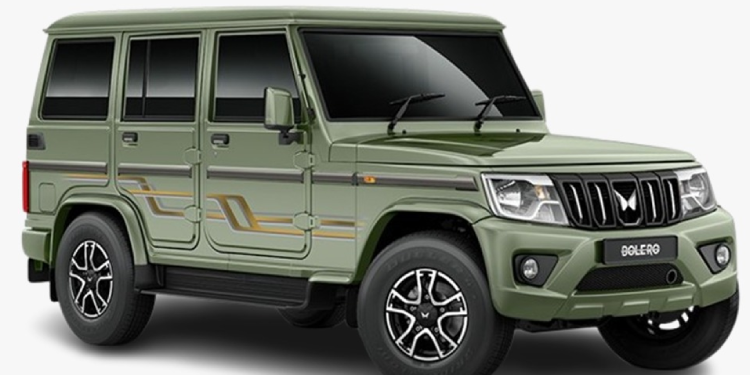
When buyers consider long-term vehicle ownership, reliability often becomes more important than features, styling, or even performance. This is particularly true in markets where vehicles are expected to operate across varied road conditions and remain in service for many years. The Mahindra Bolero offers a useful case study in understanding how reliability shapes ownership decisions and why it continues to matter in the SUV segment.
Rather than evolving rapidly with market trends, the Bolero has maintained a steady, function-first identity that aligns closely with the priorities of long-term owners.
Why Reliability Matters More Over Time
Reliability influences nearly every aspect of vehicle ownership. A reliable vehicle reduces unexpected repair costs, minimises downtime, and provides confidence that the car will perform consistently over years of use. For many buyers, especially those who depend on a single vehicle for daily mobility or work-related travel, these factors outweigh the appeal of frequent updates or premium features.
Long-term ownership also exposes vehicles to wear that short-term users may never encounter. In this context, mechanical durability and predictable performance become central to perceived value.
Engineering Choices That Support Longevity
The Mahindra Bolero’s engineering reflects a clear emphasis on durability. Its body-on-frame construction provides structural strength that is better suited to prolonged use on uneven roads compared to lighter monocoque designs commonly found in urban SUVs.
This approach allows the vehicle to absorb stress over time without compromising structural integrity. While it may not deliver the ride comfort expected from city-focused SUVs, it supports consistent performance under demanding conditions—an important consideration for owners planning to keep their vehicle for several years.
Mechanical Simplicity and Dependable Performance
Another contributor to the Bolero’s reputation for reliability is its mechanical simplicity. The vehicle relies on a diesel powertrain tuned for steady torque delivery rather than high output. Paired with a manual transmission, this setup reduces dependency on complex electronics and automated systems.
For long-term owners, simpler mechanical systems often translate into:
- Easier diagnosis and repair
- Lower risk of component failure
- Greater tolerance for varied driving conditions
These characteristics support reliability not as a marketing claim, but as an outcome of deliberate design choices.
Maintenance Accessibility and Ownership Confidence
Reliability is closely linked to how easily a vehicle can be maintained. In many parts of India, access to specialised service centres may be limited. Vehicles that can be serviced using widely available parts and basic mechanical expertise tend to inspire greater ownership confidence.
The Bolero’s design supports this reality. Its systems are familiar to local technicians, and routine maintenance does not typically require advanced diagnostic tools. This accessibility reduces downtime and helps owners manage long-term costs more predictably.
Interior Durability Over Aesthetic Appeal
Long-term ownership also tests interior durability. Materials that look appealing in showrooms may not age well under frequent use. The Bolero’s interior prioritises resilience over refinement, using durable surfaces and straightforward layouts designed to withstand daily wear.
While this may not appeal to buyers seeking a premium cabin experience, it aligns with the expectations of owners who value longevity and practicality. Over time, interiors that resist damage and remain functional contribute significantly to perceived reliability.
Safety Through Consistency and Predictability
Safety plays a role in long-term reliability by influencing driver confidence. The Bolero adopts a straightforward approach, offering essential safety systems supported by a robust structure. Rather than relying heavily on electronic intervention, it focuses on predictable handling and braking behaviour.
For owners driving in mixed traffic conditions, predictability often feels safer than complexity. A vehicle that responds consistently can build trust over years of ownership, reinforcing its reliability credentials.
How Buyers Evaluate Reliability Today
Modern buyers increasingly combine traditional word-of-mouth insights with digital research. When comparing long-term ownership prospects, many use online platforms to assess durability, maintenance expectations, and real-world usage feedback.
On car discovery and comparison platforms such as ACKO Drive, which combine online car buying with expert reviews and structured comparisons, vehicles like the Bolero are often evaluated through the lens of reliability and ownership suitability rather than feature density. This reflects a growing awareness that long-term satisfaction depends more on dependability than novelty.
Reliability as a Differentiator in a Changing Market
As SUVs become more complex and technology-driven, reliability has emerged as a differentiator rather than a given. Buyers increasingly recognise that advanced features can introduce additional points of failure over time.
The Bolero’s continued relevance suggests that a segment of the market still values vehicles designed to last, even if they sacrifice refinement or innovation. This highlights that reliability remains a valid and influential purchase criterion.
Conclusion
The Mahindra Bolero demonstrates how reliability plays a defining role in long-term ownership. Through durable construction, mechanical simplicity, and accessible maintenance, it continues to meet the needs of buyers who prioritise consistency over change.
In an SUV market shaped by rapid evolution, the Bolero’s approach serves as a reminder that long-term value is often built on dependability. For owners planning to keep their vehicle for years rather than seasons, reliability is not just a feature—it is the foundation of ownership satisfaction.