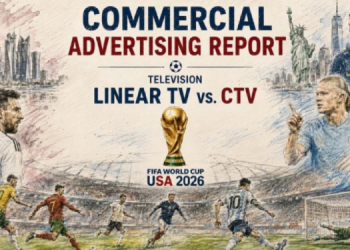
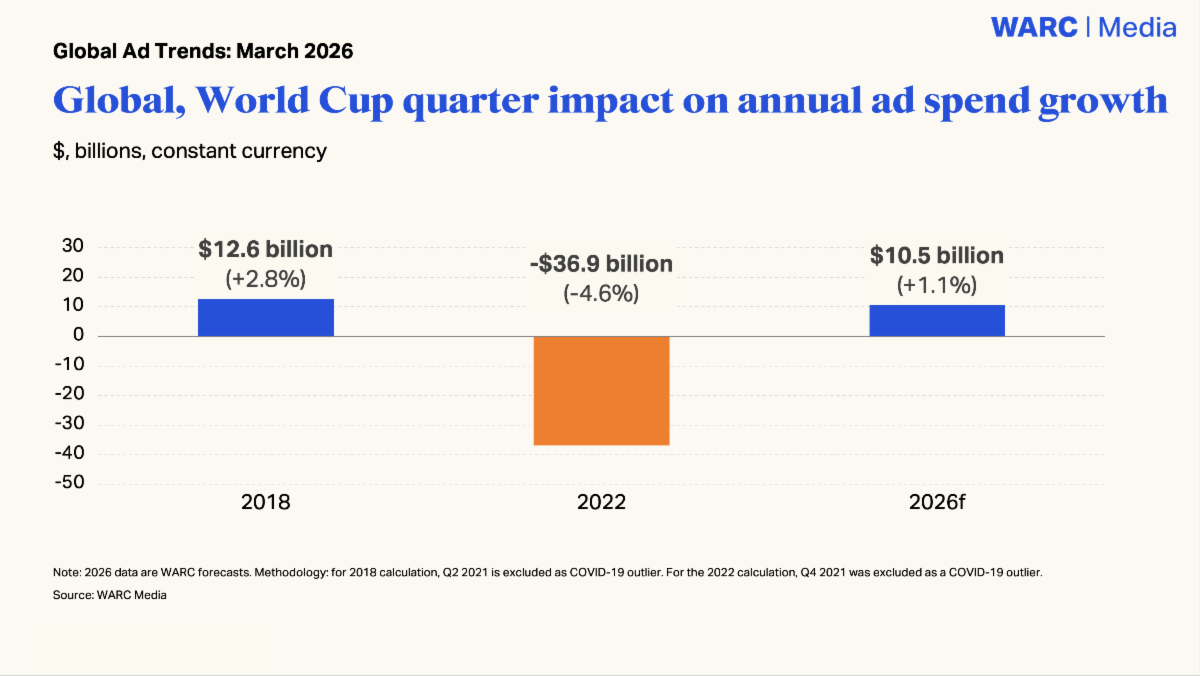
Mumbai: The upcoming FIFA World Cup 2026 is expected to inject $10.5 billion into the global advertising market, but its overall impact on ad growth is diminishing amid a rapidly evolving media landscape, according to a new report by WARC Media.
The tournament, set to be the largest in history and hosted across United States, Canada, and Mexico, will feature more matches and expanded sponsorship opportunities. However, despite its scale and global reach, the report highlights a fragmented advertising ecosystem where brands are no longer relying solely on traditional broadcast channels.

Alex Brownsell, Head of Content, WARC Media, said, “This World Cup is no longer just about live matches—brands will engage with fans across touchpoints before, during and after matches have concluded. Media plans will include platforms that benefit from the conversation about the World Cup without the burden of bidding for rights – from creator content to podcasts, turning conversations around the games into powerful opportunities for connection and impact.”
According to WARC, while the tournament is projected to generate a $10.5 billion uplift in ad spend during the event quarter, this represents a modest 1.1% incremental gain compared to the FIFA World Cup 2022. This is significantly lower than the $12.6 billion (+2.8%) boost seen during the FIFA World Cup 2018, indicating a declining marginal impact.
The report attributes this trend to shifting audience consumption patterns. While the 2022 tournament reached 2.87 billion viewers globally, linear TV viewership declined by 11.9% compared to 2018, as audiences increasingly moved towards digital and multiplatform viewing experiences.
Platforms such as TikTok and YouTube are expected to play a larger role in fan engagement, offering behind-the-scenes content and live streams through media partnerships. Meanwhile, streaming platforms like Netflix are exploring monetisation opportunities through complementary formats such as video podcasts, reflecting a shift towards conversation-led engagement beyond live matches.
The report also notes that premium pricing during major sporting events often redistributes existing ad spend rather than expanding the market, limiting overall growth impact. In host markets like the United States, the World Cup’s contribution to ad spend has historically been modest, typically ranging between 0.4% and 1% of total expenditure.
Another key trend identified is the growing importance of “second-screen” engagement, where fans interact with content across multiple platforms before, during, and after matches. This shift is expected to further fragment audience attention and reshape media strategies.
Additionally, late-night match schedules in regions such as Europe, the Middle East, and Asia may restrict traditional broadcast advertising opportunities but open new avenues for digital content, highlights, and social media engagement. These time slots could also benefit certain categories, including quick-service food delivery, particularly in markets with advertising restrictions during peak hours.
Overall, the report concludes that while the FIFA World Cup 2026 remains a high-visibility global event, its commercial impact is increasingly dispersed across platforms, requiring advertisers to adopt more integrated, multi-channel strategies to maximise returns.