Asia Pacific’s FMCG landscape is witnessing a decisive shift, with local brands now commanding nearly 79% of value share, up from 74% a decade ago, according to Worldpanel by Numerator’s “Made Local, Played Global – Asia Brand Power 2025” report. Once seen as challengers, these brands have evolved into agile, insight-driven organisations that are outperforming global competitors through stronger consumer connect, faster innovation, and digital-led strategies.
In this interaction, K Ramakrishnan, Managing Director – South Asia, Worldpanel by Numerator, unpacks the forces driving this transformation and what lies ahead for Asia’s rising brand leaders.
Q) Your latest report shows that local brands now command nearly 79% of FMCG value share across APAC, up from 74% a decade ago. How significant is this shift, and does it represent a permanent structural transformation in the region’s competitive landscape?
A 5% increase over a decade is very significant, especially when the base was already high. If the share had moved from, say, 25% to 30%, it would be less remarkable. But moving from 74% to 79% indicates a strong structural shift.
Whether this is permanent is difficult to say. There is a growing view that the era of purely global or national brands is evolving into one dominated by regional and local brands, driven by highly localised consumer preferences. From 79%, it may not be easy to grow dramatically further, but what could happen is global brands adapting by mimicking local behaviour.
This means leveraging global insights but localising them meaningfully rather than relying on a “cut-copy-paste” approach. Multinationals will need to evaluate each market—and even sub-markets—on their own merit and respond accordingly, whether through existing brands, new launches, or acquisitions.
The key drivers identified a decade ago—nationalism, regional relevance, digital adoption with a human touch, and deep local insights—still hold true. However, they have now become baseline expectations rather than differentiators. With widespread access to information and technology, we are in an age of parity. What matters most today is agility—how quickly brands can respond. Local brands have demonstrated strong agility and are leveraging it effectively.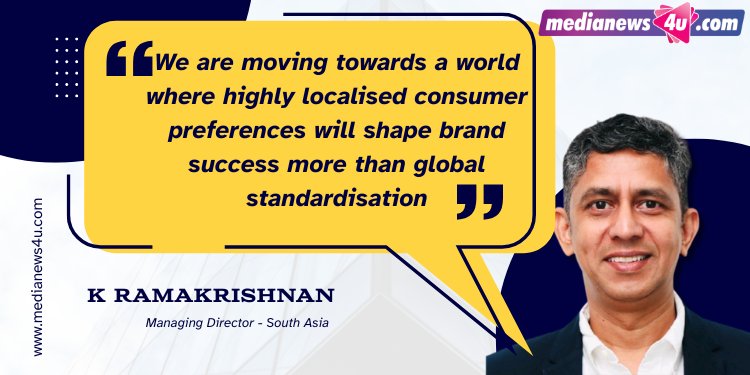
Q) You describe this as a structural shift — what key internal changes and organisational agility gains have enabled Asian brands to grow market share, and are they now better equipped than multinationals in terms of speed and responsiveness?
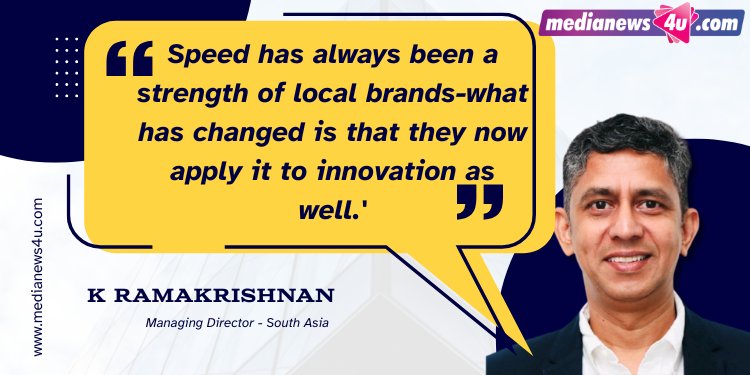
Local and regional brands have always had an advantage in speed. Multinationals, by design, operate with multiple layers of approval—national, regional, and global—which can slow decision-making.
In contrast, local brands can respond much faster. What has changed now is that this speed extends beyond market execution into innovation. With easy access to information and technology, local brands are able to quickly identify trends and translate them into products. So while speed has always been their strength, they are now applying it more effectively across the entire value chain, including innovation and go-to-market strategies.
Q) How significant is South Asia’s — particularly India’s — contribution to the 79% FMCG value share, and are Indian brands leading this momentum across key categories such as food & beverages, personal care, and home care?
Our Brand Footprint reports consistently show a strong presence of local and Indian brands. However, in India, it is difficult to clearly classify brands as “local” or “multinational” from a consumer perspective.
For instance, brands like Surf or Colgate are perceived by many consumers as Indian brands, regardl
ess of their global ownership. To the average household, the distinction is not particularly relevant.
While India’s share may not exactly mirror the 79% figure, the country has several strong homegrown brands such as Aashirvaad, Dabur, Parle, and Britannia, particularly in food categories. There is also growing momentum in personal care and home care, indicating a broader strengthening of Indian brands across categories.
Q) The report highlights agility as a core capability — how has this agility translated into competitive advantage, and how are local brands balancing short-term performance marketing with long-term brand equity building?
The term “local” was once associated with lower pricing, but that perception no longer holds. Today, local and regional brands operate at parity—or even at a premium—in certain categories.
Earlier, the assumption was that local brands would replicate multinational innovations at a lower price. That model is outdated. Today, local brands are innovating independently based on deep consumer understanding. Examples such as sachet-based coconut oil formats or shampoo-based hair dyes demonstrate distinctly local innovation.
Agility, combined with speed and access to information, has enabled these brands to compete effectively. They are no longer followers but innovators in their own right.
Q) Do consumers actively prefer “local” brands today, or is the growth primarily drive
n by better execution and value?
For most consumers, the distinction between local and global brands is not particularly important unless influenced by specific
movements such as “Make in India.” Even then, many multinational brands qualify because they manufacture locally.
In reality, consumers often do not differentiate—brands like Colgate or Ariel are perceived as local. What matters more is the value delivered. If a brand can offer better performance, convenience, or affordability, it succeeds irrespective of its origin.
So the growth is largely driven by execution and value rather than a conscious preference for “local.”
Q) Do you anticipate increased acquisition activity by multinational companies targeting strong local brands?
Yes, this trend is likely to continue, though it may not always take the form of outright acquisitions. Many strong local brands are not willing to sell but may be open to investment partnerships.
For example, companies like Haldiram’s or Balaji Wafers have resisted acquisition despite sustained interest from multinationals. As a result, multinationals may need to adopt a phased approach—starting with investments and gradually building towards deeper partnerships. That said, mergers and acquisitions remain a key strategic lever for multinational growth.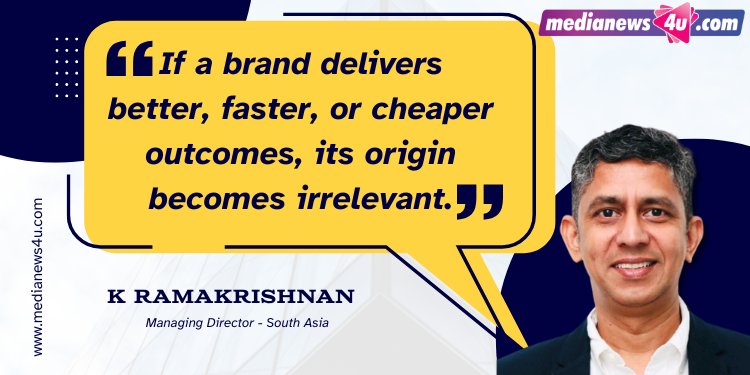
Q) So based on the acquisition trends that has happened in the recent past with whether it is HULS minimalist or the other branch that has been recently by or others after acquisition. Do you see these MNCs are able to create a better reach and value than what it was when it was with the original founders. What is your take?
It is a mixed outcome. Some large organisations acquire smaller brands and attempt to integrate them fully into their systems, which can dilute the brand’s original strengths and slow growth.
Others take a more hands-off approach, allowing the acquired brand to operate independently while providing investment support. This approach tends to be more successful.
For instance, brands like Minimalist or Soulfull have been allowed to retain their identity post-acquisition. Similarly, acquisitions by companies like Wipro—such as Brahmins and Nirapara—have preserved the local essence of these brands.
The key is resisting the temptation to impose large organisational structures on agile brands. Those that succeed are the ones that allow acquired brands to continue operating in their original ecosystem.
Q) How will AI, retail media, and evolving consumer behaviour shape the next phase of competition?
AI is fundamentally democratising access to insights. Today, everyone has access to similar tools and data. The differentiator will not be access, but how effectively these tools are used.
AI will not replace strong management, but those who leverage AI effectively will outperform others. It enables faster decision-making, better targeting, and more efficient use
of information.
Ultimately, success will depend on how well brands use AI to derive actionable insights and
translate them into meaningful strategies.
Q) What potential risks could slow down the current growth momentum of local brands?
The biggest risk is complacency. If local brands assume that success in one market can be easily replicated in another, they may struggle.
Each state or region has distinct consumer preferences. For example, a brand that is highly successful in Tamil Nadu may not achieve the same success in Andhra Pradesh or beyond.
Another risk is the availability of easy capital. While investment opportunities are abundant, brands must ensure that they raise funds for the right reasons—such as expansion and capability building—rather than simply because capital is available.
Q) What key strategic lesson should CMOs across APAC take away from this study?
The key lessons are centred around agility, being digital-first by design rather than adoption, and maintaining a strong human connection despite digital transformation.
Additionally, purpose-driven brands tend to have greater longevity. Brands that stand for something meaningful are more likely to sustain and grow over time.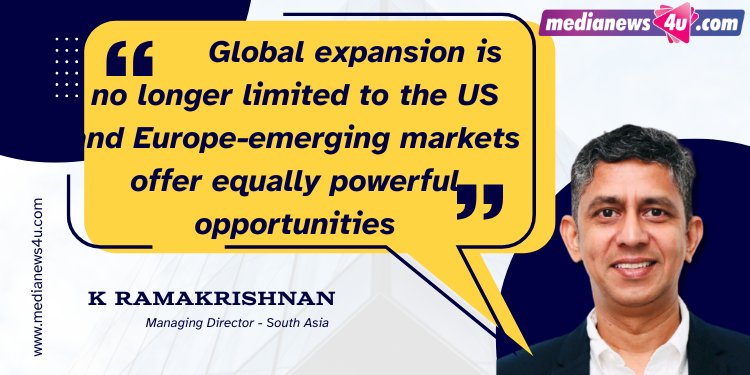
Q) How would you summarise the future of Asian brands in the global FMCG landscape?
The concept of a single “global” FMCG landscape is evolving. Today, every market is accessible, but success depends on how well brands understand and act on local insights.
Asian brands have a strong opportunity for global growth, but this must be driven by deep consumer understanding rather than relying solely on diaspora markets.
Many Indian brands, such as Parle, have expanded successfully into regions like Africa, South America, and the Middle East. Similarly, companies like Marico and Wipro have grown internationally through strategic acquisitions.
Global expansion is no longer limited to Europe and the US. Emerging markets across regions offer significant opportunities, and Asian brands are well-positioned to capitalise on them.