Mumbai: Criteo has released its latest report, ‘From Fragmented Touchpoints to Connected Journeys: A New Commerce Playbook for India’, developed in collaboration with Ecosystm, highlighting a growing consumer preference for relevance over volume in digital advertising.
The report reveals that 84% of Indian consumers prefer fewer, more relevant ads—even if it involves sharing their browsing or purchase history. Additionally, over 60% of consumers find history-based advertising helpful. However, despite this openness, 71% still encounter repetitive messaging, pointing to a significant gap in execution and a missed opportunity for brands to deliver meaningful personalisation.
Fragmented Journeys Reshape Consumer Behaviour
The findings underscore a shift in how Indian consumers navigate purchase journeys. Around 51% of shoppers conduct product research entirely outside retail platforms, while 44% engage across multiple channels before making a purchase. Only 5% complete their journey on a single platform, reflecting a highly fragmented and research-driven consumer mindset.
Discovery is increasingly happening across multiple touchpoints, with 67% of consumers noticing ads on social media, followed by shopping app searches (55%), retailer homepages (51%), and product pages (45%). In terms of influence, 29% of consumers cited social media ads as the most impactful, followed by video/OTT ads (25%) and search ads (21%).
Shorter Purchase Cycles, Higher Expectations
The report highlights evolving purchase timelines, with 26% of consumers making immediate purchases after seeing ads, while 38% complete transactions within the same day. However, 27% still take up to a week to research, indicating opportunities for brands to shorten decision cycles through smarter, well-timed engagement.
Measurement and Data Challenges Persist
Despite the growing adoption of data-driven advertising, structural challenges remain. Nearly 50% of digital advertisers cite measurement and attribution as a key hurdle, while 43% struggle with data standardisation across platforms. Additionally, 32% face challenges in activating data across multiple channels, leading to fragmented consumer experiences.
AI Adoption Rising, but Execution Gaps Remain
While AI is increasingly being used to build audience segments (72%) and model shopper behaviour (65%), its application in real-time creative optimisation remains limited. Only 46% of retailers currently use AI to dynamically adapt ad formats across platforms such as web, app, and connected TV, highlighting a gap between data intelligence and execution capabilities.
Looking ahead, retailers expect high-margin growth to be driven by formats such as offsite shoppable videos (40%), connected TV (24%), and on-site sponsored listings (21%), particularly those that integrate SKU-level data and enable automated omnichannel execution.
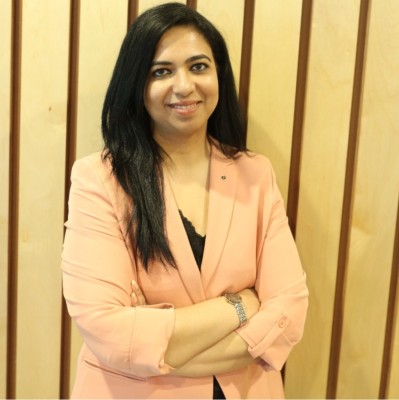
Commenting on the findings, Medhavi Singh, Country Head, Criteo India, said,“Retail media in India is at a pivotal moment, with high-intent consumer signals and shrinking purchase cycles creating a strong opportunity for brands and retailers to drive measurable outcomes. However, unlocking this full potential requires moving beyond siloed, lower-funnel activation toward more connected, full-funnel strategies that seamlessly integrate offsite discovery with onsite conversion. This calls for stronger data foundations, closed-loop measurement, and a shift from last-click optimisation to AI-driven, real-time personalisation. At Criteo, we are enabling this transition by helping retailers and brands unify data, activate insights across channels, and deliver measurable business outcomes across the consumer journey.”
Based on a comprehensive study conducted in January 2026, the report combines consumer surveys, platform insights, and industry interviews to provide a detailed view of India’s evolving e-commerce and digital advertising ecosystem. It highlights a clear imperative for brands to move beyond fragmented strategies and adopt more connected, intelligence-driven approaches to meet rising consumer expectations.